Beyond the Famous Legend
The house became an archive of family history.
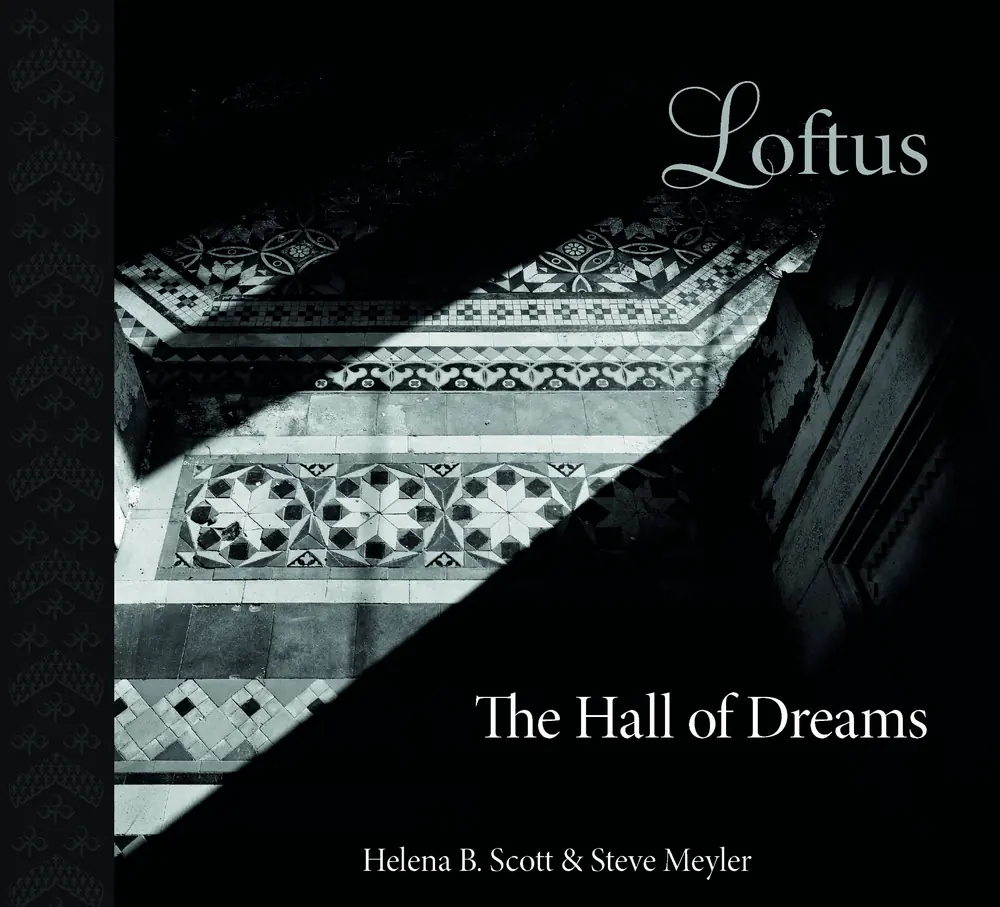
For Loftus: The Hall of Dreams, Helena reconstructed the intertwined Redmond, Tottenham and Loftus histories through genealogy, estate records, architecture, heraldry and the material language of the Hall itself. The research moved beyond the supernatural story to ask what the building could reveal about the people, relationships and historical currents that shaped it.
The annotated 1771 survey map of the Loftus Hall estate supplied another kind of evidence. A note recording continuing ill feeling between Redmond and Loftus interests suggested that the hostility surrounding the family's history had not simply disappeared, but remained alive in inherited memory across the centuries. Reading the map as both a territorial document and a record of family sentiment revealed a tension that a conventional pedigree could not show.
Close study of the Hall's floors and wider architectural symbolism led into documented family networks in which Freemasonry was historically present. The argument is not that every relative belonged to a lodge; it is that securely evidenced relationships provide a credible historical context in which the building's symbolic programme can be read.
The floor is not a single eight-pointed star, but a layered composition of stars within stars. At its centre, an eight-pointed star is superimposed upon a broader cluster of radiating points, with a cross pattée at its heart. In Loftus: The Hall of Dreams, Helena relates this central cross to the Maltese cross of the Knights of St John and the star form to the insignia of the Most Illustrious Order of St Patrick. The Order's fuller insignia also incorporates the trefoil, although that element is not reproduced in this section of the tiled floor. Templar-cross borders, checkerboard work and repeated square-and-compass motifs continue across the wider design, placing the central device within a much larger symbolic programme.
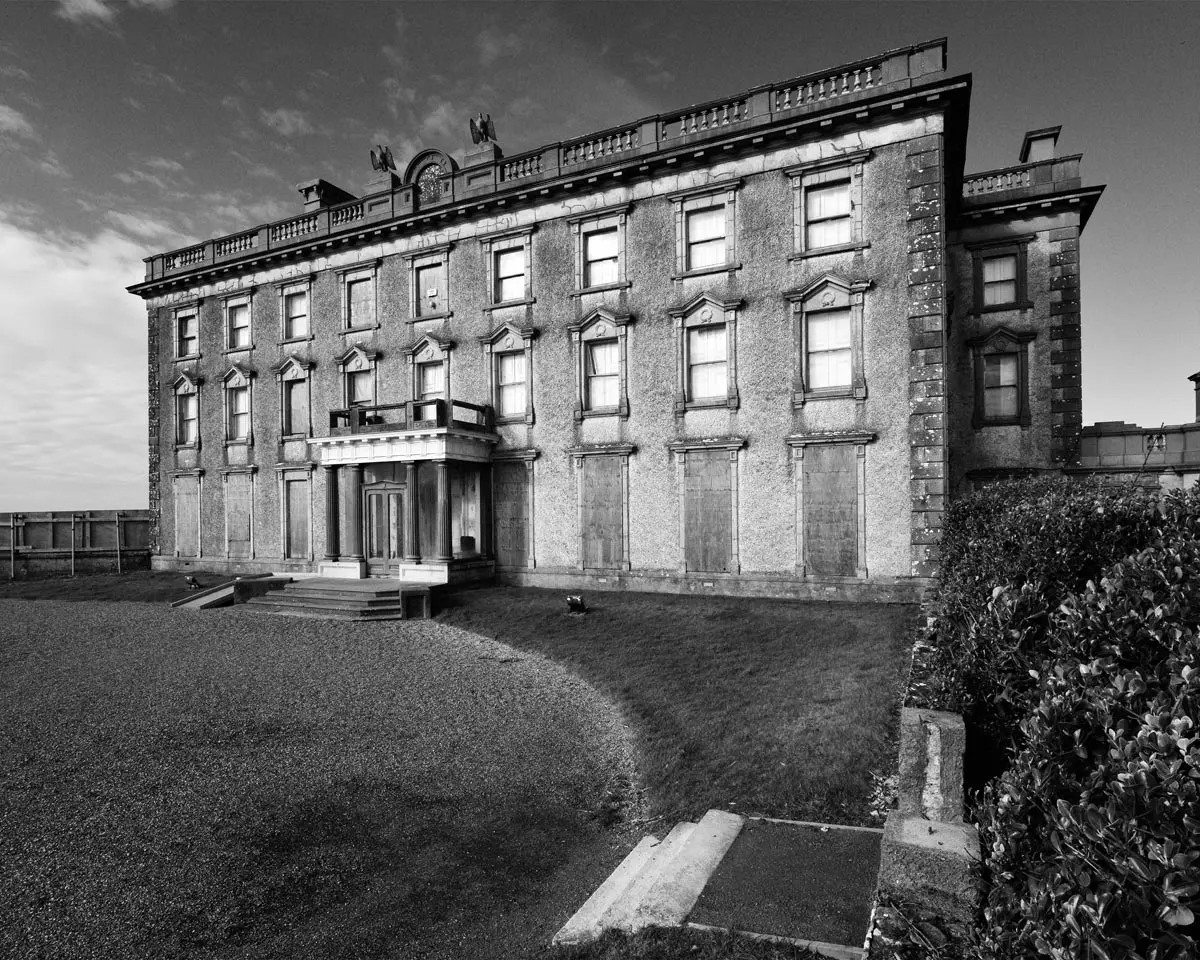
Hero photograph: Loftus Hall © Steve Meyler · From Loftus: The Hall of Dreams
The Extended Family Network
Genealogy revealed relationships architecture alone could not explain.
Among the wider kinship network was Philip Wharton, Duke of Wharton, the son of Lucy Loftus. A documented Freemason, he served as Grand Master of the Grand Lodge of England in 1722–23 and was later recognised by French Freemasons as their Grand Master. In 1728 he co-petitioned the Grand Lodge of England for a lodge in Madrid, subsequently established there, and he was also the founder of London's first Hellfire Club.
Wharton's place within the extended family makes Freemasonry part of its documented historical world, rather than an association inferred from the Hall's symbolism alone. Other members of the Loftus and Tottenham network can also be placed securely within Freemasonry. These connections allow genealogy, material culture and symbolism to be tested against one another—turning a decorative feature into a historically situated research question.
St Patrick's Cathedral · A Surviving Record
Two generations of the family entered the Most Illustrious Order of St Patrick.
Henry Loftus, First Earl of Ely, was appointed a Knight Founder on 11 March 1783. Charles Tottenham Loftus, also recorded as First Earl of Ely and later Marquess of Ely, was appointed on 12 December 1794. St Patrick's Cathedral served as the Order's chapel, and the surviving Roll preserves both names with their armorial shields in the same institutional record.
Photograph © Andreas F. Borchert · CC BY-SA 4.0 · Adapted by cropping · Source and licence
From Published Research to Institutional Story
A family history that reconnects house, Cathedral and heraldic memory.
The presence of Henry and Charles on the Roll gives the family story a surviving institutional anchor. The matching armorial shields beside their names confirm the continuity between two members of the Ely line. The trefoil slipped is an established charge within Loftus heraldry and was chosen for the embossed spine of Helena's Collector's Edition—carrying the family's visual identity from the archival record into the design of her published work.
The public case study establishes the documented relationship between family, house, Order and Cathedral. Together, the surviving Cathedral Roll, heraldry, family network, Loftus Hall material and published research offer a strong foundation for exhibition, digital interpretation or collaborative heritage storytelling. Helena's continuing interpretation of the wider institutional, Masonic and Templar material remains reserved for direct discussion with heritage partners and for a developed exhibition proposal.