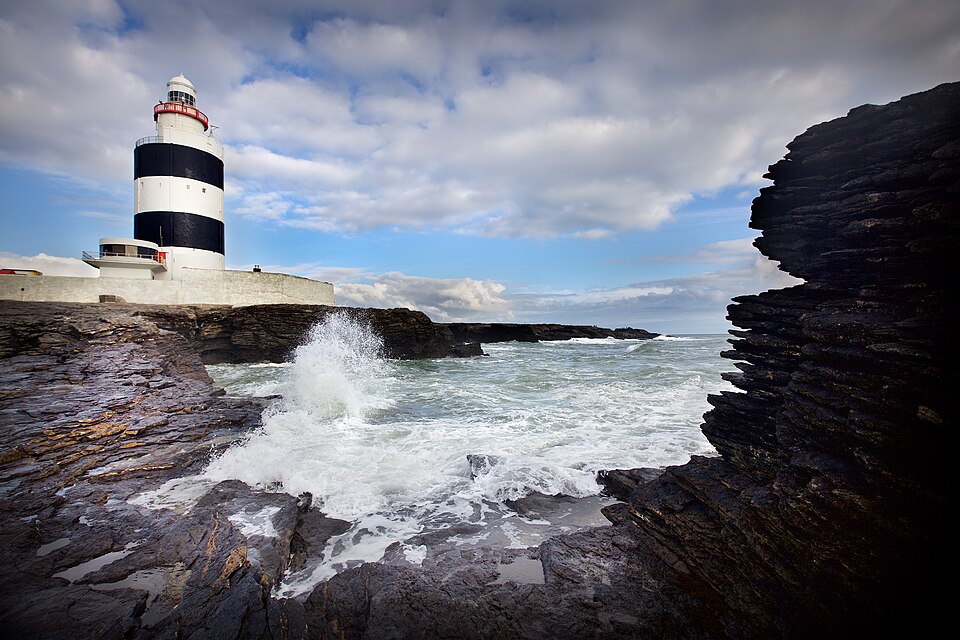
Hook Lighthouse · Photograph: Michael J. Foley / Wikimedia Commons · CC BY-SA 4.0
Templar Ireland · Research Atlas
Templar Ireland
Ireland's Templar history has been overlooked for centuries. What survives is not a footnote, but a network written into land, ports, stone and memory.
Helena B. Scott · Templar Ireland Research
Ireland's Templar history has long been overshadowed by the better-known histories of the Order in the Holy Land and continental Europe, yet its scale and significance are substantial. Helena's research builds on established scholarship while deliberately turning toward some of the Order's most overlooked dimensions. Her work asks where the Templars were, how their preceptories functioned, and what they were doing here, how their Irish estates sustained the wider Order, what Ireland's position at the western edge of Latin Christendom may have made possible, and what the surviving evidence can reveal about Templar faith, belief, spirituality and religious culture. This historical-revisionist approach returns repeatedly to primary sources and archaeology, building the interpretation from the documentary and material record.
Her work brings together medieval administrative and ecclesiastical records, manuscript material, archaeology, landscape and place-name evidence, material culture and established scholarship on the military orders. Particular attention is given to areas often treated as secondary to institutional and military history: religious identity, devotional culture, symbolism, sacred landscape, relationships with other religious communities, and the beliefs expressed through the Order's own textual and material worlds. The research also reaches into Cistercian manuscript traditions and other primary material whose developing connections are being reserved for forthcoming publications.
Templar Ireland · Research at a Glance
14
Verified Templar preceptories
McCarthy’s mapped scholarly foundation for the Irish atlas
+2 proposed additions currently shown · Helena B. Scott · further sites under active reassessment
3
Archaeological features
Confirmed at Kilbarry after Helena’s field identification and reporting
1
National research atlas
A developing digital map of Templar Ireland within Terrae Templariae
1
Enhanced preceptory hub
Kilbarry as the first deep-dive model for site interpretation
Historical Context · Ireland & the Temple
Why Ireland matters
As Helena argues in her MA dissertation, the arrival of the Knights Templar in Ireland is best understood within the religious as well as political upheavals of the twelfth century. The Anglo-Norman intervention of 1169–71 unfolded as a territorial conquest within a wider culture of crusade, papal reform and Angevin expansion. The controversial bull Laudabiliter (1155), preserved in later sources and disputed in modern scholarship — including arguments over its authenticity and transmission through Gerald of Wales — belongs to that context of claims that the Irish Church required reform and that English intervention could be framed through papal authority. Helena's dissertation stresses that the larger political argument does not depend upon the bull alone: English and Angevin ambitions toward Ireland pre-dated the invasion and formed part of a wider expansionist strategy.
Helena argues that, in this context, the Anglo-Norman interventions of 1169–71 can be read as the first crusade against Christians within Christendom: a conquest of a Christian population justified through claims that the Irish Church remained too independent, insufficiently reformed and, in contemporary Latin-Christian polemic, too close to older “Celtic” or allegedly heterodox practices. On this interpretation, Ireland precedes the better-known crusade against the Cathars — the Albigensian Crusade (1209–29) — as an early model for directing crusading ideology inward against fellow Christians. A further connection followed the murder of Archbishop Thomas Becket in 1170. Henry II's subsequent settlement with the papacy included substantial crusading obligations, among them support for Knights Templar serving in the Holy Land. Helena's dissertation places the early grants to the Templars in south-east Ireland within this same political and penitential landscape. By the later twelfth century the Order held lands at Crook and Kilbarry in Waterford and Kilcloggan in Wexford, embedding Templar estates within territories newly brought under Anglo-Norman lordship.
Reconsidering the chronology
The Irish Templar story does not begin in 1177 with Matthew “the Templar.” The individual recorded in the later 1170s is an important documentary marker, but Helena's research places him within a wider chronology of royal grants and Templar estates in the south-east belonging to the immediate aftermath of the Anglo-Norman intervention. The surviving charter evidence is itself subject to dating and attribution questions; the significance lies in the wider pattern rather than a single named witness.
This does not mean that a Templar army invaded Ireland as an organised force. Helena describes what followed instead as a “silent invasion”: a quieter embedding of the Temple through crusading families, patrons, royal and aristocratic land grants, estates and strategic landscapes in the wake of conquest. The dissertation traces this more complex network around the invasion and settlement. Figures associated with the Anglo-Norman advance had connections to the wider crusading world, while subsequent grants placed the Order at strategically important points in the south-east. Waterford and Wexford mattered not only as conquered territories but as maritime landscapes facing Britain, France and the routes beyond.
The Irish foundations themselves were working estates. Land, rents, agriculture, livestock, mills, horses, trade and access to ports formed part of the material infrastructure through which western properties supported the international Order. This economic dimension is central to Helena's research: the question is not only where the Templars were, but why they were established in particular landscapes, how their Irish estates functioned, and how people, resources and information moved through wider networks.
The suppression of the Temple in the early fourteenth century did not erase these landscapes — or the people who had inhabited them. Many, but not all, former Templar properties, churches and estates eventually passed into the hands of the Knights Hospitaller. The transfer was neither as simple nor as universally welcomed as a straightforward succession can imply. Some of the donors and families connected with lands that had been given to the Templars were not favourable to those properties passing into Hospitaller hands — part of a more complicated story of patronage, ownership, resistance and institutional memory that Helena also examines in her work. Nor did the Templars themselves simply vanish from Ireland when the Order was suppressed. What became of its people, networks, properties and memory after 1307–12 is one of the questions Helena's continuing research investigates. She follows these afterlives through documentary sources, archaeology, manuscripts, landscape evidence and public history, while reserving developing source connections and conclusions for forthcoming publication.
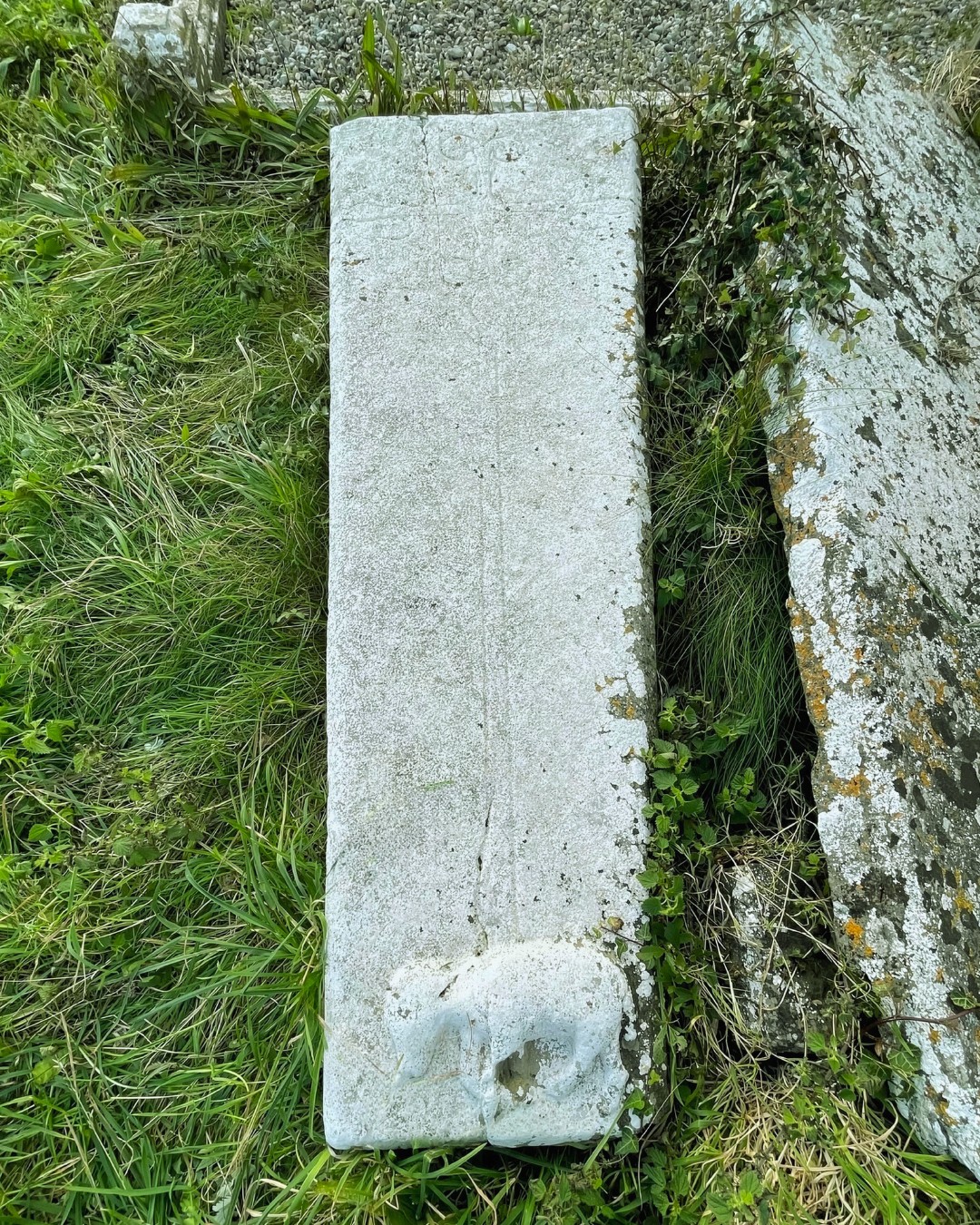
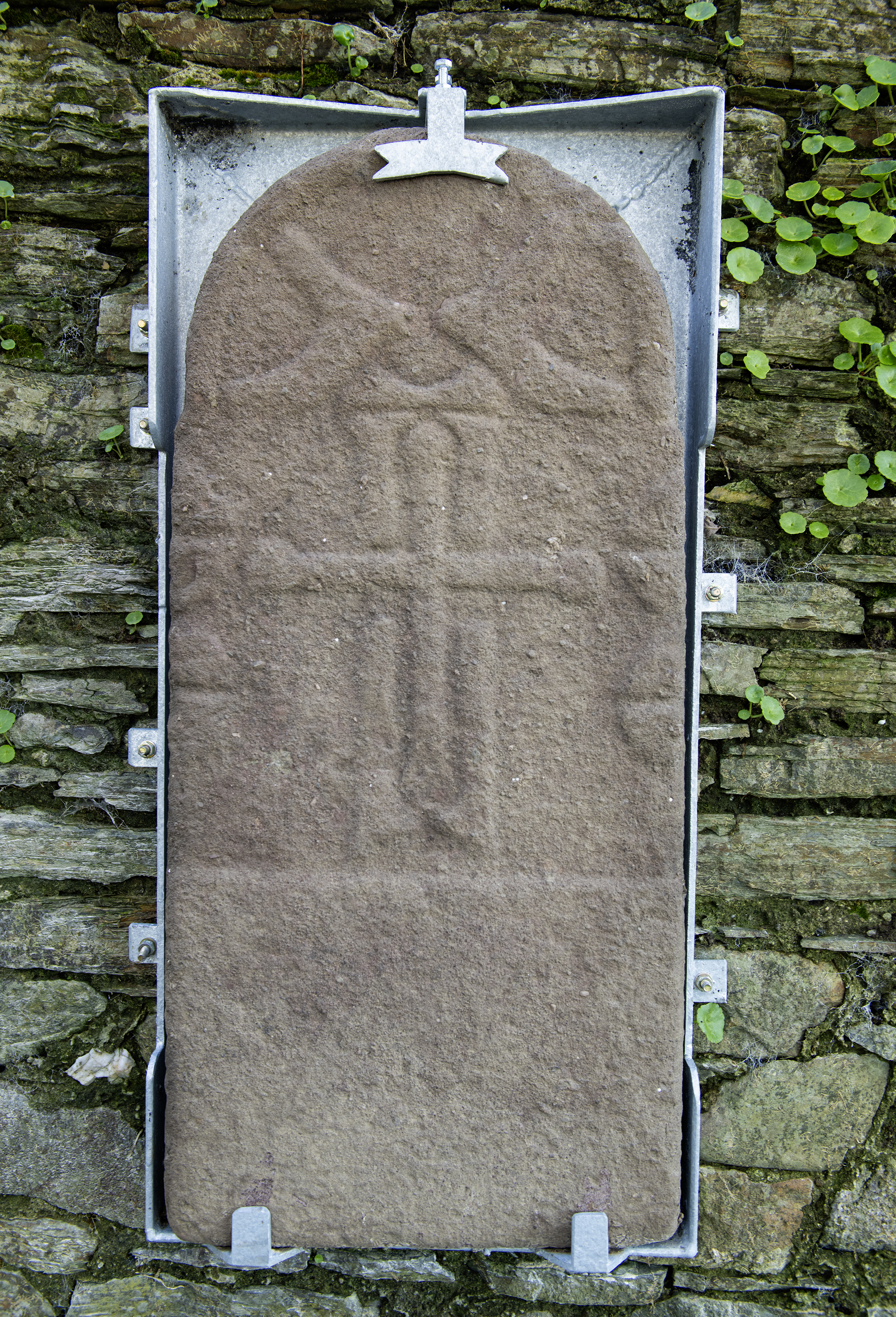
Templar-associated medieval graveslab · St Mary's, Templetown, Co. Wexford Cross with fleur-de-lys terminals and raised Agnus Dei. The slab is displaced from its original burial context; its present position should not be assumed to mark the grave it originally covered. Photography: Helena B. Scott · click to enlarge
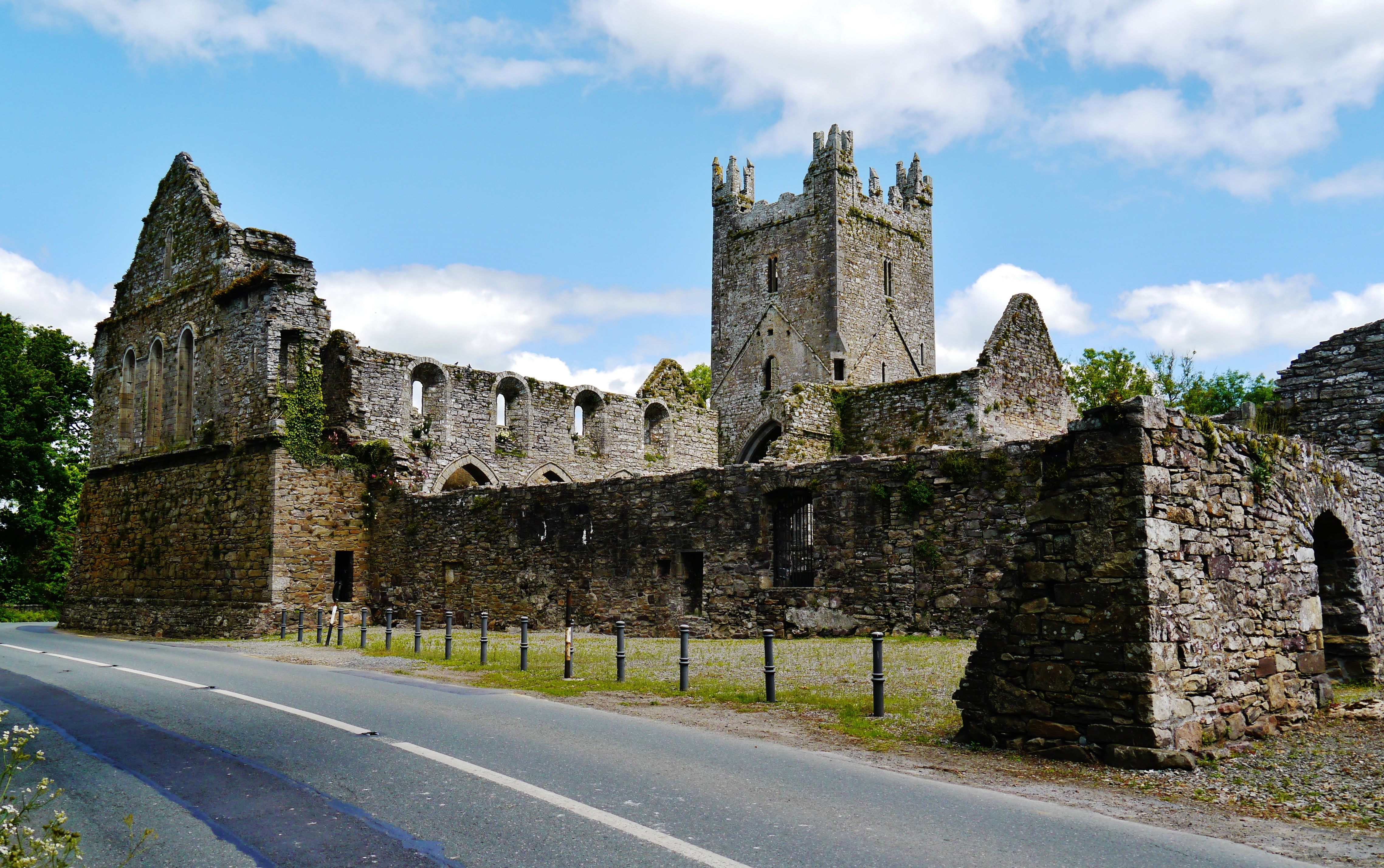
Hook Lighthouse · Hook Peninsula, Co. Wexford The medieval lighthouse was built under Templar William Marshal as part of the maritime landscape of the Hook and Waterford Harbour. Its modern black-and-white bands strikingly echo the colours associated with the Templar Beauséant, creating a compelling modern visual parallel within the harbour landscape.Photograph: Michael J. Foley / Wikimedia Commons · CC BY-SA 4.0 · click to enlarge
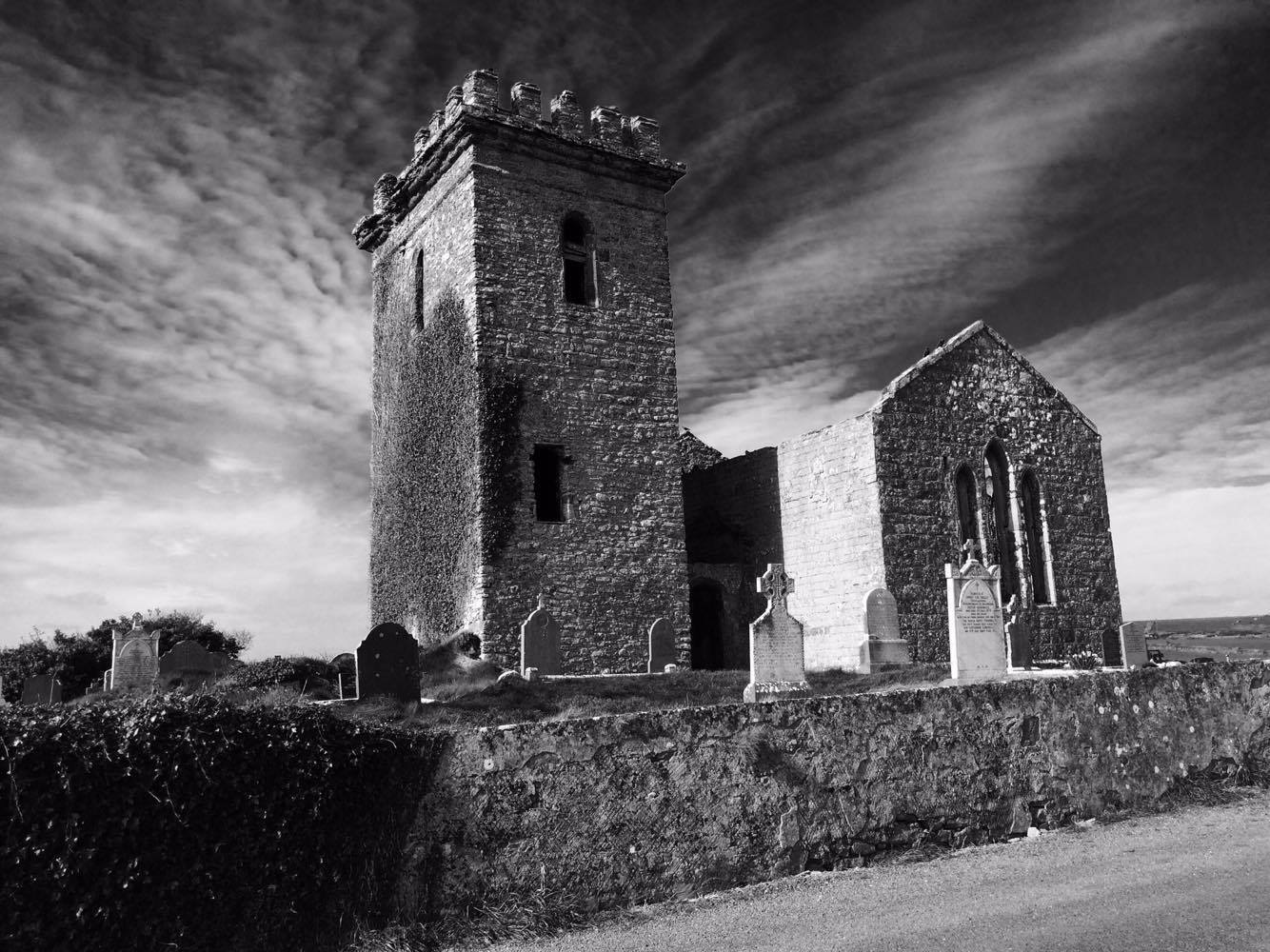
St Mary's, Templetown · Hook Peninsula, Co. Wexford A layered ecclesiastical site within the former Templar manor of Kilcloggan, preserving successive Templar, Hospitaller and later church histories within the same landscape. Photography: Helena B. Scott · click to enlarge
Study the Overlooked Templars · Research-Led Teaching
Beyond battles, castles and the end of the Order
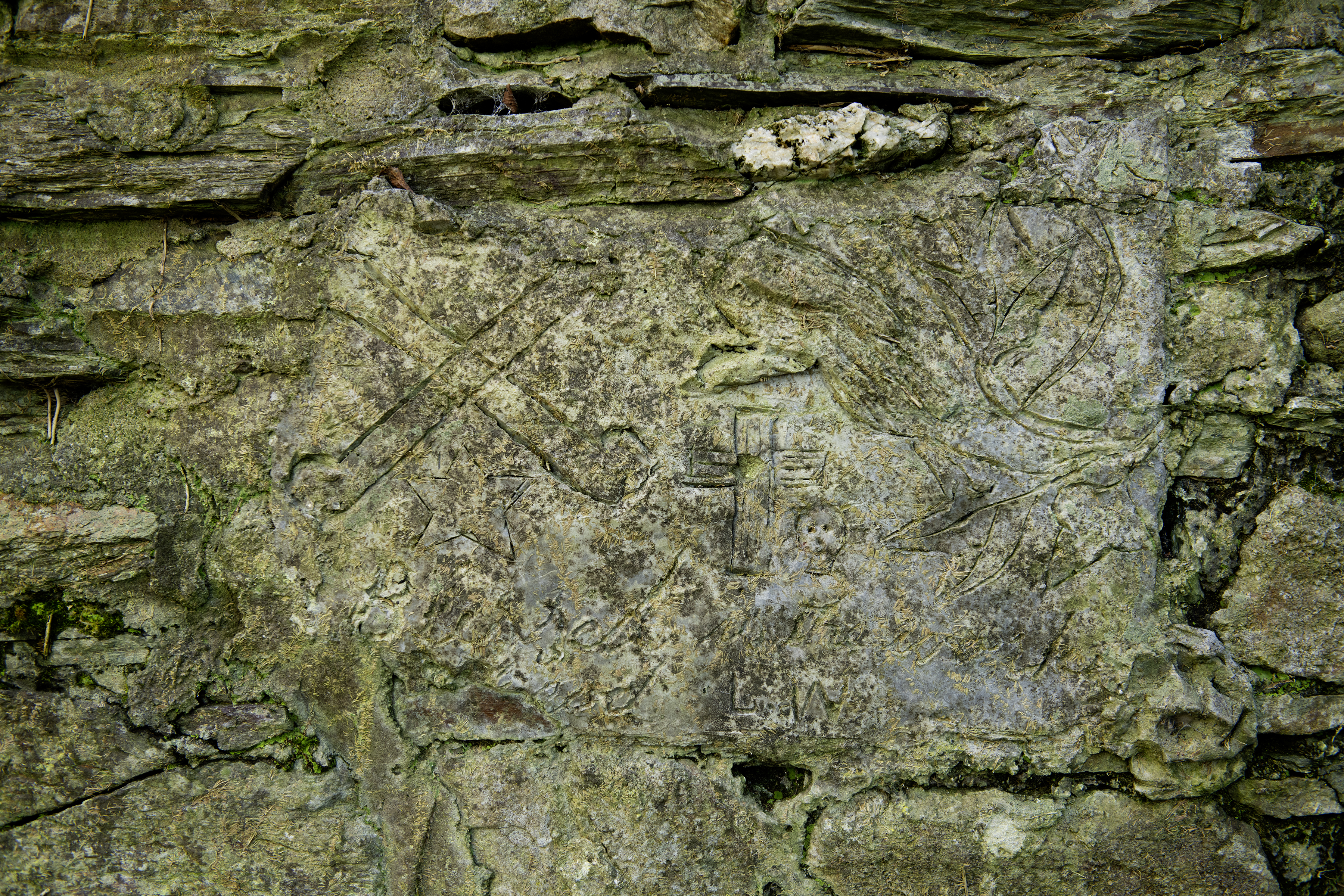
Helena teaches about the overlooked aspects of the Knights Templar: their faith and devotional culture, spirituality, symbolism and sacred imagery; the Sacred Feminine; primary texts and manuscripts; archaeology, material culture, carved stone, mason's marks and historic graffiti; sacred landscapes, estates, ports and movement; relationships with the Cistercians and other religious communities; and the long afterlife of Templar memory. These questions are approached through primary sources, archaeology, material culture and the wider documentary record.
The teaching grows directly from active original research. Helena works across documentary, archaeological and material evidence, returning wherever possible to primary sources and reading across the languages in which the medieval evidence survives, including Latin, medieval French and other European-language scholarship and sources. Her Templar research is international rather than confined to Ireland, allowing Irish evidence to be tested within the wider networks of the medieval Order.
Helena lectures internationally and teaches as a tutor and lecturer at the College of Psychic Studies, alongside independent lectures, specialist masterclasses and private programmes. Her work has also received recognition within contemporary Templar communities and orders. The developing Templar Academy brings these strands together as a dedicated environment for source-led study, original research and deeper exploration of the Order beyond the familiar narrative.
Cover photographs: Philip Devereux for Helena B. Scott · Helena B. Scott Research Archive
Original Research · Helena B. Scott
MA · Public History & Cultural Heritage University of Limerick · 2025
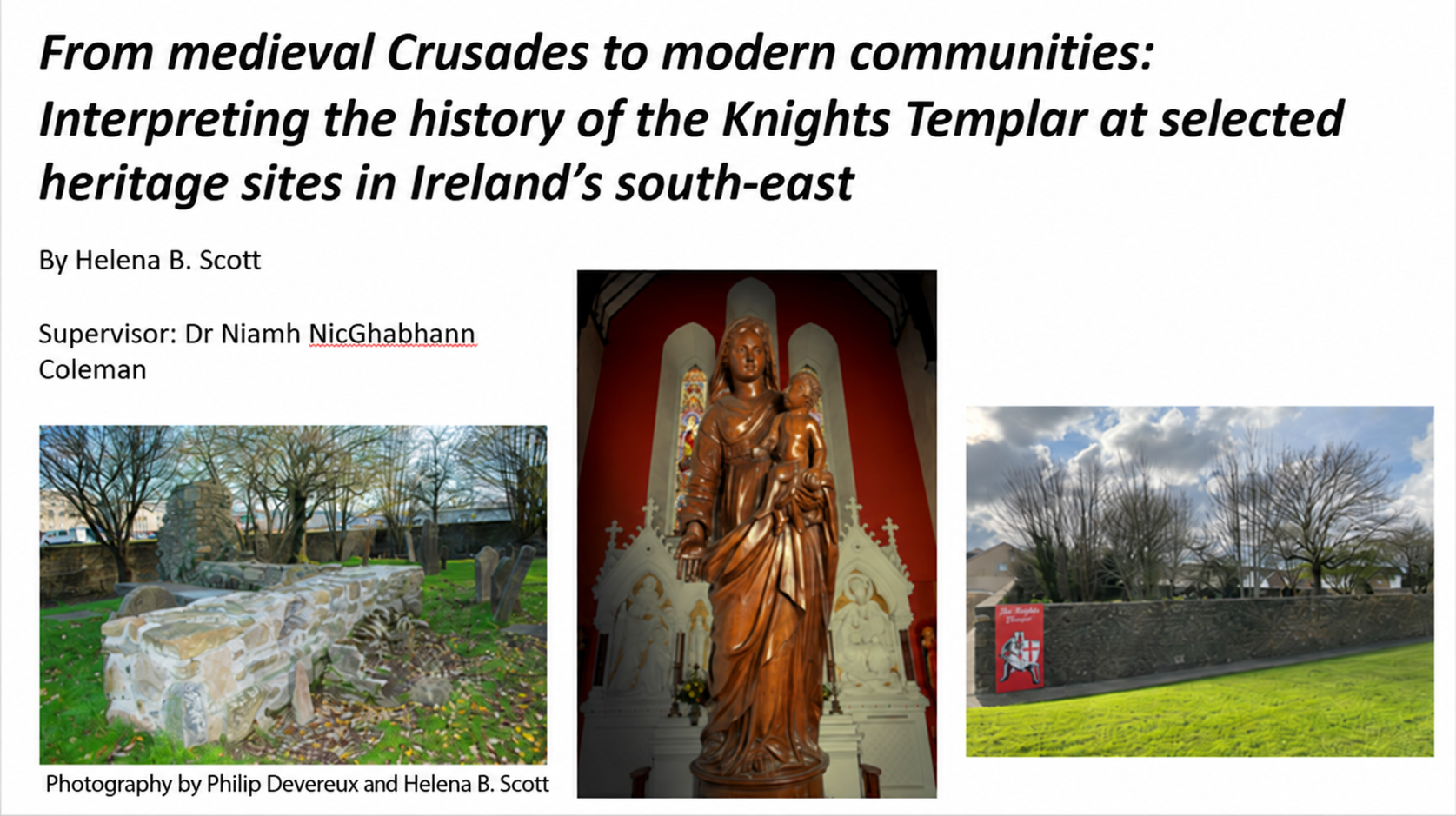
From medieval Crusades to modern communities
Helena's MA dissertation examined how public history can interpret, preserve and reconnect communities with the Knights Templar heritage of Ireland's south-east. Combining historical research, archaeology, sacred landscape and participatory public-history practice, it provided an academic foundation for the developing Templar Ireland and Terrae Templariae projects.
The dissertation draws on primary sources including the Latin and medieval French Templar Rules, Cistercian material and Bernard of Clairvaux, alongside archaeology, oral history, landscape evidence and established scholarship. Related unpublished research remains under restricted access while being prepared for publication.
Research into Record · Kilbarry · Co. Waterford · Ireland
Field research with a documented heritage outcome
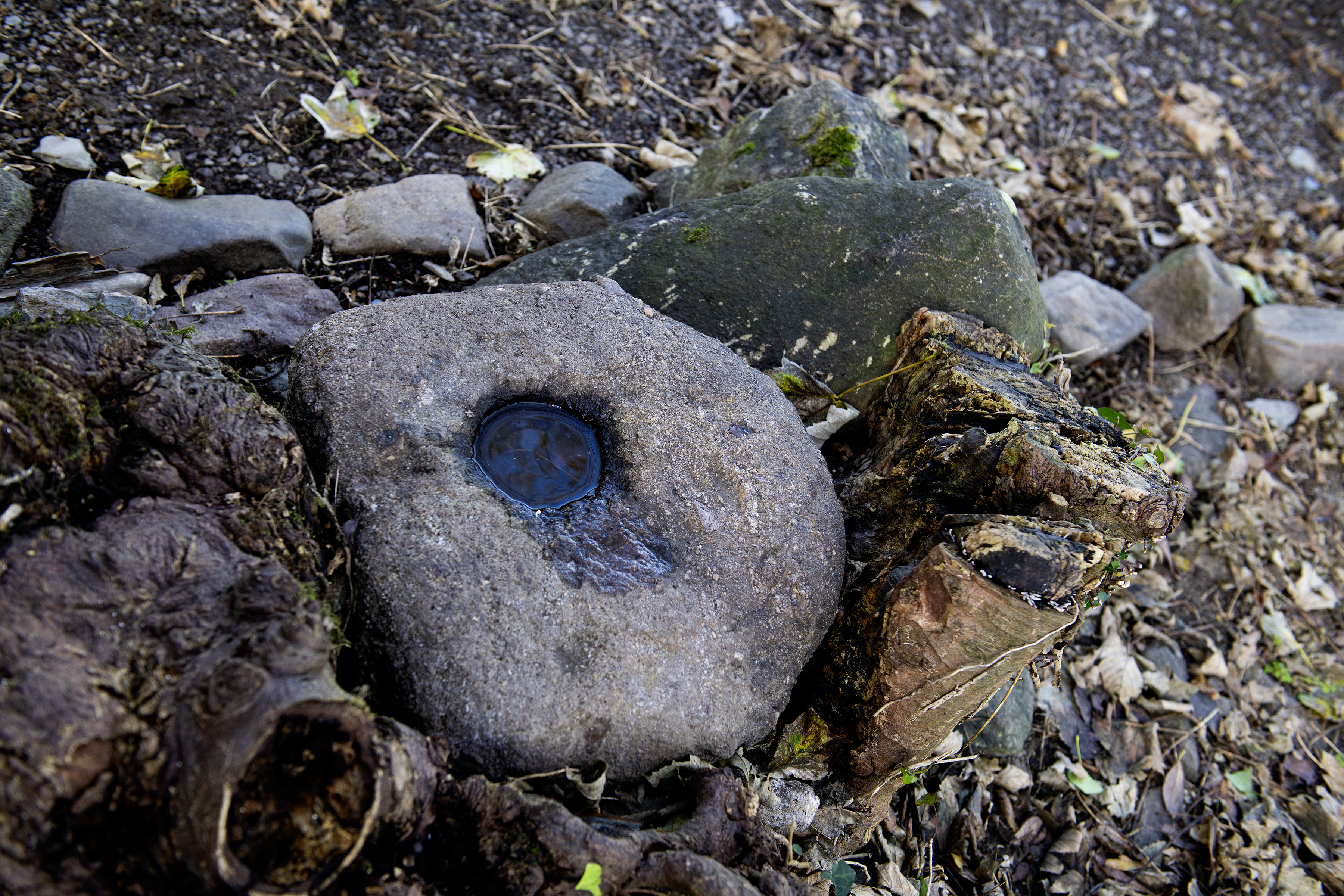
As part of her MA fieldwork at Kilbarry Knights Templar Graveyard, Helena identified and reported previously unrecorded archaeological material to Ireland's National Monuments Service. Three features were subsequently confirmed and entered into the national archaeological record with Helena recorded as identifier and reporter: a Norse cross-slab, a bullaun / spudstone and Masonic graffiti. Kilbarry now functions as the strongest proof-of-concept for the wider Templar Ireland project: research is translated into field recording, official heritage reporting, community memory, restoration, interpretation and visitor-facing digital heritage.
01Identify
02Record
03Report
04Interpret
05Engage
Archaeology · Community · Digital Heritage · Visitor Experience · Biodiversity
From Archive to Street · Public History in Practice · Waterford · 11 October 2025
Waterford Templar Historical Day · Research into Place
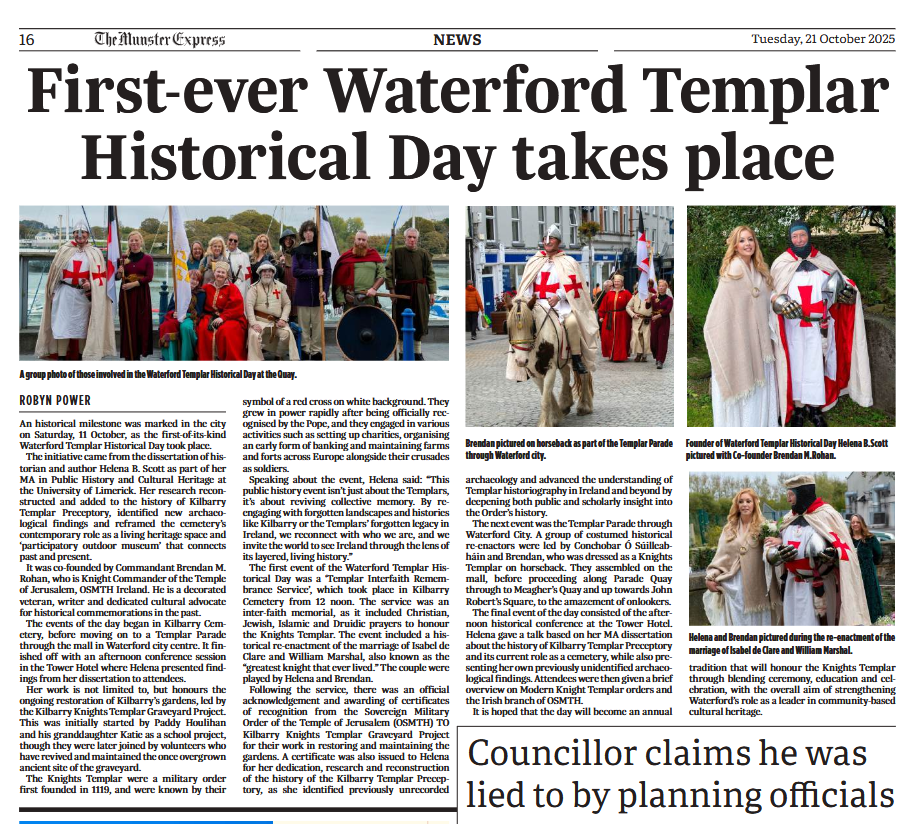
Conceived by Helena through her MA in Public History & Cultural Heritage and subsequently co-founded and delivered with Brendan M. Rohan and OSMTH Ireland, the inaugural Waterford Templar Historical Day became Ireland's first public-history initiative dedicated to the Knights Templar. It translated dissertation research into public heritage practice: remembrance, historical interpretation, re-enactment, community participation and a public conference rooted in the medieval landscape of Waterford and Kilbarry.
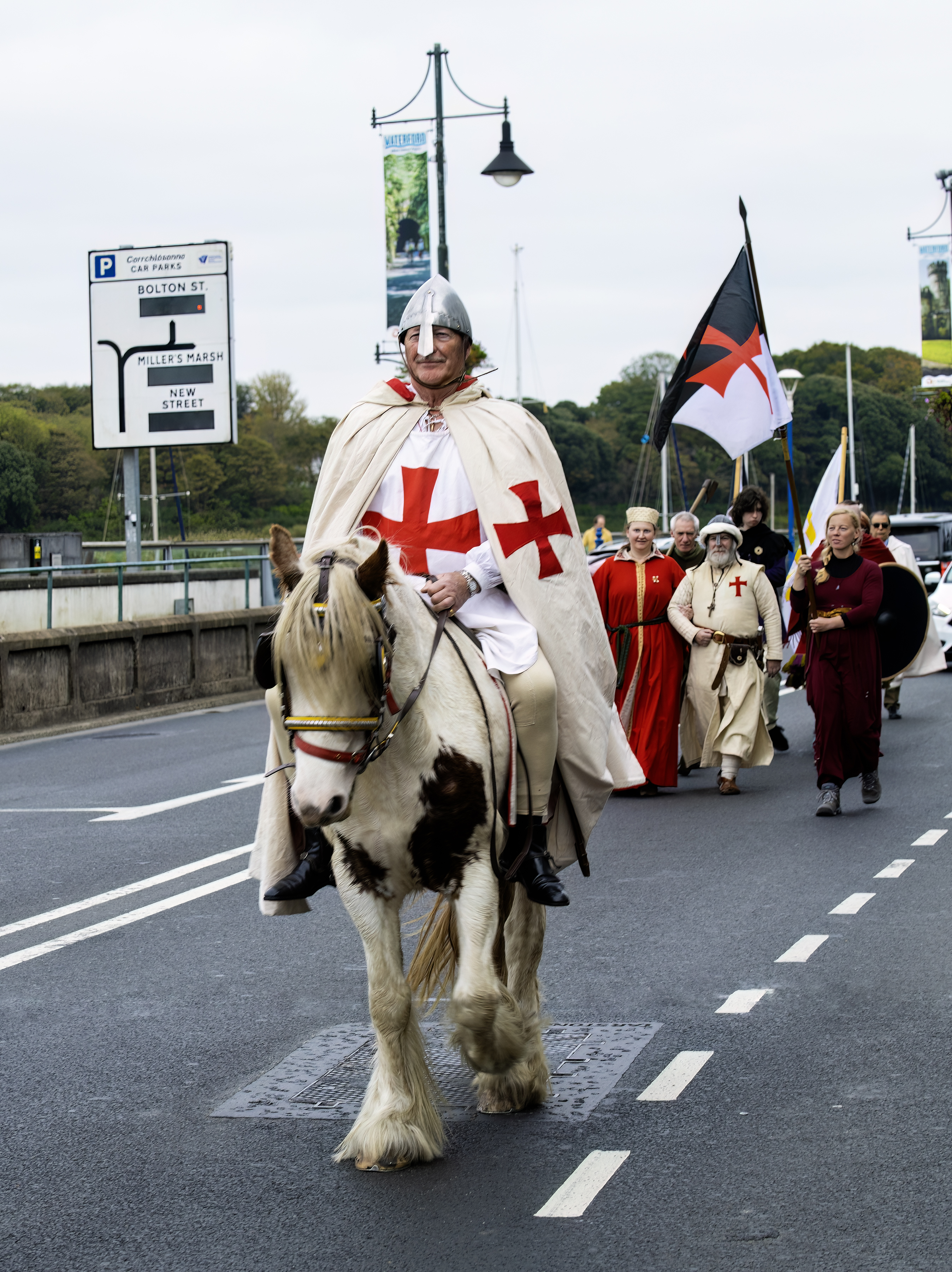
The initiative demonstrates a central principle of Helena's work: research belongs in archives and publications, and also in the communities and landscapes whose histories it interprets. At Kilbarry and in Waterford city, historical evidence was brought back into the community through an interfaith remembrance service, the William Marshal and Isabel de Clare wedding re-enactment, a costumed medieval parade with mounted Templars, and an evening history conference.
Research
Remembrance
Re-enactment
Community
Conference
The Munster Express · 21 October 2025 · click to enlarge
Founder · Helena B. Scott · Co-founder · Brendan M. Rohan · OSMTH Ireland
Brendan M. Rohan · mounted Templar parade · Waterford
The Templar Agenda · Kathleen Anne Ball, PhD · Forthcoming October 2026
Book Contribution · Chapter 19
The Templar Agenda
Author: Kathleen Anne Ball, PhD · Contributing Author: Helena B. Scott, MA
“Templar Ireland” — Helena B. Scott
Helena contributes Chapter 19, “Templar Ireland”, to Kathleen Anne Ball's forthcoming volume. The chapter distils Helena's sustained research into the Knights Templar in Ireland, developed through public history, her MA in Public History & Cultural Heritage, ongoing primary-source research and original fieldwork.
It is a concise published overview of Helena's larger book-in-progress, Templar Ireland; the fuller developing site, network and source research remains reserved for Helena's own publication and digital atlas.
Helena is developing a major book on the Knights Templar in Ireland, bringing together more than a decade of fieldwork with archival research, archaeology, material culture, landscape history and spatial analysis. The project reassesses the scale and character of the Order's Irish presence: its preceptories and estates, maritime and economic networks, relationships with other religious communities, and what became of its people and properties after suppression.
The research currently includes an updated working corpus of Templar sites; investigation of harbours, ports and routes; the Order's economic and administrative life; Templar–Cistercian relationships; material and symbolic evidence; and the unresolved question of personnel and movement after 1308. The website offers the questions and verified public evidence — not the unpublished conclusions.
Public Research Map · 14-Site Scholarly Foundation
The public starting point is the 14-site framework mapped by Ian McCarthy for the Discovery Programme and reproduced in Soldiers of Christ: The Knights Hospitaller and the Knights Templar in Medieval Ireland ↗. Helena credits that work as an important foundation for her own research. The wider atlas concept was developed as part of her MA dissertation research and has since evolved into Terrae Templariae, a developing digital research atlas. Helena's working research extends beyond the fourteen-site Irish foundation and is beginning to map Templar landscapes in Scotland, with Wales and England planned as subsequent research layers. Additional Irish identifications and the developing corpus are being reserved for her forthcoming book, Templar Ireland, and the Terrae Templariae digital research atlas.
Research in progress. The map is a working visualisation rather than a finished gazetteer. Geographic positions are being refined as the atlas develops, sites are reviewed against documentary, archaeological and heritage evidence, and not all current research locations are publicly displayed.
14 mapped Templar preceptories: Ian McCarthy · Discovery Programme · +2 proposed additions currently shown: Helena B. Scott · further sites under active reassessment · Rincrew and Baldungan remain off-map pending fuller reassessment
Ireland was not peripheral to the Temple. It was part of the system that sustained it.
Helena B. Scott
Templar Ireland · Research Corpus
The Templar Landscape of Ireland
The research framework presented here begins with the fourteen Templar foundations mapped by Ian McCarthy and places them alongside two additional sites currently being reassessed through Helena B. Scott's ongoing research.
14
McCarthy mapped foundations
2
Sites under reassessment
16
Sites in the current research framework
KeyMcCarthy corpus · 14 mapped preceptoriesScott research additions · under reassessment(H) in McCarthy · transferred to the Hospitallers
The interactive map currently displays only McCarthy's fourteen-site corpus. The two research additions below remain off-map while their evidence is being reassessed.
01
McCarthy corpus
Kilbarry
Exhibition
Co. Waterford
(H) · Transferred to the Hospitallers
A major Templar foundation in the Waterford landscape and a central site within Helena's field research. Its surviving archaeology, carved stone and wider sacred landscape provide an unusually rich setting in which to investigate the medieval Templar presence.
A documented Templar landholding south of Dublin. Records associate the estate with a castle, cottages, approximately 160 acres and cultivated ground, providing a glimpse of the economic landscape surrounding a Templar property.
03
McCarthy corpus
Carlingford
Co. Louth
Part of the important concentration of Templar estates in north-east Ireland, closely connected with the Order's holdings around Cooley and Templetown and the wider ecclesiastical landscape of medieval Louth.
04
McCarthy corpus
Clonoulty
Co. Tipperary
(H) · Transferred to the Hospitallers
One of the Tipperary foundations within McCarthy's reconstruction of the Irish Templar network, reflecting the Order's broader landed presence across the medieval south and east.
05
McCarthy corpus
Clontarf
Co. Dublin
(H) · Transferred to the Hospitallers
The principal centre of the Knights Templar in medieval Ireland. Although little survives above ground today, Clontarf occupied a central administrative position within the Order's Irish estates.
06
McCarthy corpus
Crooke
Co. Waterford
(H) · Transferred to the Hospitallers
A securely identified Templar foundation on Waterford Harbour and part of the remarkable concentration of Templar sites in Ireland's south-east.
07
McCarthy corpus
Gowran
Co. Kilkenny
(H) · Transferred to the Hospitallers
Documentary evidence records Templar land and a church at Gowran. As late as 1710, a local property was remembered as “The Templars’ House,” preserving the Order's association with the landscape long after its suppression.
08
McCarthy corpus
Kilcloggan
Co. Wexford
(H) · Transferred to the Hospitallers
A Templar foundation within the south-eastern concentration of estates surrounding the Waterford estuary and its important medieval crossing landscape.
09
McCarthy corpus
Kilsaran
Co. Louth
(H) · Transferred to the Hospitallers
One of the principal Templar estates in Ireland, associated with a wider network of churches, lands and dependent properties. The Kilsaran estate subsequently passed to the Knights Hospitaller.
10
McCarthy corpus
Newcastle West
Co. Limerick
Associated in historical tradition with a Templar castle and nearby church, the site preserves one of the more striking western Irish traditions surrounding the Order.
11
McCarthy corpus
Rathbride
Co. Kildare
(H) · Transferred to the Hospitallers
Recorded as a Templar manor with associated lands and a religious house. The estate subsequently passed into Hospitaller possession following the suppression of the Temple.
12
McCarthy corpus
Rathronan
Co. Tipperary
(H) · Transferred to the Hospitallers
A substantial Templar manor and landed estate near Clonmel. Following the suppression of the Order, the property passed into Hospitaller control.
13
McCarthy corpus
Temple House / Emlaghfad
Co. Sligo
Associated with a Templar house or preceptory also recorded as Druimabradh and Teachemple. The property was later transferred to the Knights Hospitaller.
14
McCarthy corpus
Templetown / Cooley
Co. Louth
(H) · Transferred to the Hospitallers
A significant Templar manor within the Cooley landscape. Documentary material connects the estate with Matilda de Lacy and records Templar churches, tenements and lands before their later transfer to the Hospitallers.
Scott Research Additions
The corpus expands
Historical maps are not static. Rincrew and Baldungan are the first two additional preceptories currently being made public from Helena B. Scott's wider working corpus. Further sites remain under documentary, archaeological and landscape reassessment and are not yet publicly identified. They will be released only as the evidence and publication programme develop. The two entries below are therefore presented as research additions rather than confirmed additions to the public map.
15
Scott research addition
Rincrew
Co. Waterford
Contested attribution under reassessment
The traditional identification of Rincrew as a Templar preceptory has been challenged in modern archaeological scholarship. Earlier accounts, however, associate the site with Raymond le Gros and the Knights Templar and describe a complex incorporating a church, kitchen and refectory. Samuel Lewis also recorded substantial ruins at Rhincrew within the historic Molana–Templemichael landscape, closely associated with Raymond le Gros.
Helena B. Scott’s current research revisits Rincrew through documentary evidence, landscape context, surviving architecture and comparative analysis. A fuller reassessment is in preparation.
16
Scott research addition
Baldungan (Baldongan)
Co. Dublin / Fingal
Historical Templar site under reassessment
Baldungan has a long historical association with the Knights Templar. Samuel Lewis, drawing upon earlier antiquarian scholarship, records a commandery of the Knights Templar dedicated to the Blessed Virgin, while other historical accounts associate the Order with the lands and the establishment of a religious house there.
The extent to which the surviving architectural remains belong to the Templar phase requires further examination. Helena B. Scott’s current research is reassessing Baldungan’s documentary, architectural and landscape evidence within the wider network of Templar foundations in medieval Ireland.
Research Branches
01
Mapping the Forgotten Network
Beginning with Ian McCarthy’s 14-site Discovery Programme framework, Helena is reassessing Irish Templar houses, estates and associated sites through archival, archaeological, topographical and place-name evidence.
02
Ports, Harbours & Movement
How coastlines, estuaries, ferries and trading routes may reshape our understanding of the Order’s Irish geography and movement.
03
What the Templars Actually Did
Estates, agriculture, horses, trade, rents, religious life and administration — recovering the Temple as a working medieval institution.
04
People & Documentary Evidence
Brothers, tenants, patrons and communities: reconstructing people and relationships from the surviving record.
05
Templars & Cistercians
Landscape proximity, institutional relationships, Bernardine influence and shared religious culture — investigated without treating proximity alone as proof.
06
After 1308: Where Did Everybody Go?
What arrest, estate and personnel records can reveal about Irish brothers, properties, networks and movement after suppression.
07
Reading the Landscape Again
Fieldwork, archaeology and material culture at supposedly familiar sites — including Kilbarry, where Helena’s identifications entered the national archaeological record.
08
Public History & Community Heritage
Turning specialist research into public interpretation through exhibitions, historical days, digital resources and place-based heritage.
From Research to National Heritage
A connected Templar story for places, people and visitors
Templar Ireland is designed not only as a research project, but as a framework through which medieval evidence can support interpretation, education, destination development and public engagement. The value lies in connecting individual sites into a coherent national story while allowing each place to retain its own archaeological, documentary and community identity.
Heritage Interpretation
Research-led site narratives · exhibitions · interpretive text · digital resources
Connected Visitor Routes
Preceptories · ports · roads · sacred landscapes · regional and national itineraries
Museums & Public Programmes
Lectures · specialist events · temporary displays · research partnerships
Public lectures · seminars · adult learning · source-led teaching
Tourism & Destination Storytelling
Place-based narratives for local authorities, heritage bodies and cultural tourism
Original Research · Helena B. Scott
Developing Research · William Marshal · Ireland & the Temple
Templar William Marshal · Reconsidering a Templar Legacy
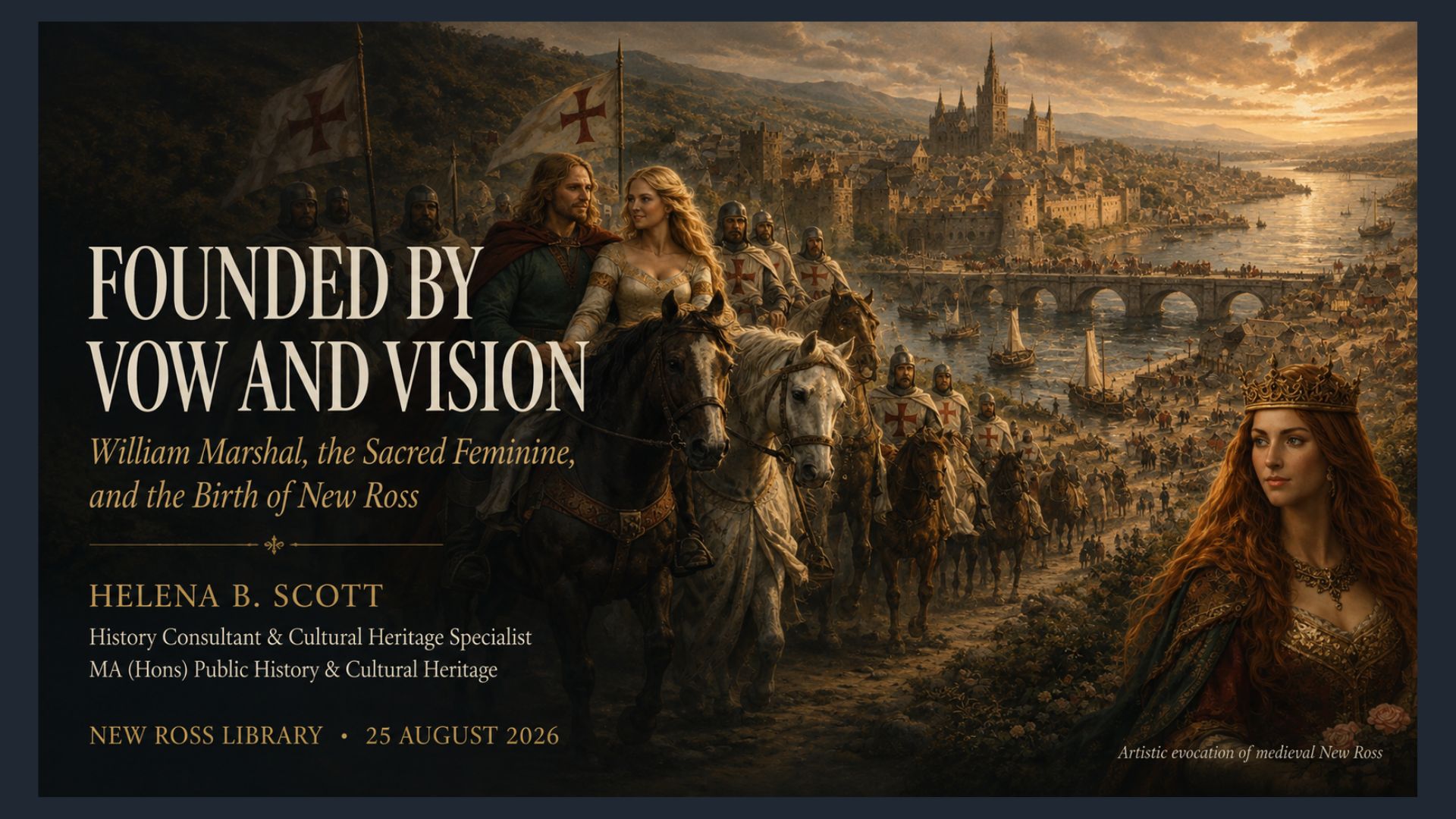
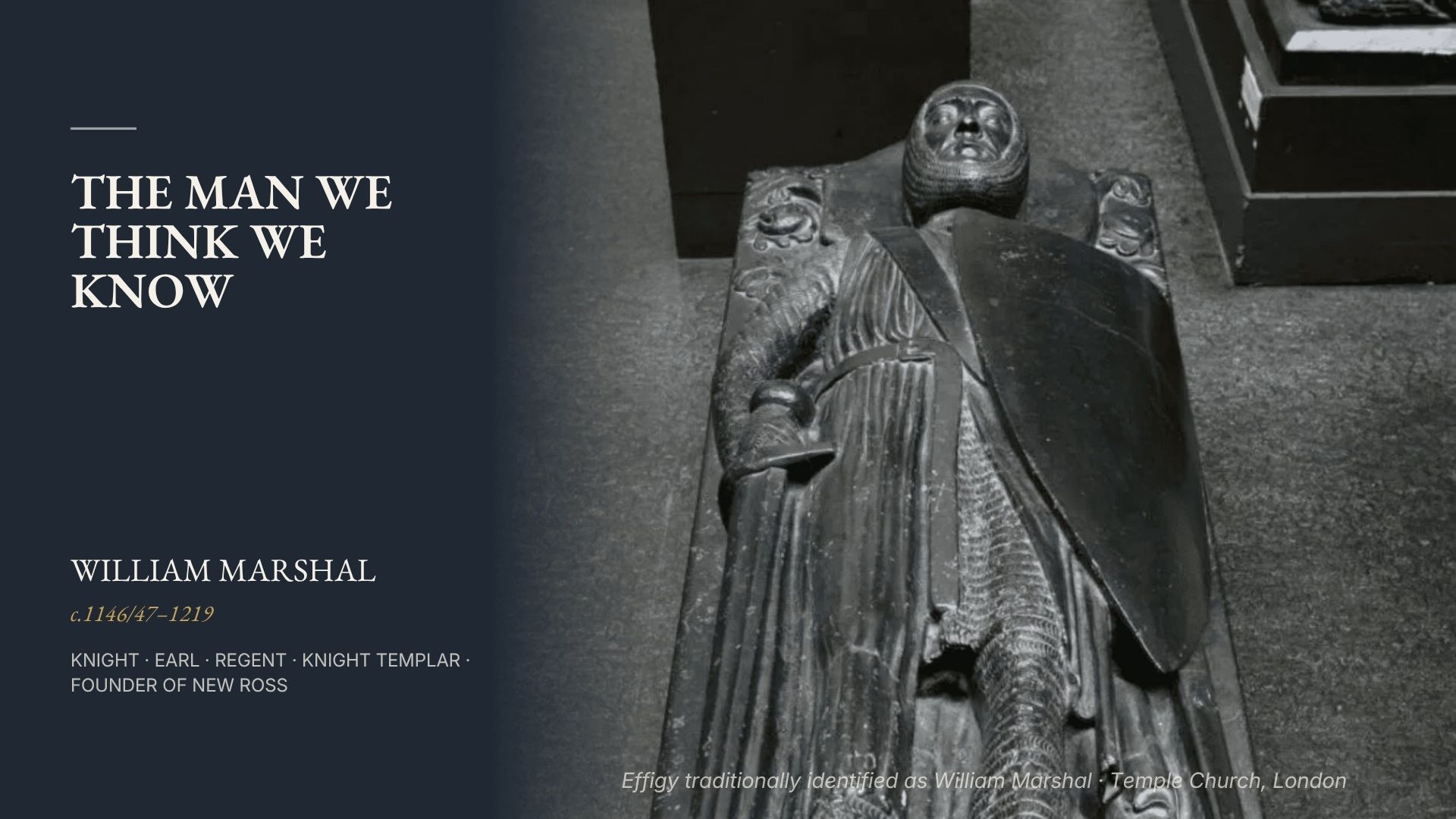
William Marshal occupies an important place in Helena's developing research into the crusading, religious and familial networks surrounding the Knights Templar in Ireland. Helena never found the familiar portrayal that Marshal became a Templar only on his deathbed convincing. Read against the pattern of his behaviour, patronage, associations and the relationships he maintained, the conventional account raised questions that led her to investigate the surviving evidence independently. She had undertaken that research before encountering historian Steve Tibble's published reassessment ↗. Her research led independently to the same broad conclusion: Marshal's relationship with the Temple was longer and more substantial than the conventional deathbed narrative suggests. Helena's findings therefore support Tibble's reassessment, while her continuing work contributes additional evidence and pursues the question particularly through Marshal's Irish, familial, religious and Cistercian networks.
The research also follows Marshal into the sacred landscape of south-east Ireland: his lordship of Leinster, New Ross and the foundation of Tintern Minor in County Wexford, where questions of patronage, devotion, Cistercian culture and the Sacred Feminine intersect with Helena's wider investigation of the medieval religious landscape. Helena presented part of this developing research in New Ross in Founded by Vow and Vision: William Marshal, the Sacred Feminine, and the Birth of New Ross. Further source investigation is being developed for future publication and for deeper study within the Templar Academy.
Founded by Vow and Vision · New Ross Library · 25 August 2026 · click to enlarge
The Man We Think We Know · William Marshal research · click to enlarge
Selected lecture material is shown here while the developing argument, additional evidence and source trail remain reserved for Helena's teaching and future publication.
Original Research · Helena B. Scott
MA Research · Religious, Familial & Landscape Networks
Templars & Cistercians in Medieval Ireland
The relationship between the Knights Templar and the Cistercians was far closer than is often conveyed in popular accounts. At the formative centre of both stood Bernard de Clairvaux, the Cistercian abbot who was family of the initial founding Templars. Bernard was related to Hugues de Payens, first Grand Master of the Knights Templar, with whom he co-wrote the Latin or Primitive Rule of the Order, and was also connected through the de Montbard family to André de Montbard, one of the founding Templars and later the Order's fifth Grand Master.
As Helena argues in her MA dissertation, these connections matter. The Cistercians and Templars developed within deeply interconnected medieval religious, familial and institutional worlds. They worked in concert, moved within interconnected familial and vocational networks, and shared important religious, economic and geographical contexts. In Ireland, Cistercian expansion during the twelfth and thirteenth centuries provided a cultural and monastic landscape within which the Templar presence developed.
The Irish evidence makes that relationship especially compelling. Helena's research identifies repeated geographical relationships between Cistercian foundations and Templar preceptories and asks what these landscapes may reveal about patronage, movement, settlement, resources, religious culture and sacred geography. The research investigates these spatial patterns alongside documentary evidence, patronage networks, movement, settlement, resources, religious culture and sacred geography.
Original Research Tool · Helena B. Scott
Existing Scholarship · Comparative Mapping
Mapping Cistercian Ireland
The University of Sheffield's Cistercians in Yorkshire project provides an important existing visualisation of Cistercian expansion across Britain and Ireland. Its map offers a valuable point of reference for exploring the remarkable spread of the Order in medieval Ireland, although the surviving Cistercian landscape extends beyond the foundations represented in that visualisation.
Helena is developing a new research-led interactive map of medieval Cistercian Ireland, designed to make this dispersed monastic landscape easier to find, explore and understand. A later comparative research layer will bring independently verified Knights Templar evidence into dialogue with the Cistercian landscape while preserving the distinction between geographical proximity and documented historical connection.
University of Sheffield · Digital Humanities Institute · Cistercians in Yorkshire
Institutional Research Opportunity · Saint Patrick's Cathedral
Dublin · 1310 · Suppression of the Temple
Saint Patrick's Cathedral · The Trial of the Templars in Ireland
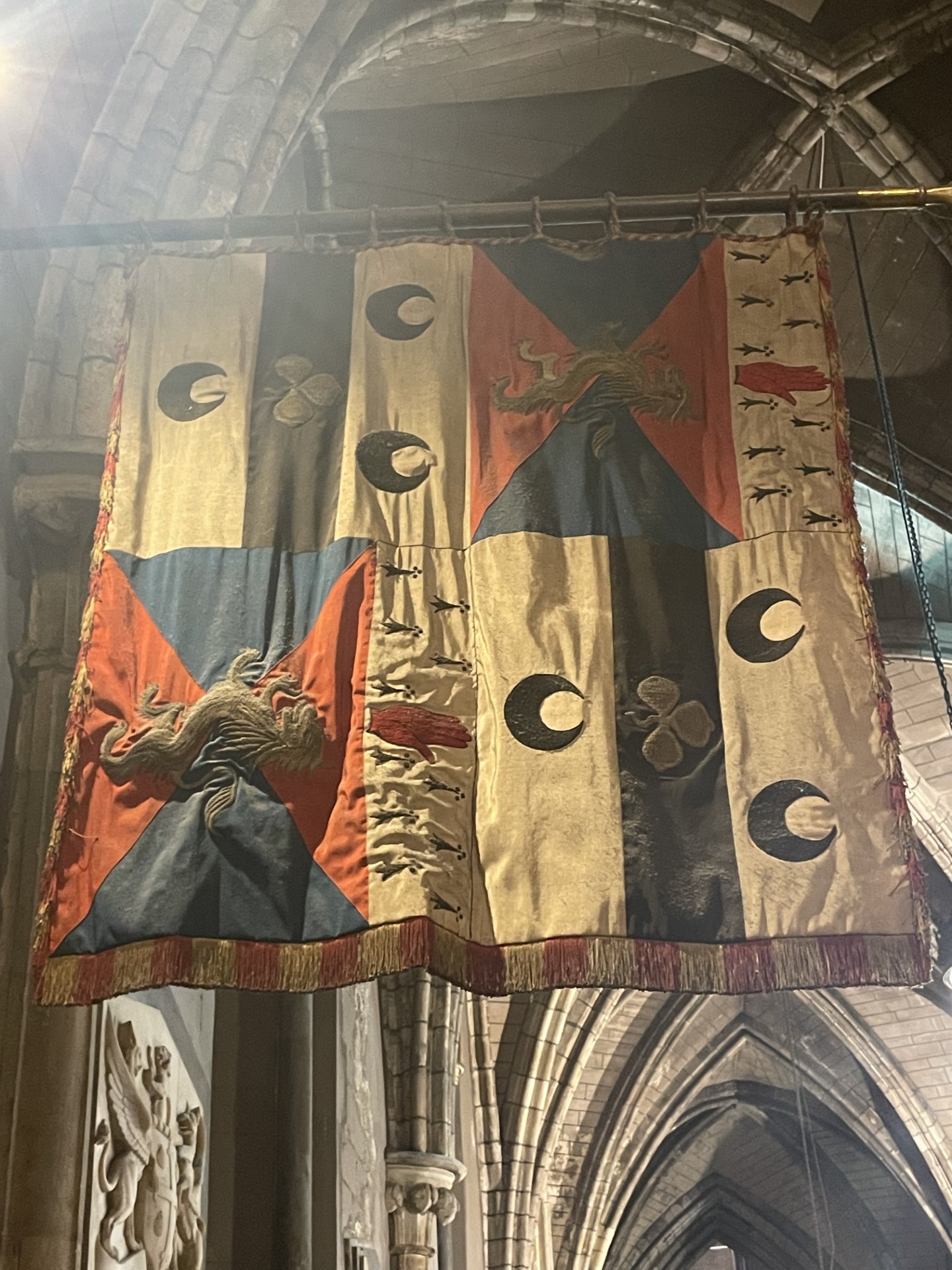
Heraldic memory · Saint Patrick's Cathedral, Dublin Photograph: Helena B. Scott · Research Archive
Saint Patrick's Cathedral, whose medieval form emerged from the Anglo-Norman transformation of Dublin's ecclesiastical landscape, occupies a singular place in the final history of the medieval Knights Templar in Ireland. Following the mass arrest of the Knights Templar in France on 13 October 1307, the suppression spread beyond the French kingdom. In Ireland, royal orders for the seizure of the Templars were issued in January 1308 and arrests followed on 3 February 1308.
Templars held in Ireland were imprisoned in Dublin Castle; the formal Irish proceedings did not begin until 1310, when members of the Order were interrogated at Saint Patrick's Cathedral as part of the inquiry against them. No torture is recorded as having been used in the Irish interrogations, and no deaths are recorded among the Irish Templars as a consequence of the 1308 arrests or the subsequent imprisonment and proceedings.
Templars held in Ireland were imprisoned in Dublin Castle; the formal Irish proceedings did not begin until 1310, when members of the Order were interrogated at Saint Patrick's Cathedral as part of the inquiry against them. No torture is recorded as having been used in the Irish interrogations, and no deaths are recorded among the Irish Templars as a consequence of the 1308 arrests or the subsequent imprisonment and proceedings. The contrast with France is striking. As historian Dr Helen J. Nicholson ↗ characterises the proceedings across the British Isles, there were no burnings and only three confessions following torture, in sharp contrast to France, where torture was used extensively to obtain confessions. Walter le Bacheler, former Grand Preceptor of Ireland, belongs to a different and earlier episode: he died after severe disciplinary imprisonment imposed by the Order itself at the London Temple, before the general arrests, and his death should not be counted as a consequence of the 1307–08 suppression.
The contrast with France is striking. As historian Dr Helen J. Nicholson ↗ characterises the proceedings across the British Isles, there were no burnings and only three confessions following torture, in sharp contrast to France, where torture was used extensively to obtain confessions. Walter le Bacheler, former Grand Preceptor of Ireland, belongs to a different and earlier episode: he died after severe disciplinary imprisonment imposed by the Order itself at the London Temple, before the general arrests, and his death should not be counted as a consequence of the 1307–08 suppression.
The surviving Irish testimony provides one of the most important documentary windows into the suppression of the Temple in medieval Ireland, while Helena's continuing research examines the differing experiences of arrest, imprisonment, interrogation and suppression across Ireland, Britain and continental Europe.
For Helena's wider research into Templar Ireland, Saint Patrick's therefore represents not a Templar foundation, but something equally significant: one of the principal surviving places in which the final chapter of the medieval Order in Ireland was enacted.
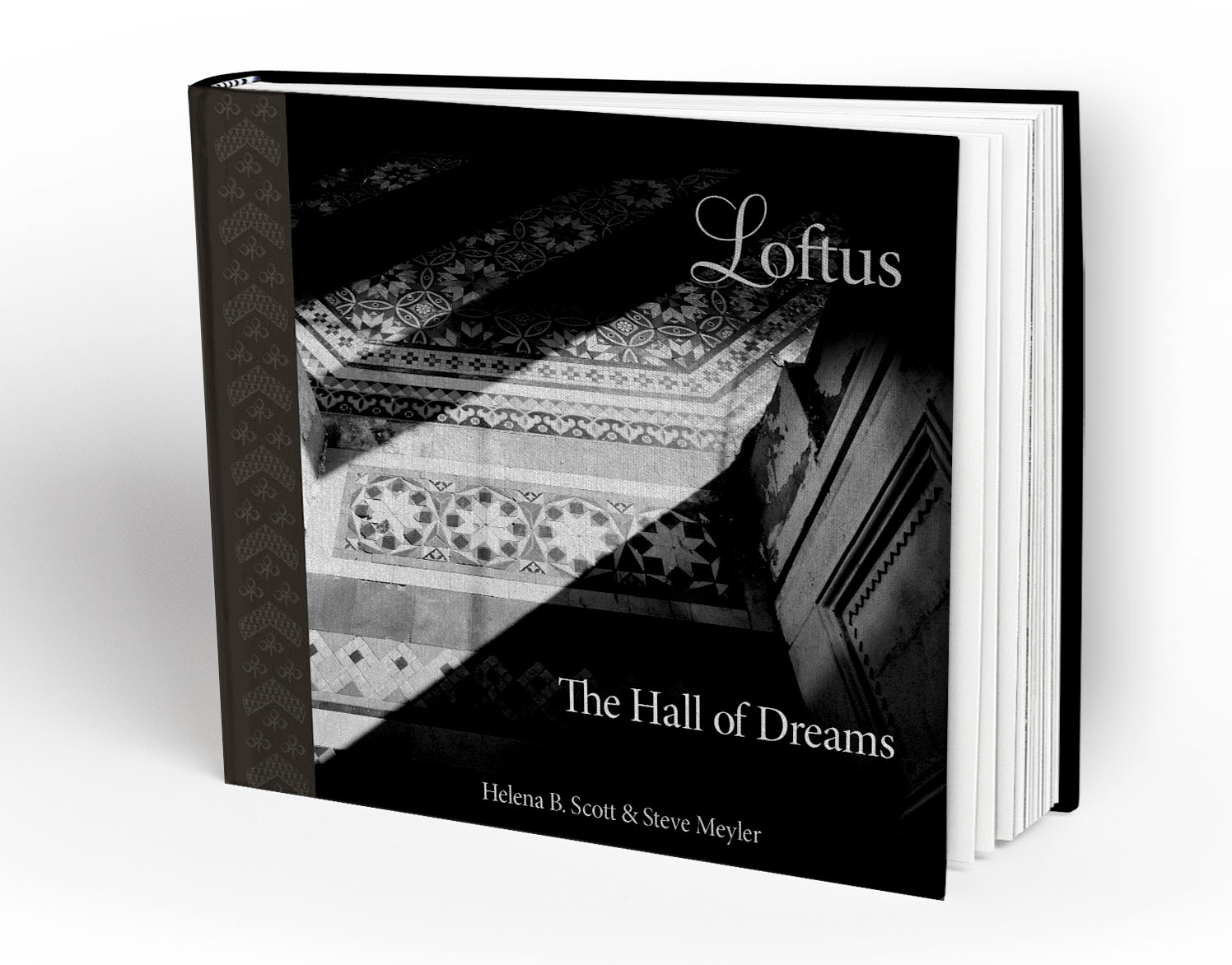
The Cathedral is also a point of convergence between two substantial strands of Helena's research. Her earlier work on Loftus: The Hall of Dreams followed the Loftus family through Ireland's political, ecclesiastical, material and esoteric history. Members of the Loftus family are among those interred within Saint Patrick's, while Helena's wider Loftus research also examines later family connections with Freemasonry and networks of association. Here, the medieval history of the Templars intersects with a longer research trajectory concerned with family, institution, memory, symbolism and the transmission of historical identities across generations.
Potential Institutional Formats
Research feature · specialist lecture · exhibition interpretation · digital storytelling · public programme
Developing research strand · selected public context only · further documentary and interpretive research reserved for publication and potential institutional collaboration
The landscape that first drew Helena deeply into the Irish Templar story was the Hook Peninsula. Her investigation of Loftus Hall — historically Redmond Hall — moved beyond the famous haunting to the families, medieval estates and sacred landscape beneath it.
The Redmond story reaches back into the Anglo-Norman settlement of the south-east and the world of Raymond le Gros; nearby Templetown and Kilcloggan preserve another part of the peninsula's Templar history. That research became an important early strand in Helena's continuing reassessment of how Templar people, patronage and places became embedded in Ireland.
No. 1 Amazon Bestseller · Featured in The Irish Times · Irish Independent · The Sunday Times
Bring Templar Ireland into your place, programme or institution
Helena works across research, public history, interpretation and teaching. Templar Ireland can support site-specific heritage work, public programmes, specialist lectures, digital interpretation, destination storytelling and collaborative research.
Museums & Heritage Sites
Research · interpretation · exhibitions · digital resources
Local Authorities & Tourism
Heritage trails · public programming · destination storytelling
Universities & Historical Societies
Lectures · seminars · specialist research · adult learning
Documentary & Publishing
Historical research · source analysis · specialist consultation
New research, forthcoming books, lectures, fieldwork, courses and occasional notes from Helena B. Scott.
By subscribing, you agree to receive occasional research news, publications, events and updates from Helena B. Scott by email. You can unsubscribe at any time. Privacy Policy.
Google Analytics helps understand how visitors find and use the site. If you decline, analytics cookies remain off and only limited cookieless measurement signals may be sent. It is not used for advertising here.