I · Language
Original-language reading
Translation · semantic nuance
Back to the Source
Helena B. Scott's research begins with a simple principle: wherever possible, return to the surviving evidence.
Working across languages allows her to move between manuscripts, documentary sources, historical editions, translations and modern scholarship without depending exclusively upon English-language interpretation. This matters because translation is itself an act of interpretation: words shift, meanings accumulate, and assumptions can enter the historical record through centuries of copying, editing and retelling.
What does the surviving evidence actually allow us to say?
The Method
A primary source is evidence, not transparent truth.
What Survives · What Disappears
This approach is central to Helena's research into the Knights Templar, Cistercians, medieval spirituality and the Sacred Feminine. Charters and cartularies, rules and customary texts, letters and sermons, liturgical and devotional works, administrative records and trial material were created for different purposes and preserve different kinds of evidence.
Later narratives about the medieval world have passed through centuries of selection, translation and interpretation. Returning to the documentary and manuscript record can expose details that have been minimised, mistranslated, overlooked or simply excluded from familiar accounts — including evidence concerning women, feminine devotion and aspects of medieval religious experience that complicate later assumptions.
Primary sources are not treated as transparent truth. Helena reads them critically: who produced this document, for whom, under what circumstances, in what language, and for what purpose? A charter recording a grant of land, a monastic customary, a devotional manuscript and testimony produced under interrogation do not speak with the same kind of authority and cannot be read in the same way. Their silences, formulae, transmission and institutional context are part of the evidence too.
And the primary source is not always a text. It may survive as an image, a carved mark, an object or archaeology in the landscape.
The Visual & Symbolic Record
Primary evidence is not confined to written documents. Images, symbols, carvings, monuments and architecture can also survive as historical witnesses. In 1982, German historians Rainer and Trudl Wohlfeil set out an early programme for Historische Bildkunde by treating the image as historical source material; Rainer Wohlfeil developed the methodological argument further in Das Bild als Geschichtsquelle (1986).
The principle is important within Helena's work. A carved symbol is not treated as decoration detached from history. Its material, location, date, repetition, maker or commissioner where recoverable, surrounding imagery and relationship to documentary and archaeological evidence can all form part of the historical record. Visual evidence, like written evidence, requires source criticism rather than free interpretation.
This is why Helena's source base extends from manuscripts, charters and archival records to seals, carved stones, mason's marks, historic graffiti, devotional imagery, monuments and architectural symbolism. A symbol cannot prove whatever we wish it to prove — but neither should evidence be excluded simply because it does not speak in words.
Some sources are written. Others have to be read in stone.
What the Sources Have Revealed
Women · Marriage · Love
Returning to the Rule and its manuscript tradition complicates familiar claims about universal Templar celibacy, marriage and the exclusion of women — including the extraordinary courtly love poem preserved in Walters MS W.132.
Explore the evidence →Document · Object · Landscape
Documentary research, fieldwork and material evidence meet at Kilbarry, where Helena’s investigation has contributed to the recognition and interpretation of previously unrecorded archaeological material.
View the Kilbarry research →Archive · Family · Place
Family papers, deeds, maps, estate records and material evidence allowed the history of Loftus Hall, its land and its people to be reconstructed beyond the familiar legend.
Explore the books →Primary Evidence in the Field · Kilbarry, Waterford
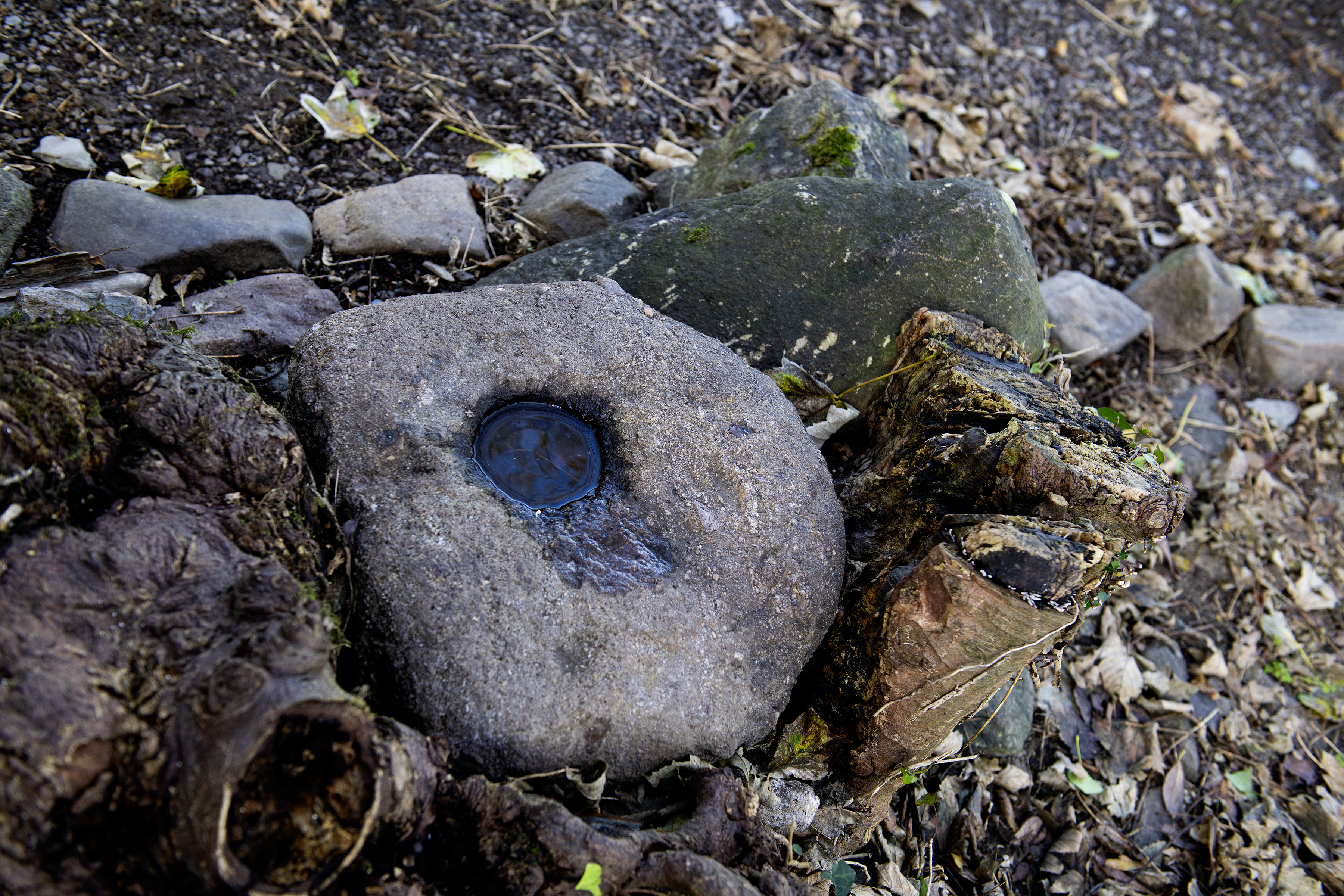
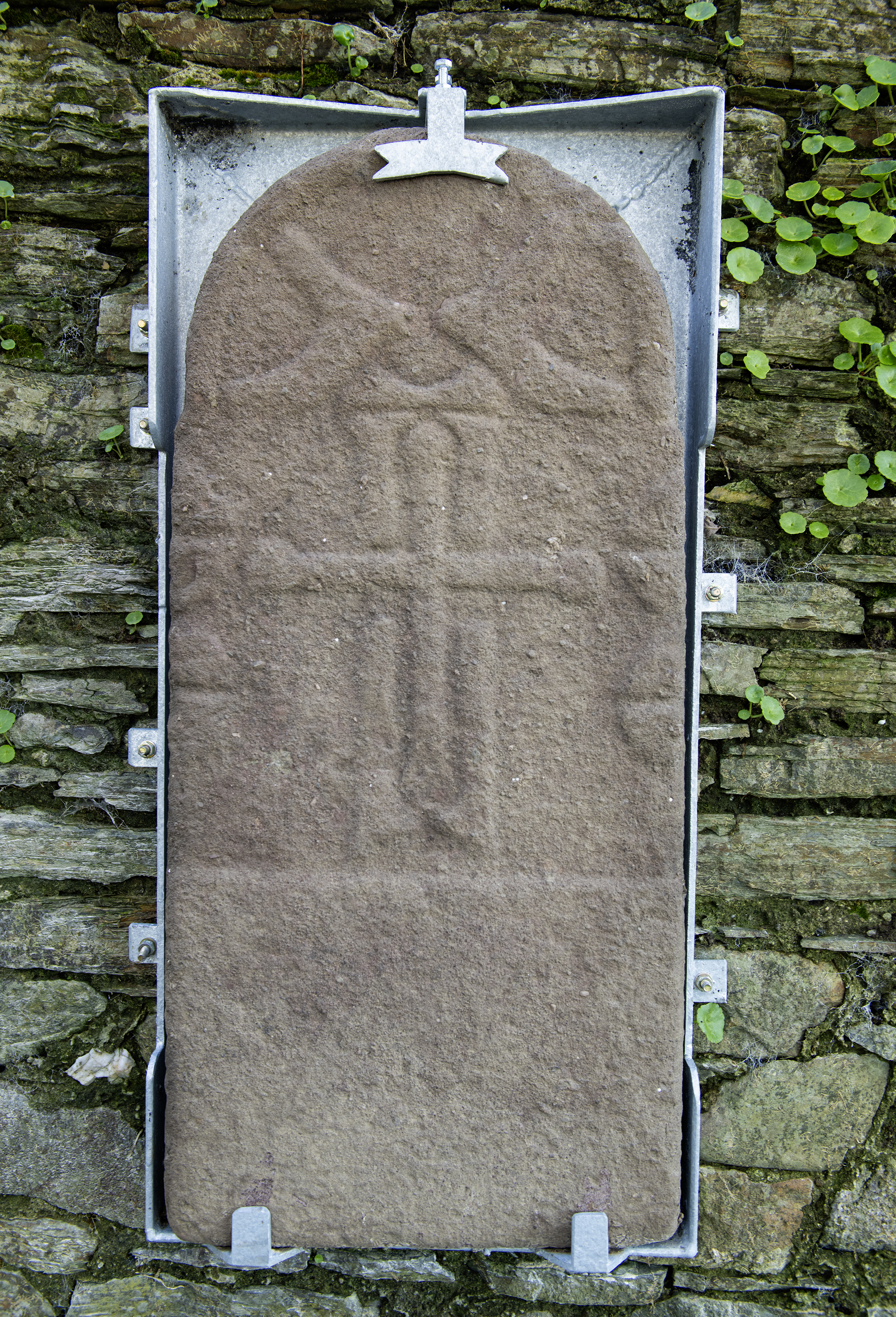
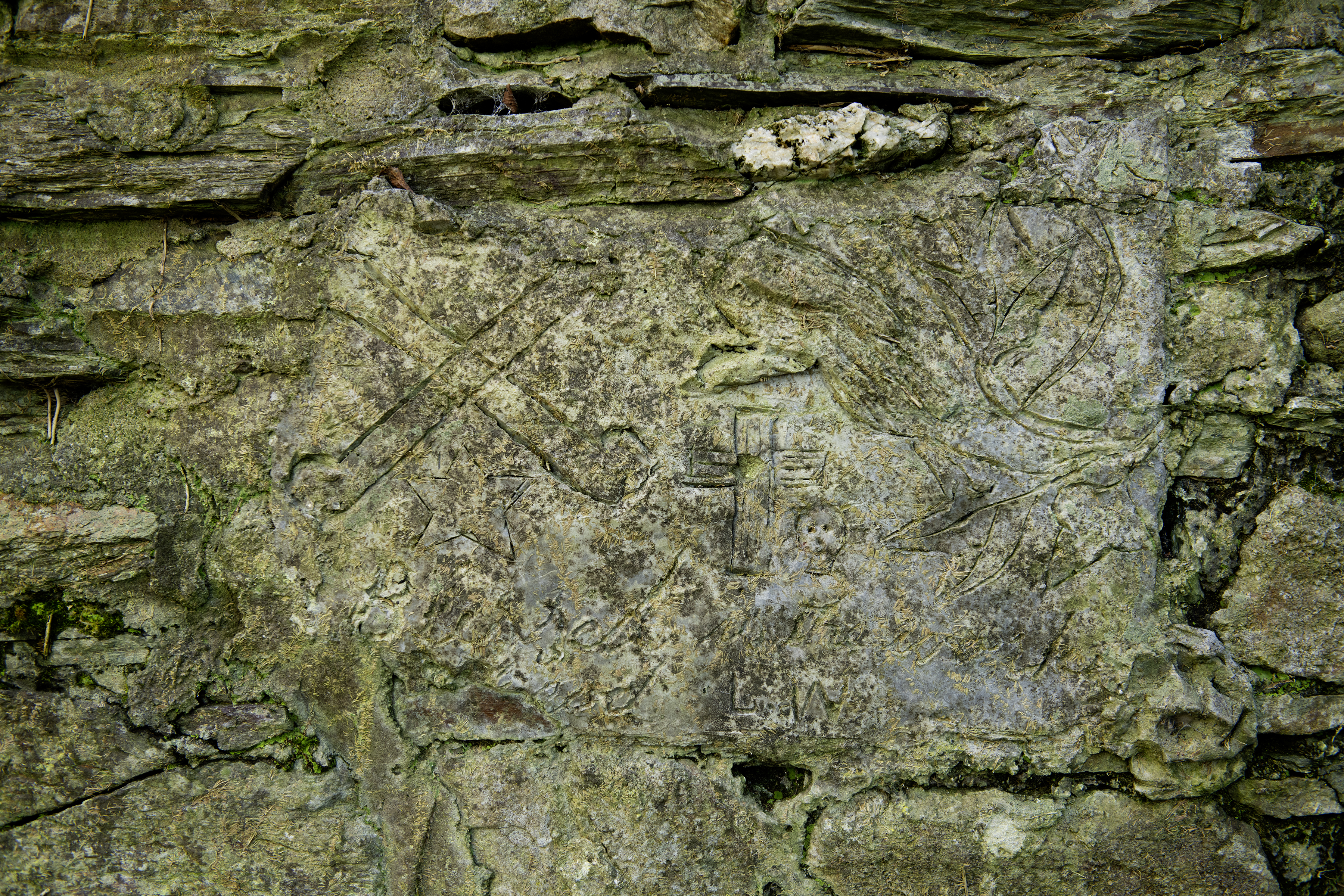
Helena's primary-source practice extends beyond manuscripts and archives into archaeological and material evidence in the field. During her postgraduate research at Kilbarry Knights Templar Graveyard, she identified previously unrecorded archaeological and historic material, documented it in context and formally reported it to Ireland's National Monuments Service.
WA017-003014
Bullaun / Spudstone
Bullaun / spudstone; possible later reuse as a spudstone
WA017-003013
Norse Cross-Slab
Red sandstone cross-carved graveslab; interpreted by Helena B. Scott as Norse and entered as a separate archaeological record
WA017-003002
Masonic Graffiti
Historic carved material incorporated into the existing Kilbarry graveyard record
From Identification to National Record
The National Monuments Service subsequently entered the red sandstone Norse cross-slab — Helena's interpretation of the stone — as WA017-003013 and the bullaun as WA017-003014, while the Masonic graffiti was incorporated into the existing Kilbarry graveyard record WA017-003002. Helena is recorded as identifier and reporter for the confirmed material.
For Helena, this is the same evidential principle applied in another medium: return to what survives, record it carefully, place it in context, and allow the evidence to change the question.
Explore the Kilbarry field research →National Monuments Service · Historic Environment Viewer ↗ · The confirmed record updates are awaiting publication in its next public data release.
The Material Trace
Where access permits, Helena also values encountering the physical source or material context rather than only its transcription or digital surrogate. Script, marginalia, erasure, annotation, seals, parchment, bindings, archival relationships and the material setting of an object can preserve information that disappears when a source is reduced to words on a page.
The value often lies not in a single document, but in bringing different classes of evidence into conversation while preserving the historical distinctions between them. Helena's work ranges from medieval Templar and Cistercian sources to later family papers, deeds, maps, surveys and estate records.
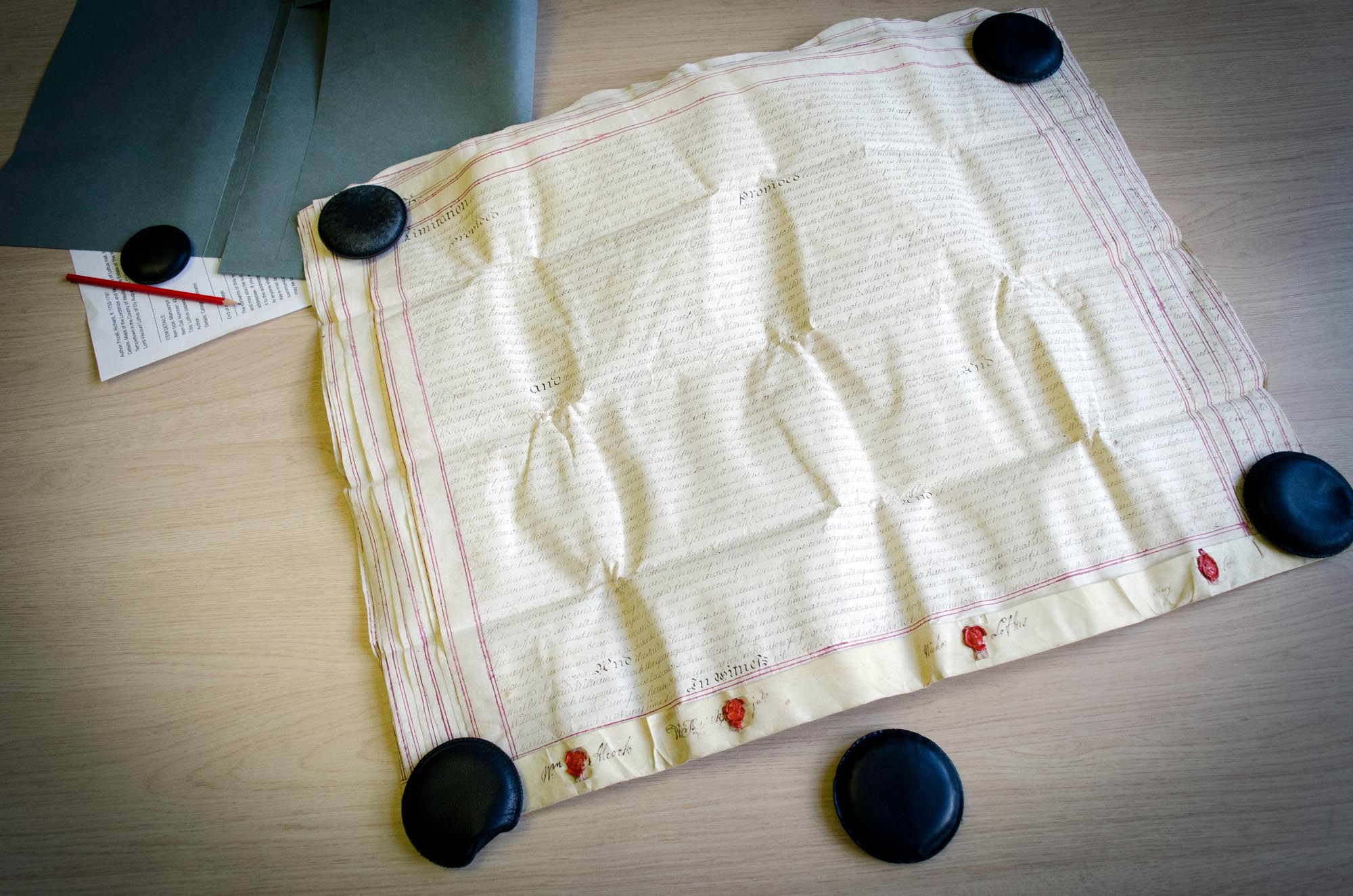
From the Archive
Original family papers · deeds · maps · estate records
Material consulted during research for Loftus: The Hall of Dreams helped reconstruct the history of the house, its land and the people connected with it beyond the familiar legend.
Photography © Steve Meyler · With thanks to the National Library of Ireland, Dublin
Secondary scholarship remains essential: it provides context, argument, comparison and generations of specialist knowledge. But whenever possible, Helena returns to the evidence beneath it.
Across Languages
Working across linguistic traditions makes it possible to compare texts, translations and scholarship that are too often encountered within separate modern-language silos. Helena's research works across Latin and European linguistic traditions, including medieval and historical forms where the source demands them, returning whenever possible to the wording and textual context of the surviving record.
From Archive to Public Knowledge
Helena's work is concerned not only with locating and interpreting sources, but with returning them to public view through research, publication, lectures, digital resources and heritage interpretation.
Because sometimes history changes when we read what was actually there.
Analytics Preferences
Help improve the Helena B. Scott website
Google Analytics helps understand how visitors find and use the site. If you decline, analytics cookies remain off and only limited cookieless measurement signals may be sent. It is not used for advertising here.