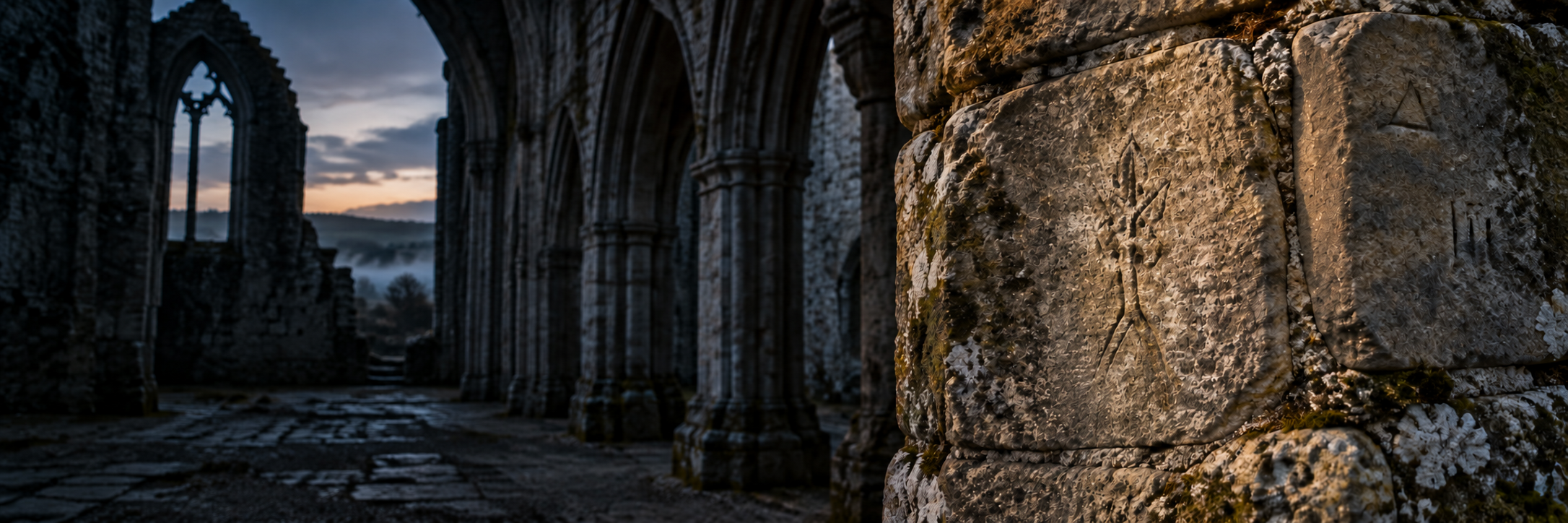
01 / 06 · FIELD GUIDE
Mason’s Marks
Marks associated with the making and construction of buildings. Their function is not always recoverable and interpretation depends upon repetition, technique, architectural context and chronology.
A First Look · Why This Work Matters
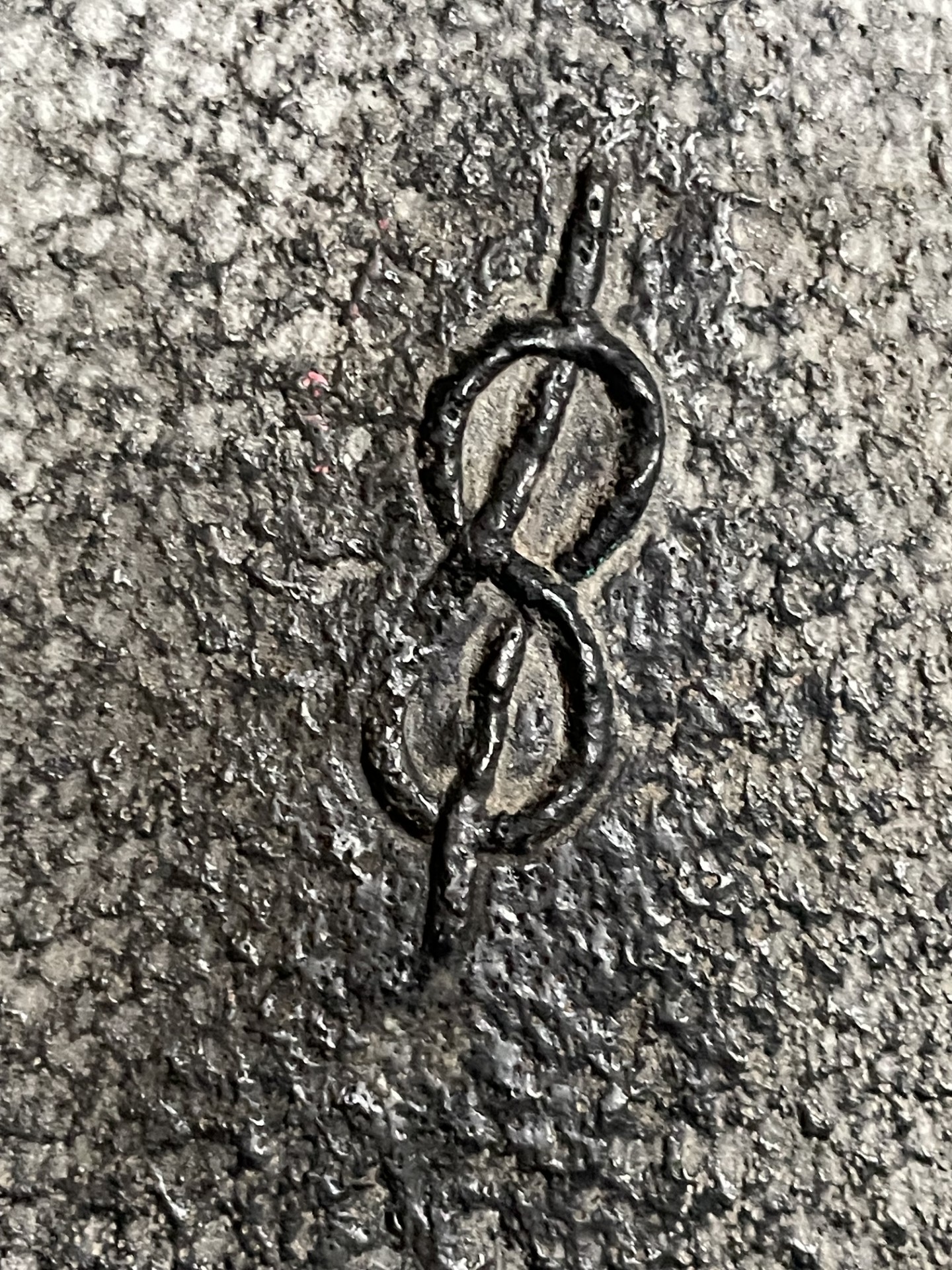
The looped mark at Holycross invites a question about the people who built the abbey. At Kilbarry Knights Templar Graveyard, Helena’s careful fieldwork had a documented outcome: she identified and reported carved material confirmed by Ireland’s National Monuments Service, which named her as identifier and reporter.
Kilbarry · County Waterford · Ireland
Norse cross-slab · bullaun / spudstone · Masonic graffiti in the existing graveyard record
That movement from close observation to a reliable record is the foundation of Marks of Ireland, Helena’s developing atlas.
Begin with the evidence
Start with the stone, the building and the people who left a trace. This guide introduces the differences between working marks, informal inscriptions and symbolic readings before inviting you into Helena’s photographs.
The Question · How Does a Mark Become Evidence?
Helena B. Scott approaches historic marks first as material evidence. Before asking what a carved form might mean, the research begins with the surface itself: where the mark occurs, how it was made, its relationship to the architecture, whether it repeats elsewhere, what tool appears to have produced it, and what can reasonably be said about its date and context.
This distinction is essential. A form that resembles a cross, pentangle, double-V or geometric figure cannot be assigned a meaning from shape alone. Mason's marks, devotional inscriptions, ritual or protective marks and later graffiti can share visual forms. Interpretation therefore emerges from the convergence of physical context, comparative evidence, documentary research and careful recording.
Historical Method · Visual Sources
This evidence-led approach belongs to a wider historiographical tradition. In 1982, German historians Rainer and Trudl Wohlfeil argued for images to be treated systematically as historical source material within Historische Bildkunde; Rainer Wohlfeil developed the methodological case further in Das Bild als Geschichtsquelle (1986). The implication for carved heritage is important: visual evidence is neither mere illustration nor a licence for unrestricted symbolic interpretation. It can be interrogated historically when material context, function, production, audience, comparison and transmission are subjected to source criticism.
Some sources are written. Others have to be read in stone.
What Survives on the Wall
01 / 06 · FIELD GUIDE
Marks associated with the making and construction of buildings. Their function is not always recoverable and interpretation depends upon repetition, technique, architectural context and chronology.
02 / 06 · FIELD GUIDE
Unofficial inscriptions, names, crosses, ships, figures, geometric designs and other marks left on historic fabric — traces of people whose presence may otherwise be absent from written records.
03 / 06 · FIELD GUIDE
Crosses, Marian forms, compass-drawn designs and other marks that may have devotional, commemorative or protective associations, assessed cautiously within their physical setting.
04 / 06 · FIELD GUIDE
Graphic marks associated with people, trade and identity, sometimes occupying the space between practical sign, personal emblem and visual signature.
05 / 06 · FIELD GUIDE
Evidence connected with quarrying, dressing, setting-out and assembly, capable of revealing aspects of how historic structures were planned, made and altered.
06 / 06 · FIELD GUIDE
A form can carry different meanings across places and periods. Surface, tool, repetition, location, date and comparative evidence bring the reading into focus.
Mason’s Marks · Craft · Construction
Marks cut into dressed stone can relate to different stages of making a building: quarrying, dressing, setting-out, assembly and the organisation of labour. Some marks traditionally called “mason’s marks” have been interpreted as identifying individual craftspeople or workshops, sometimes in relation to accounting or checking work. Others served different practical purposes.
Repetition and distribution make these traces more useful. Recording where marks occur within one building, and where comparable forms recur across sites, can contribute to the study of construction campaigns, workshop practice and the movement of craftspeople.
Reading the Building · Working Marks
Cut on worked stone, these may distinguish the output of an individual mason or workshop. Patterns of recurrence can illuminate how work was organised.
Practical instructions for joining and placing pieces. Numbered sequences or matching cuts across neighbouring stones can show how an arch, vault or other structure was fitted together.
Other working lines may relate to selecting stone, its destination, measurements or the layout of a piece before cutting. Position and sequence help distinguish them from finished-face marks.
For a detailed account of working marks and construction practice, read Jennifer S. Alexander’s study ↗
Helena’s Comparative Archive
Helena’s engagement with carved stone, inscriptions, historic monuments and the marks left upon buildings extends across almost three decades of historical and heritage study. Travel and research across Ireland, Britain, Iberia, Scandinavia and the North Atlantic have given Helena an extensive comparative photographic archive of carved stone, inscriptions and marks. The photographs presented here are a selection from that wider body of fieldwork; her international comparisons inform the atlas’s Irish core and any future comparative records.
Her present fieldwork brings that long visual familiarity into systematic recording: photographing marks in context, comparing repeated forms, tracing their distribution through buildings and across sites, and integrating material evidence with architectural history, documentary sources and digital mapping.
Historic Graffiti · Presence · Memory
Historic graffiti may preserve names, dates, crosses, ships, figures, heraldic and merchant signs, devotional marks, games and other informal inscriptions. Unlike formal monumental inscriptions, these marks can offer glimpses of people whose presence is difficult to recover from institutional records.
“Graffiti” here describes historic marks studied as archaeological and historical evidence. Their date, purpose and maker may be uncertain. Each must be read against the surface it occupies, the building’s history and other marks nearby; a modern assumption about vandalism tells us little about the circumstances in which a historic inscription was made.
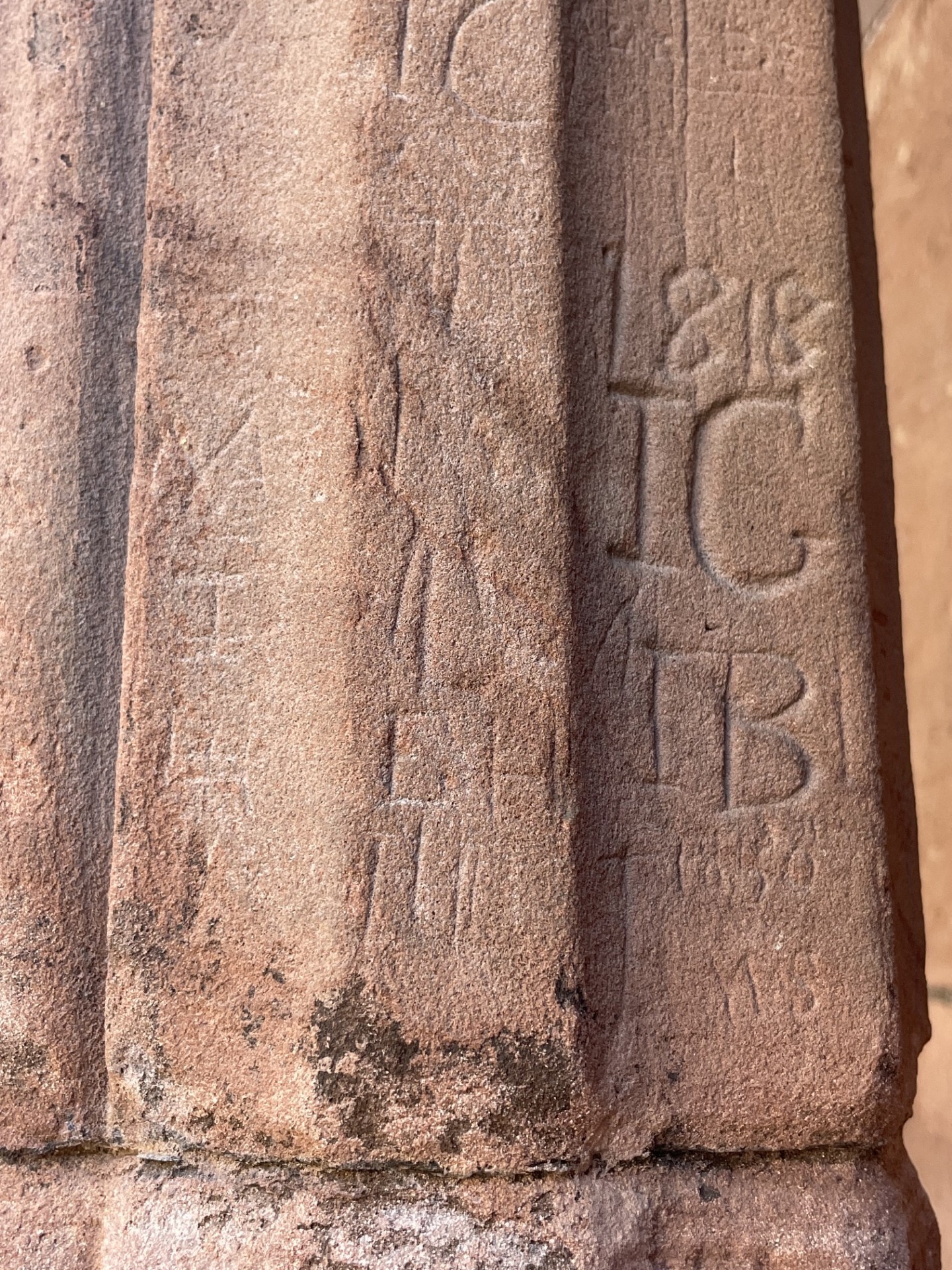
At Furness Abbey in Barrow-in-Furness, Cumbria, England, one cut on this sandstone pillar reads 1818, beside initials and other incisions. The date belongs to that part of the surface; the other cuts may have been made before or after it.
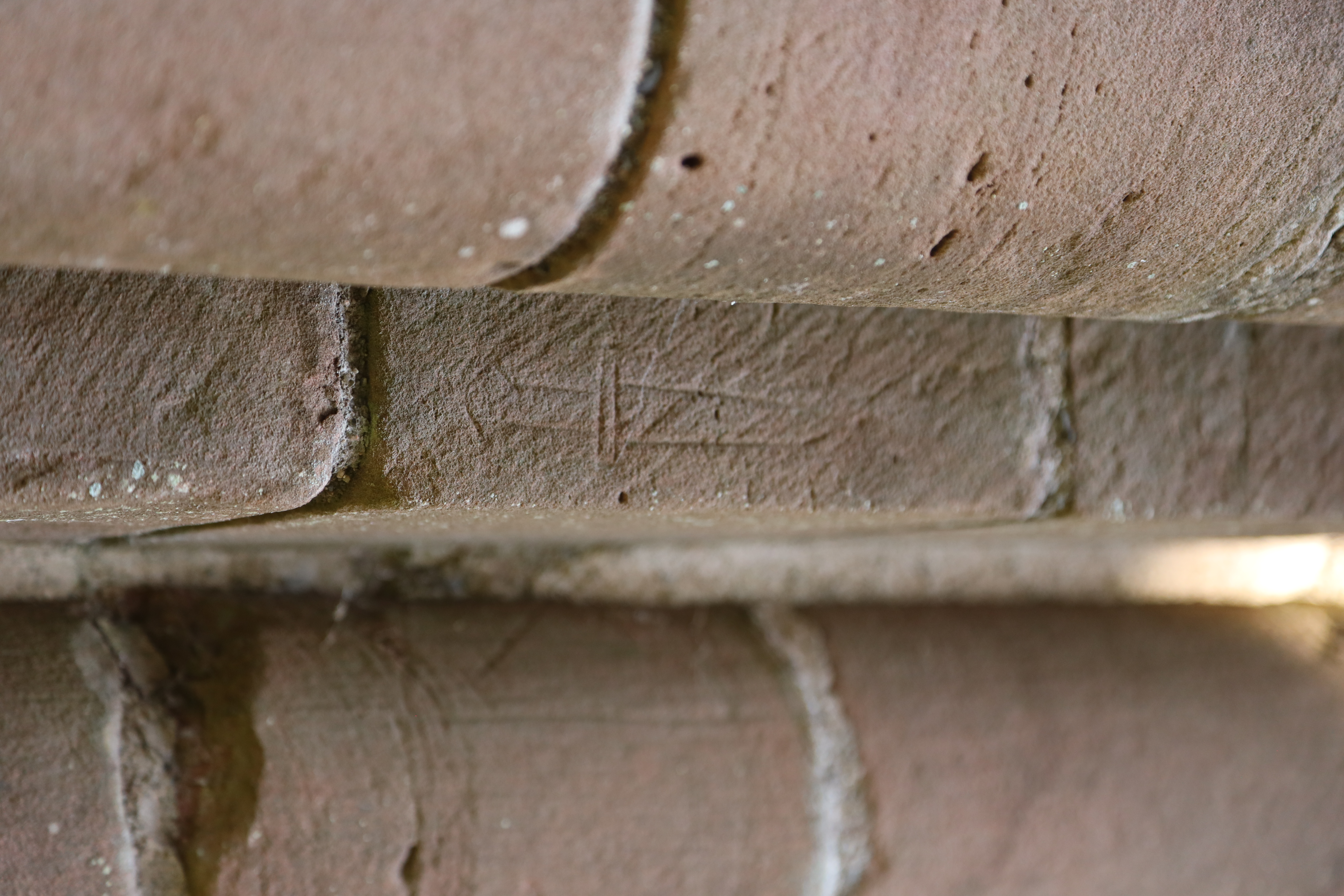
At Furness Abbey in Barrow-in-Furness, Cumbria, England, a small sword- or dagger-like outline is cut into stone. Its visual resemblance invites investigation, but the photograph alone cannot date the incision or identify its maker.
Recording Method
Historic graffiti and incised marks can be extremely difficult to see under flat illumination. Field recording therefore pays close attention to lighting angle, surface condition and photographic documentation. Raking light can reveal shallow incisions that are almost invisible when viewed frontally, while wider contextual photographs preserve the mark's relationship to the architecture.
Recording is only the beginning. Marks become more useful when their position, orientation, technique, dimensions, repetitions and relationships with other features can be compared. Digital mapping and structured records make it possible to move from an isolated photograph towards patterns across a building, site or wider landscape.
The Field Archive
Compare a mark with its surface, and then widen the view. Eight working marks and a set of carved monuments reveal craft, memory and the variety of stories held by stone.
Selected Field Archive · Eight Marks
Here the method becomes visible: move through eight photographs from Helena’s comparative archive. Each enlarged view keeps the original stone in sight; hover over a thumbnail, use the arrow controls, or select a numbered image to examine another mark.
HOLY CROSS ABBEY · COUNTY TIPPERARY · IRELAND
A looped form photographed in situ. Comparing its position and repetitions across the abbey helps turn an isolated shape into evidence about the building.
HELENA B. SCOTT · FIELD PHOTOGRAPH
The Kilcooley chevron is a field-recorded assembly-mark candidate. Its position within the masonry will be important to establishing whether it belonged to a wider construction sequence.
Discover Marks of Ireland →Carved Stone · Crosses · Memorials
Worked stone also carries commemorative and decorative carving. These photographed objects include a cross pattée on red sandstone, a six-petaled rosette from Kirkwall, and sculpted grave slabs with a knight and sword forms. Their scale and purpose differ from a small working mark; viewing them together makes those differences visible.
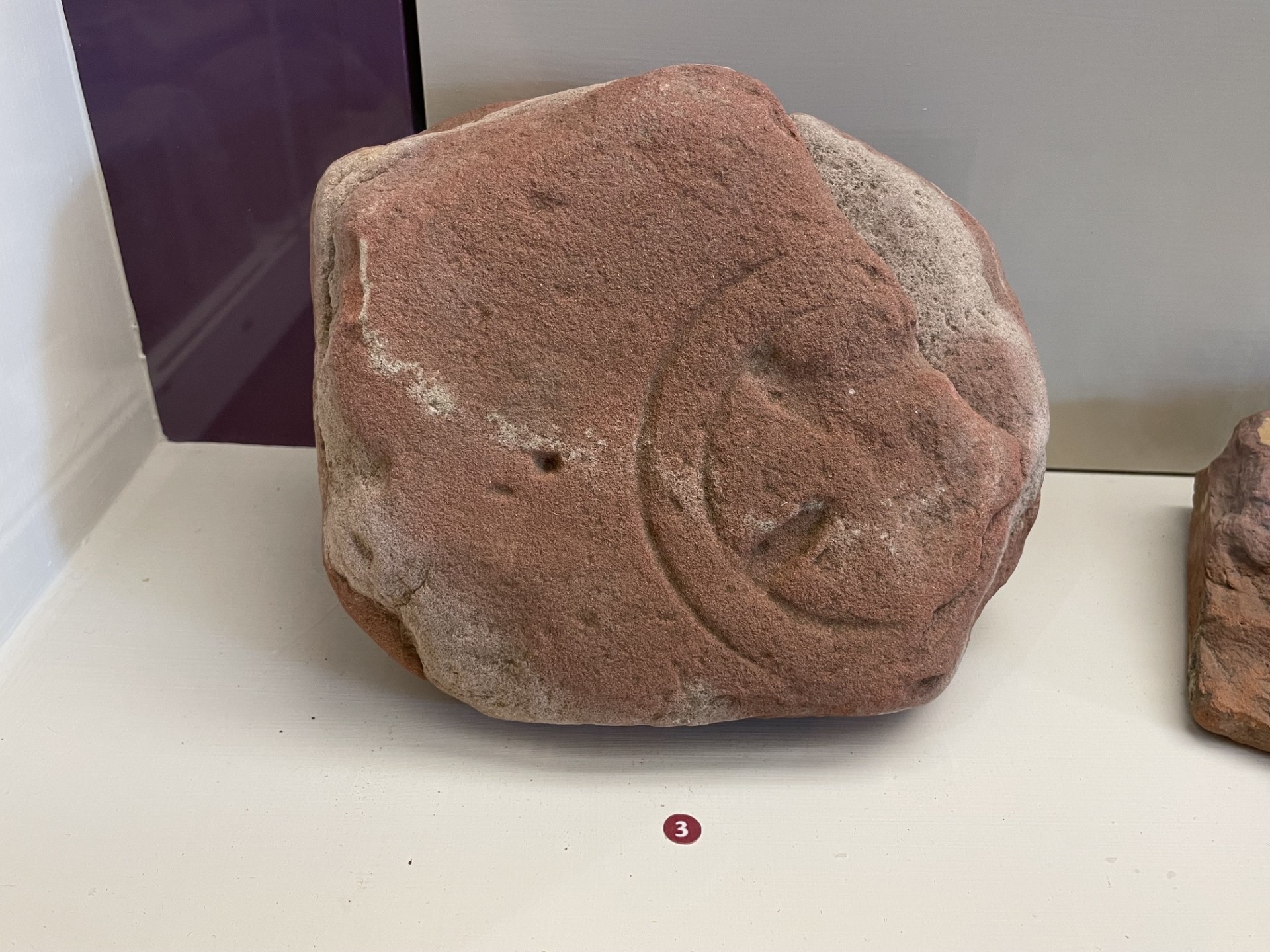
Red sandstone cross pattée photographed at the Orkney Museum in Kirkwall, Orkney, Scotland.
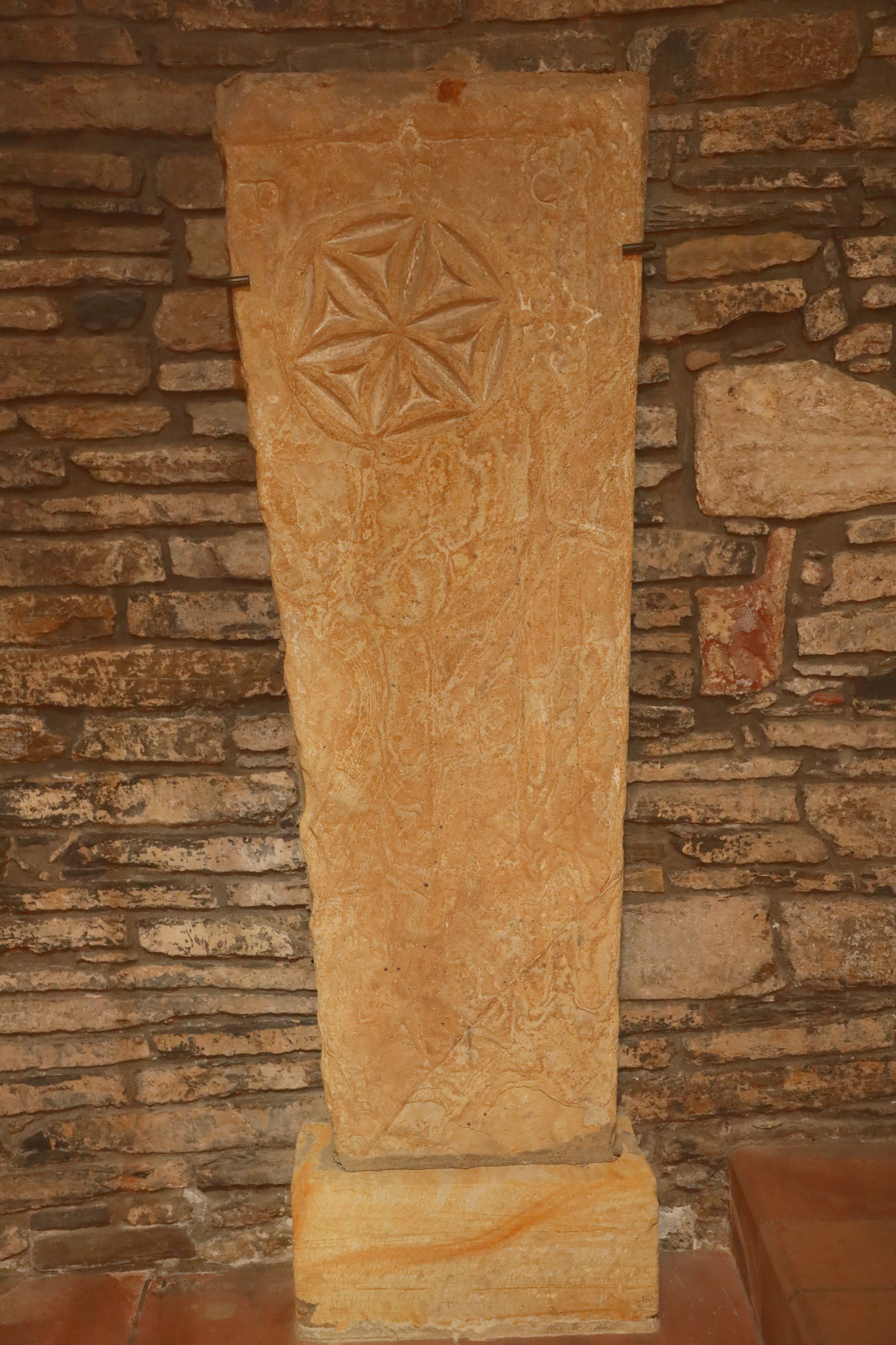
Six-petaled rosette carved into a stone slab at St Magnus Cathedral, Kirkwall, Orkney, Scotland. The photograph has been lightened to make the carving legible.
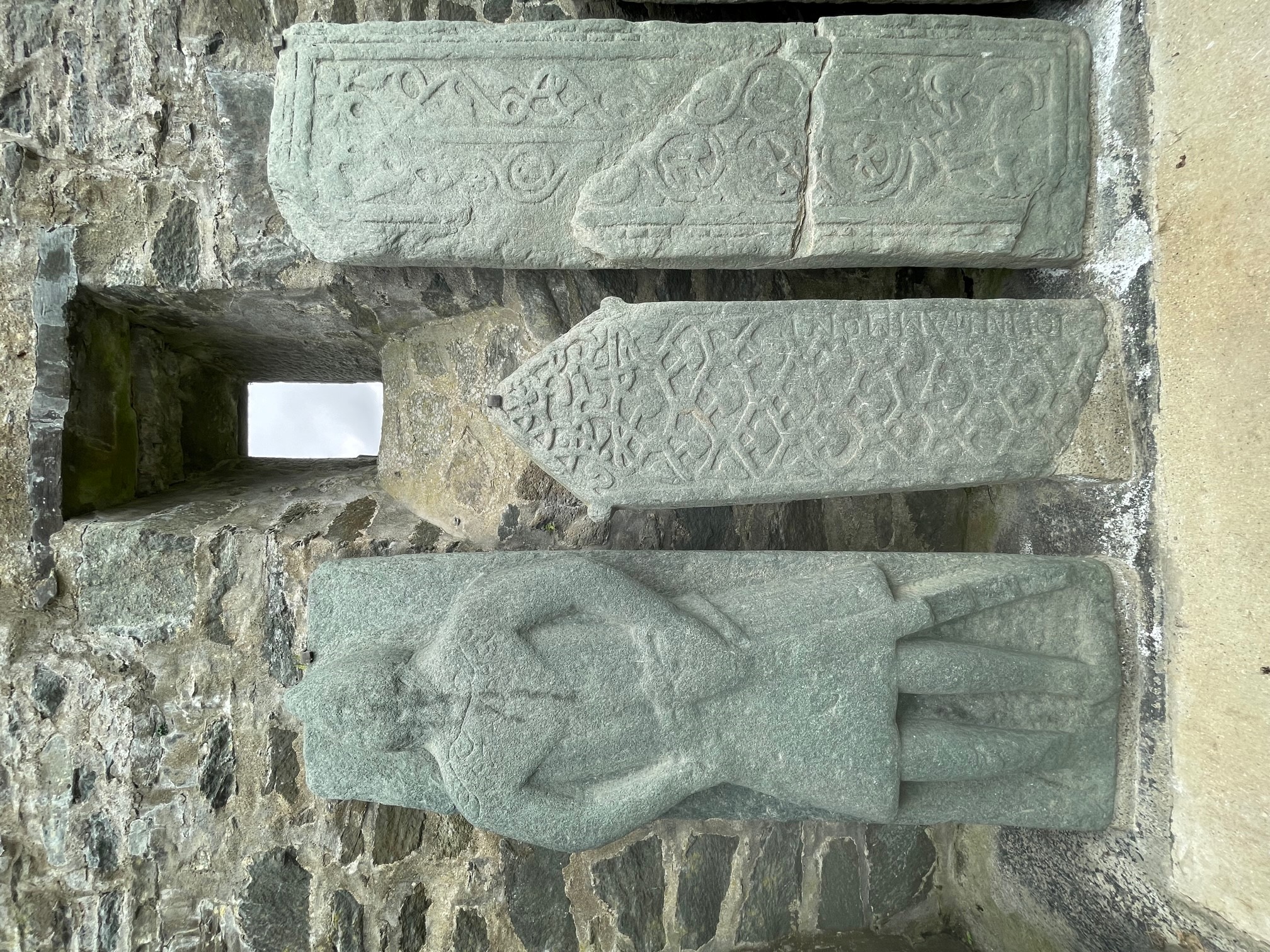
Three sculpted grave slabs at Kilmartin, Argyll, Scotland, including an armed figure and ornamented memorial stones.
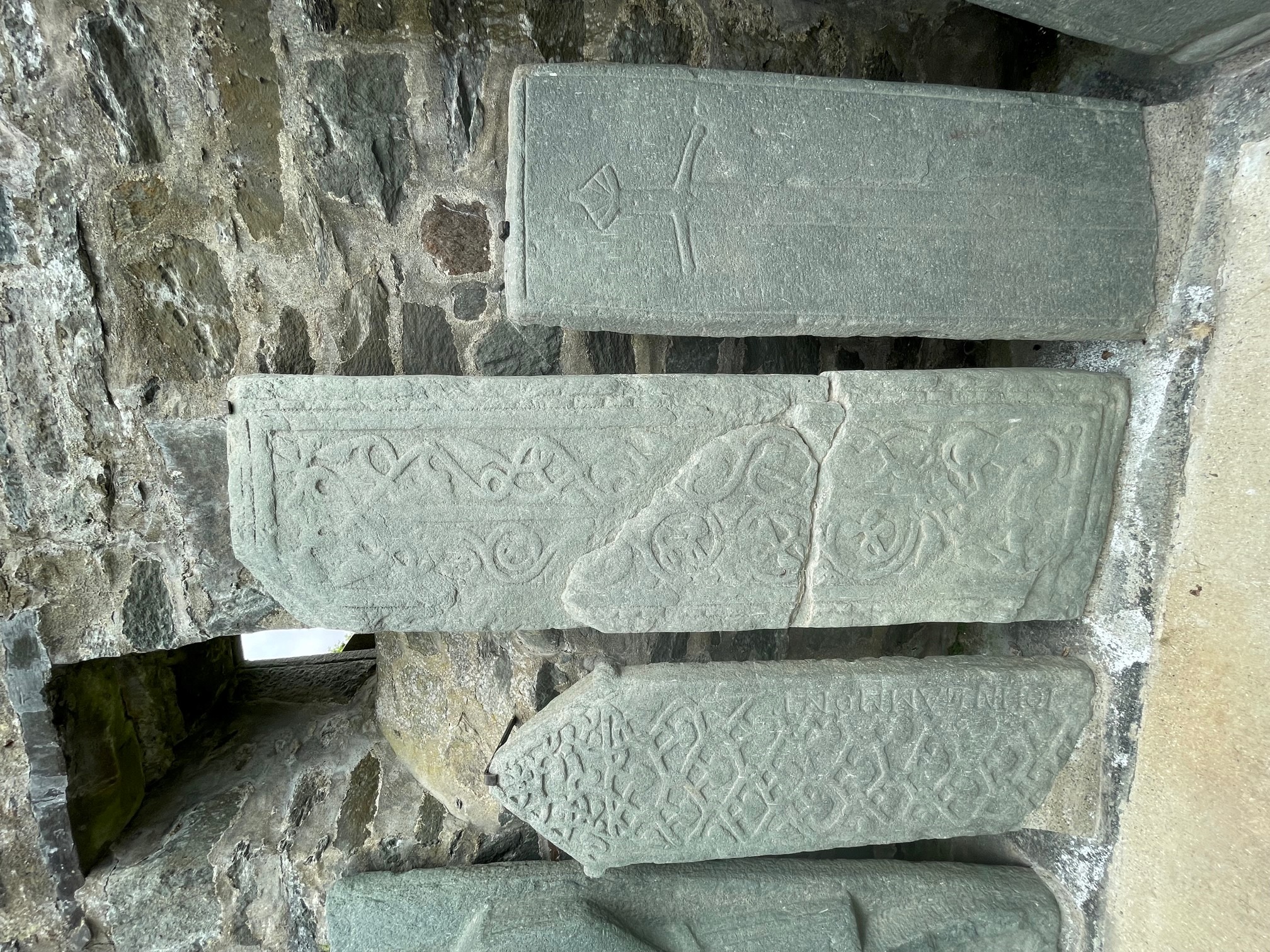
A close view of neighbouring grave slabs at Kilmartin, Argyll, Scotland, including a carved sword with a shaped hilt.
Field Research · Sites and People
At Kilbarry a field observation entered the archaeological record. At abbeys, a cathedral and memorials across Ireland and Scotland, repeated forms, documents and changing settings reveal different kinds of evidence.
Case Study 01 · Discovery to Public Record · County Waterford · Ireland
What can one site preserve?
At Kilbarry Knights Templar Graveyard, County Waterford, Helena’s field research has identified material easily overlooked at a familiar historic site. The graveyard belongs to the landscape of the former Kilbarry Knights Templar preceptory, later associated with the Hospitallers. Its surviving stones, marks and burial ground tell a history extending beyond any one phase of the site.
The same principle underlies the study of marks and graffiti: small, easily overlooked traces can become significant when they are accurately located, recorded and considered alongside the building, landscape and documentary record. The value of a mark lies not in making it mysterious, but in understanding what evidence it can genuinely contribute.
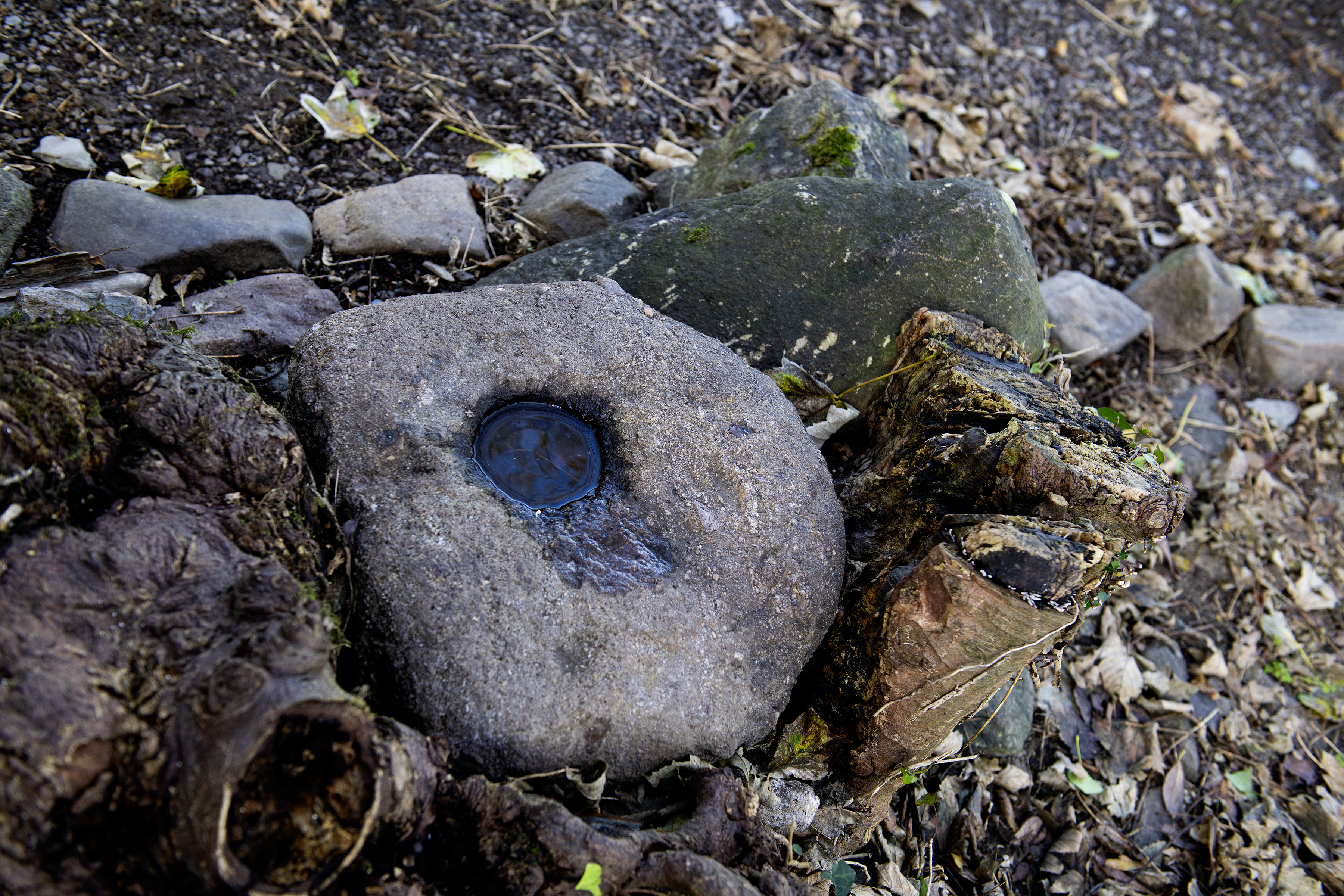
WA017-003014
Bullaun / spudstone identified by Helena; possible later reuse as a spudstone.
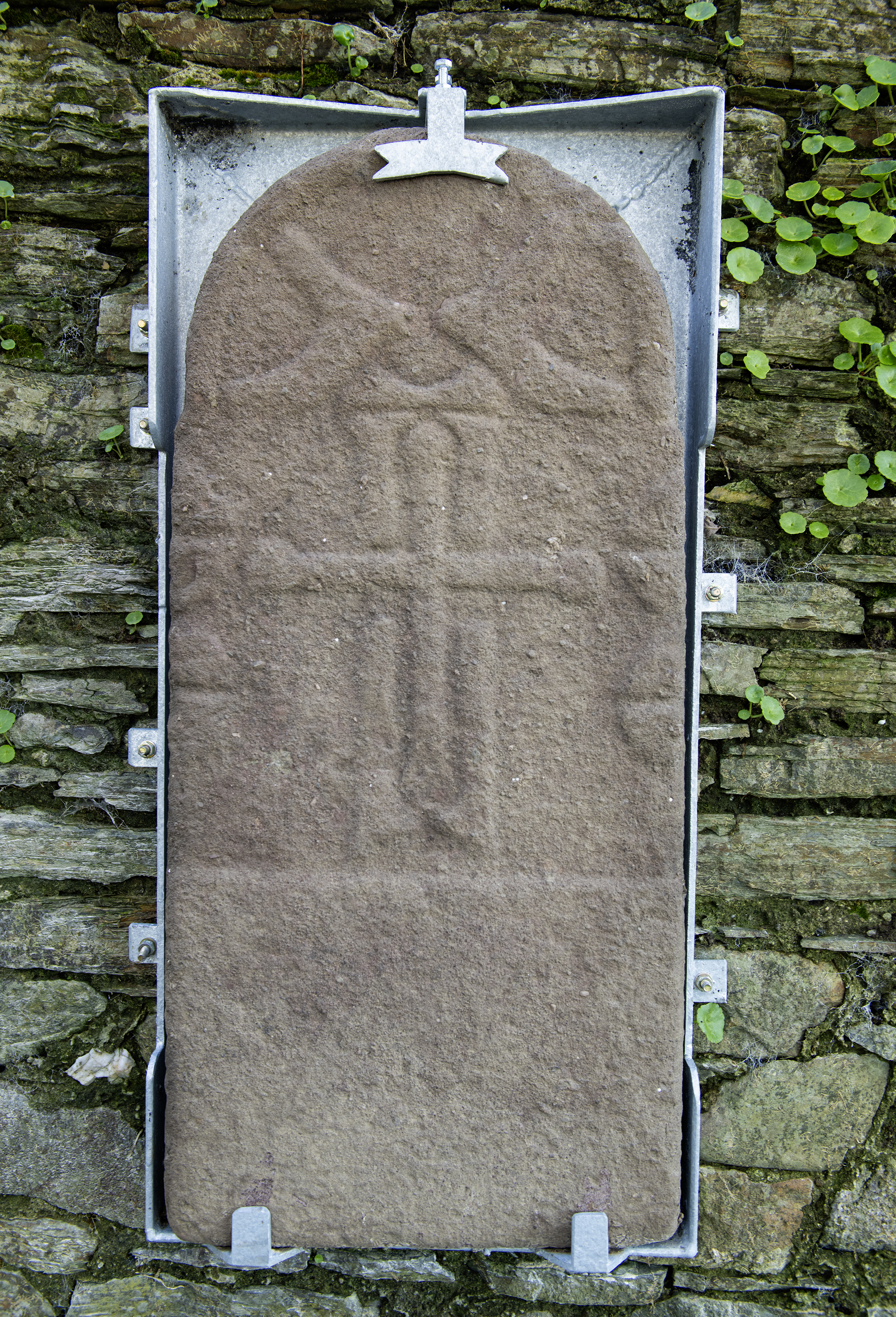
WA017-003013
Red sandstone graveslab with a carved cross in false relief; interpreted by Helena as Norse with Celtic influence.
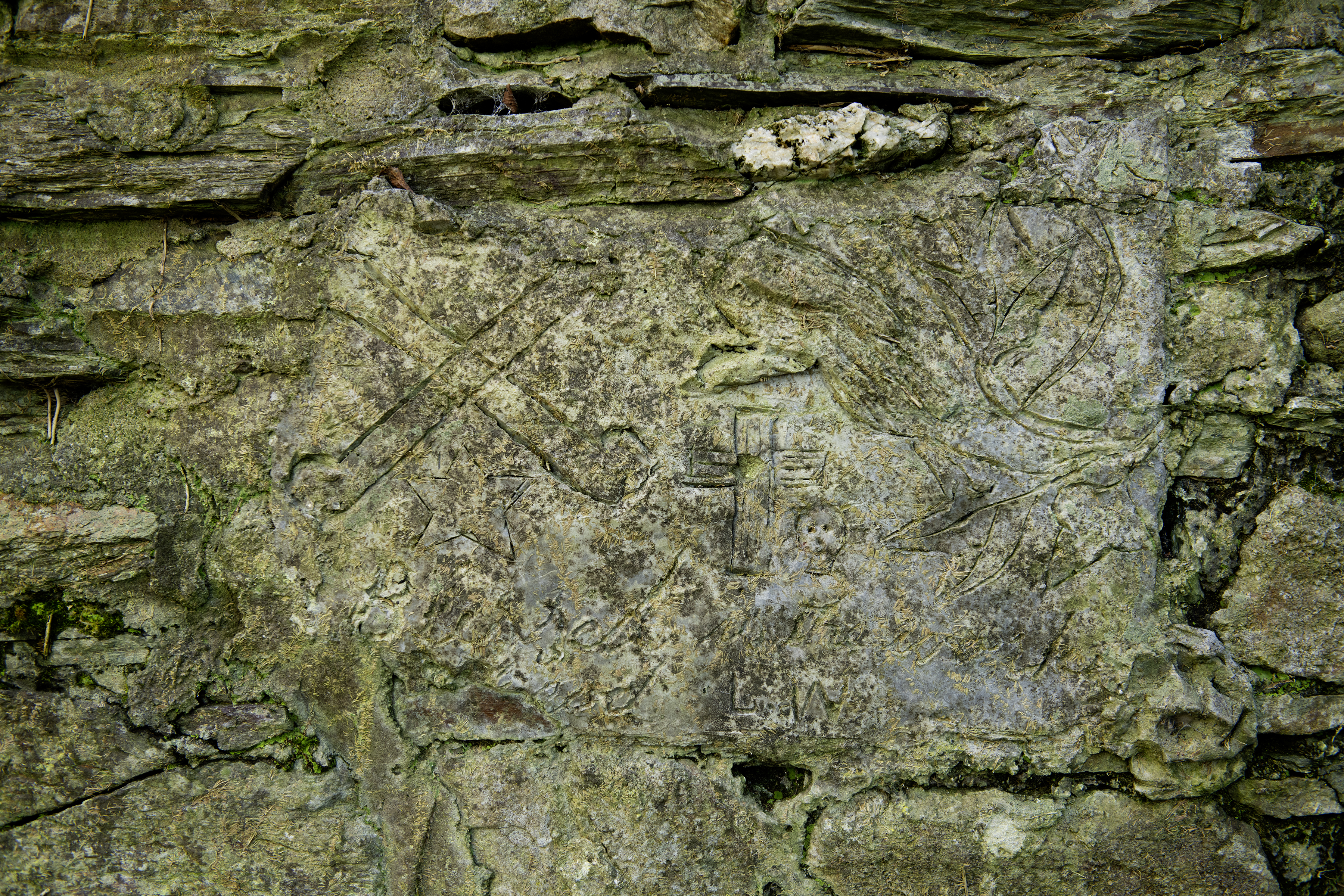
WA017-003002
Masonic carved motifs documented by Helena and incorporated into the existing Kilbarry graveyard record.
Original Field Research · Confirmed National Record
Helena B. Scott identified and documented previously unrecorded material at Kilbarry Knights Templar Graveyard and submitted her findings to Ireland’s National Monuments Service. The Service subsequently confirmed the material and entered it into its official archaeological records, naming Helena as both identifier and reporter.
WA017-003013
Norse cross-slab
WA017-003014
Bullaun / Spudstone
WA017-003002
Masonic graffiti in the existing graveyard record
The confirmed updates to these records are awaiting publication in the public viewer’s next data release.
Case Study 02 · Repetition Across Sites · Holycross · Kilcooley
At the Cistercian abbeys of Holycross and Kilcooley, Helena’s continuing fieldwork documents marks in relation to architectural zones, building phases and the surfaces on which they occur. The looped mark recurs through Holycross Abbey. A larger leaf-like mark at Kilcooley and a smaller leaf-like mark at Holycross offer a separate comparison between the two sites. Their resemblance makes the two abbeys a useful focus for comparative fieldwork.
The record contributes to Marks of Ireland, where photographs, location and context can be brought together for careful comparison.
Explore Marks of Ireland →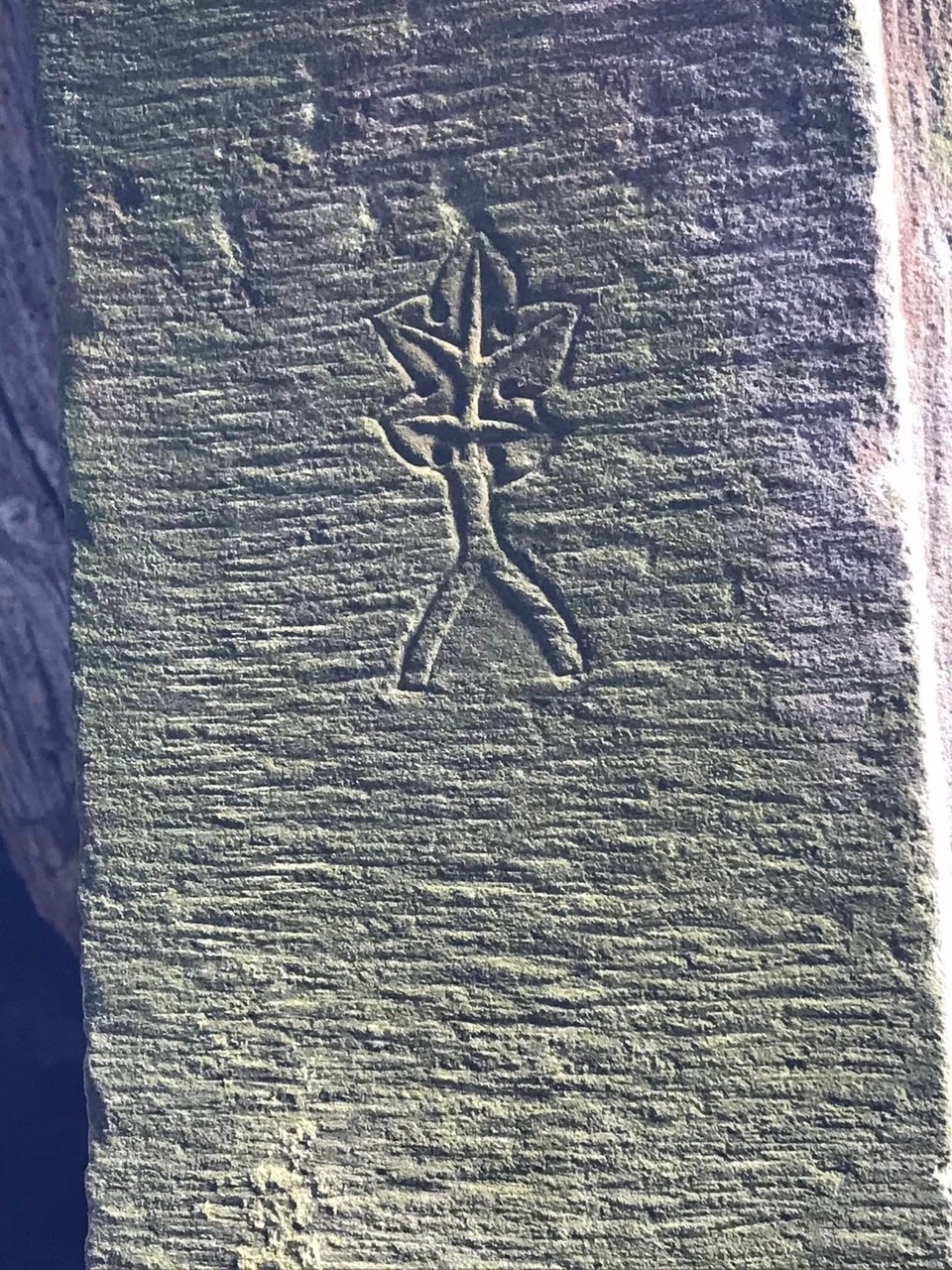
Case Study 03 · A Building-Wide Corpus · Kirkwall · Orkney · Scotland
St Magnus Cathedral is one of Helena’s favourite places to examine the marks left by medieval builders. In its nave, the architecture invites close looking: individual cuts make more sense when their position on the stone and their recurrence across the building are recorded together.
The St Magnus Graffiti Project’s survey of accessible ground-floor areas recorded 630 marks, predominantly mason’s marks. That figure describes the surveyed ground floor, rather than the nave alone, and points to the value of a careful building-wide record alongside Helena’s own photographs and observations.
Read the St Magnus survey ↗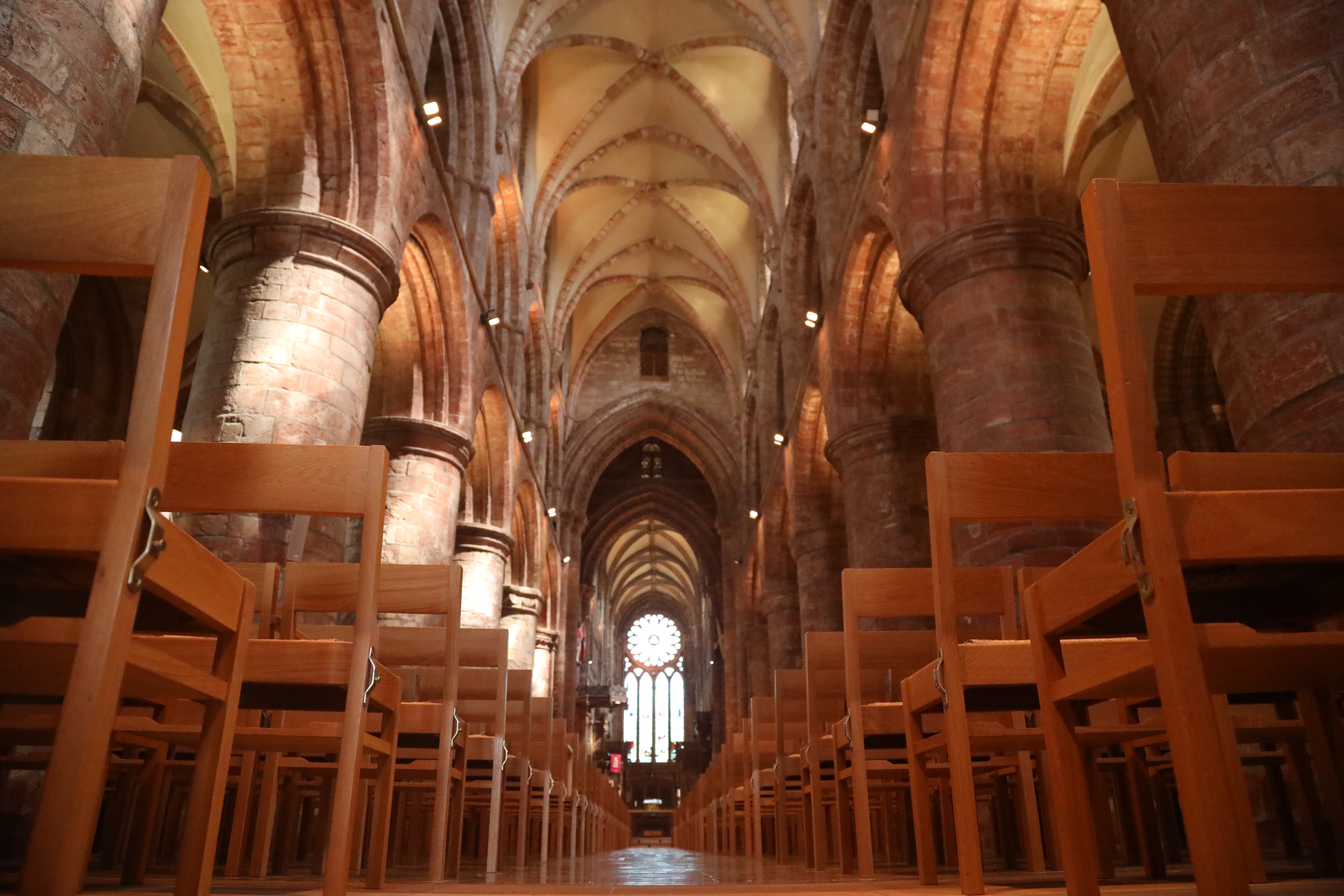
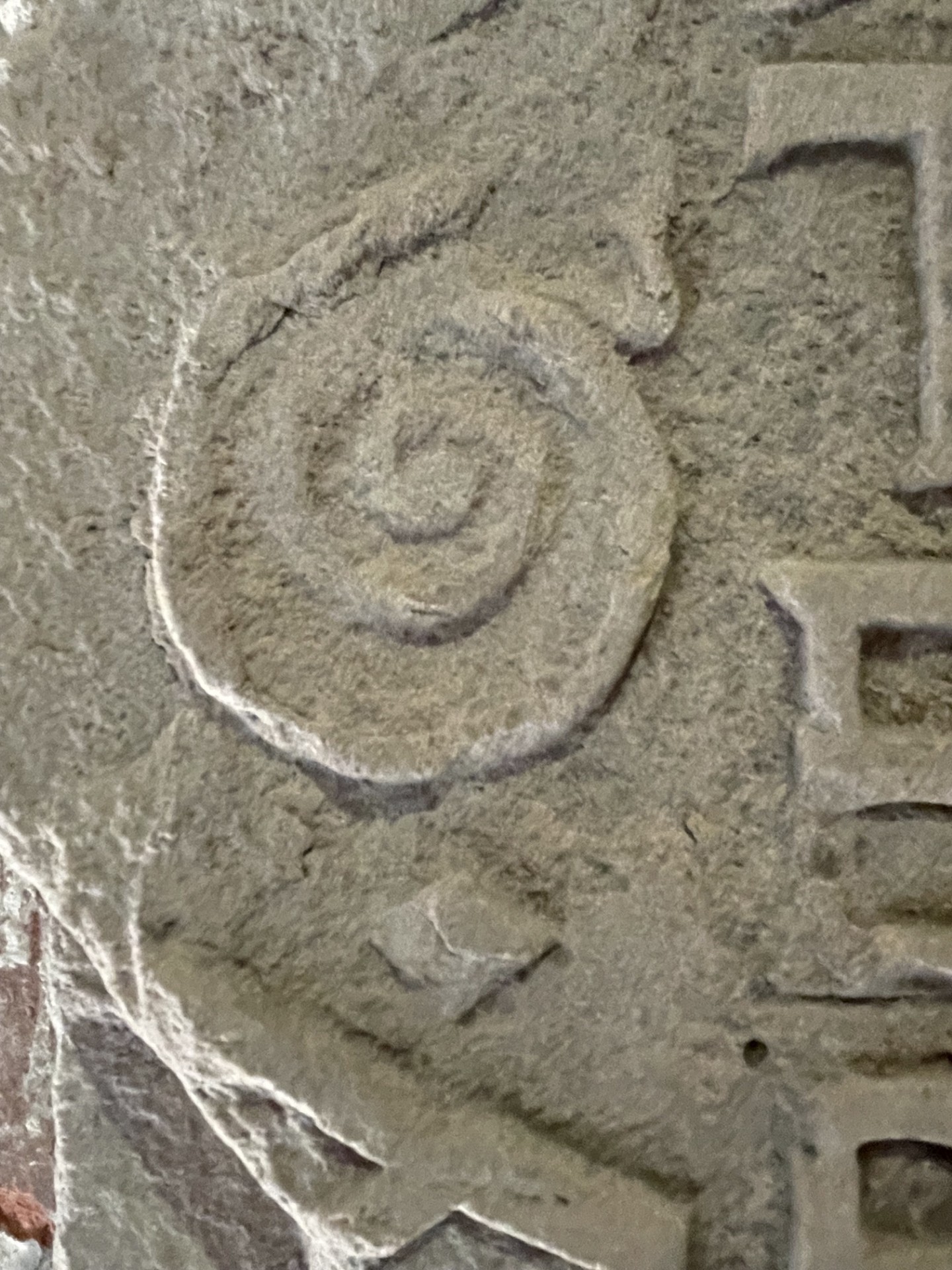
A relief-carved spiral beside lettering, recorded as part of the cathedral’s wider carved surfaces.
Photograph by Helena B. Scott
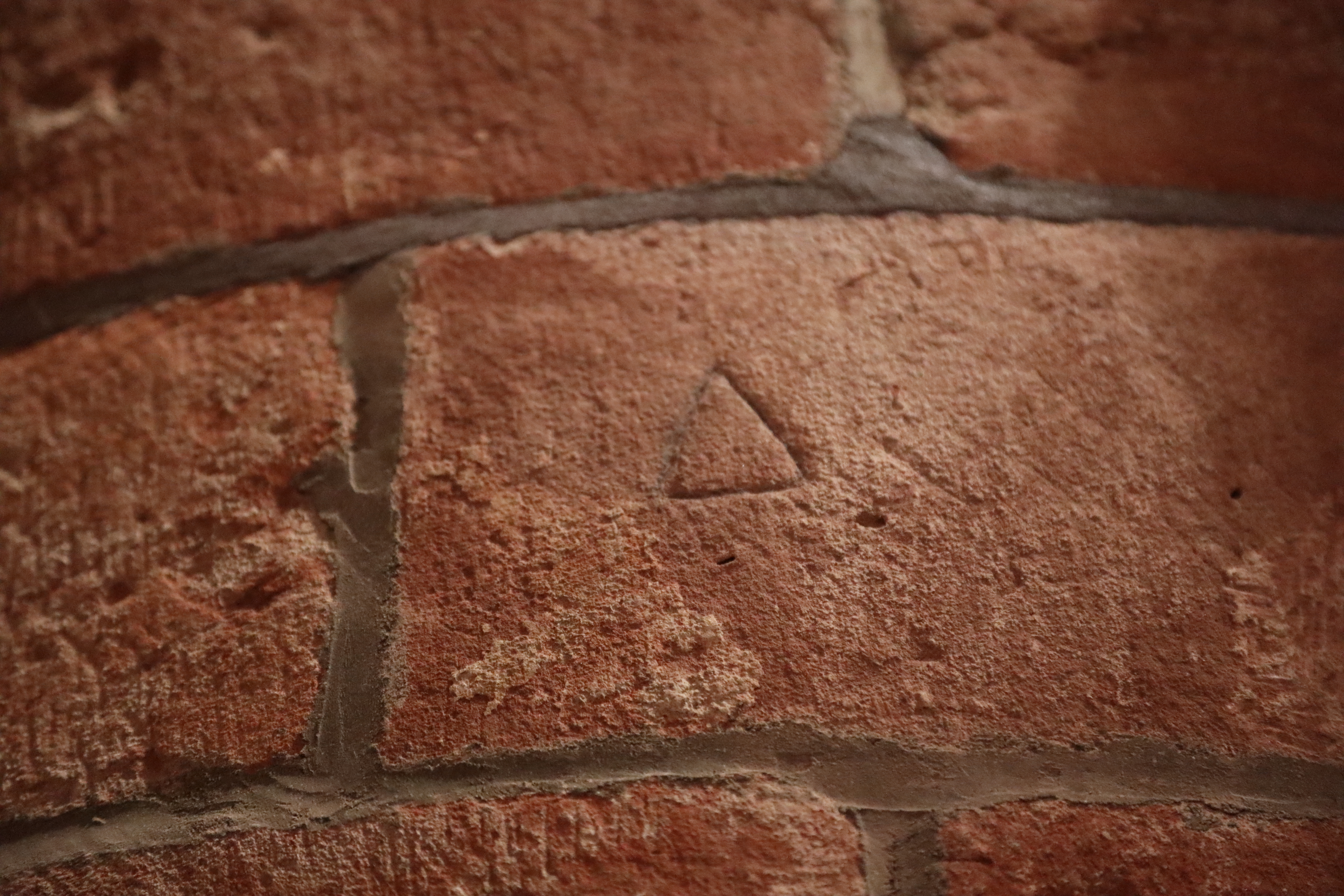
An angular incision on a red sandstone shaft, kept in view with its surrounding masonry.
Photograph by Helena B. Scott
Case Study 04 · Marks and Written Rules · Dunfermline · Fife · Scotland
Dunfermline Abbey is another of Helena’s favourite places for studying marks. It also holds the memorial to William Schaw (c. 1550–1602), royal Master of Works to James VI. The statutes he issued in 1598 and 1599 set out rules for Scottish masons and lodges, including the registration of members and their marks. They provide detailed documentary evidence of organised lodge practice well before the eighteenth century.
1598 · Lodge Practice
Rules for an existing craft
The first statutes regulate apprentices, masters, meetings and the recording of marks. Their existence provides firm evidence for organised Scottish masonry at the time and helps anchor the documented history of lodge practice before the eighteenth century.
Explore the 1598 statutes ↗Dunfermline · The Monument
Whose marks are on Schaw’s tomb?
The monument includes a letter monogram formed from Schaw’s name. Research on the stonework attributes the repeated mason’s marks on the tomb to its maker, David Scougal of Crail, and an assistant. The marks are therefore valuable evidence of the monument’s making and the craft practice behind it.
View the monument and marks ↗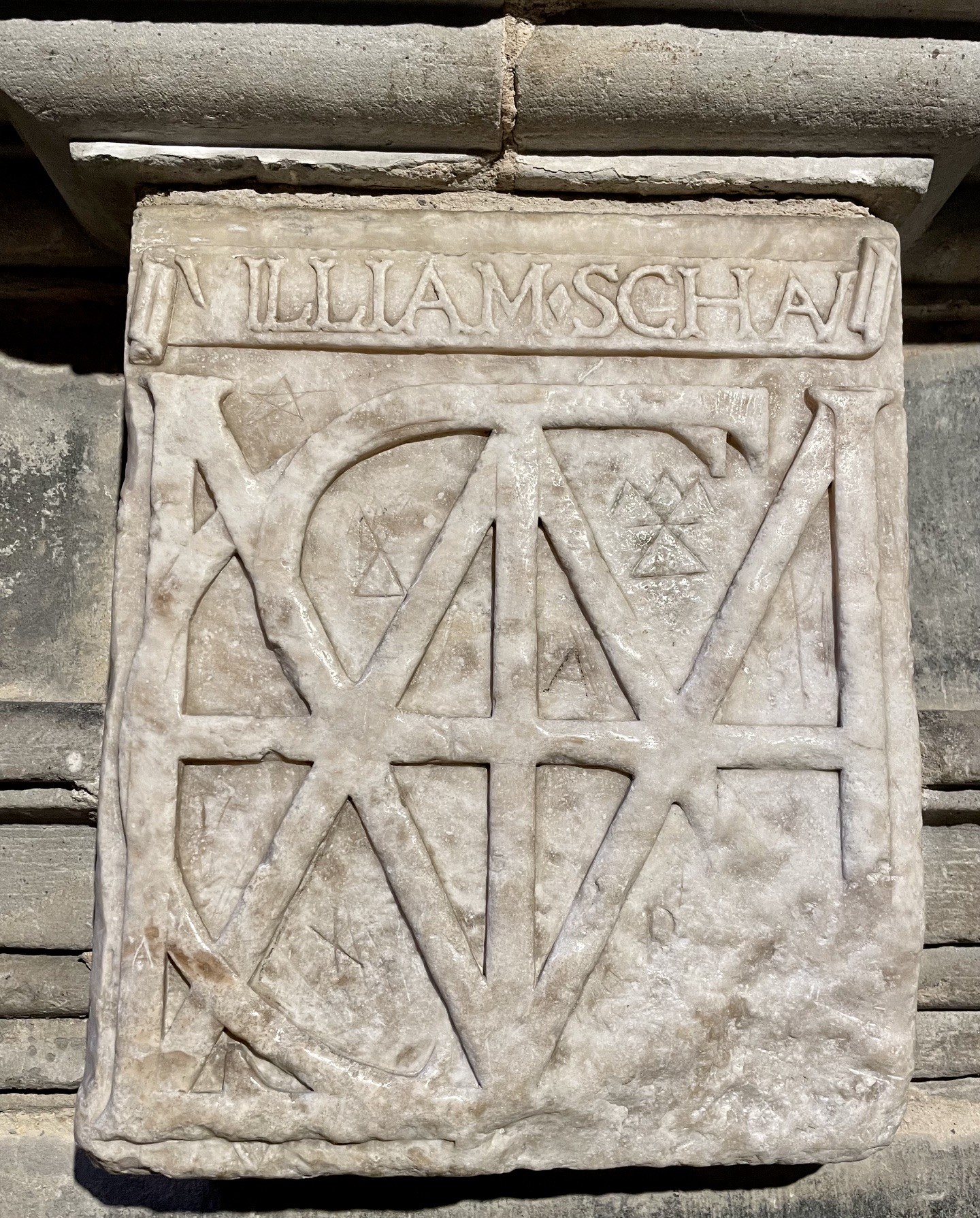
The Schaw name monogram
William Schaw’s name and letter monogram on his memorial, with smaller working marks visible on the stone. · Helena’s field photograph
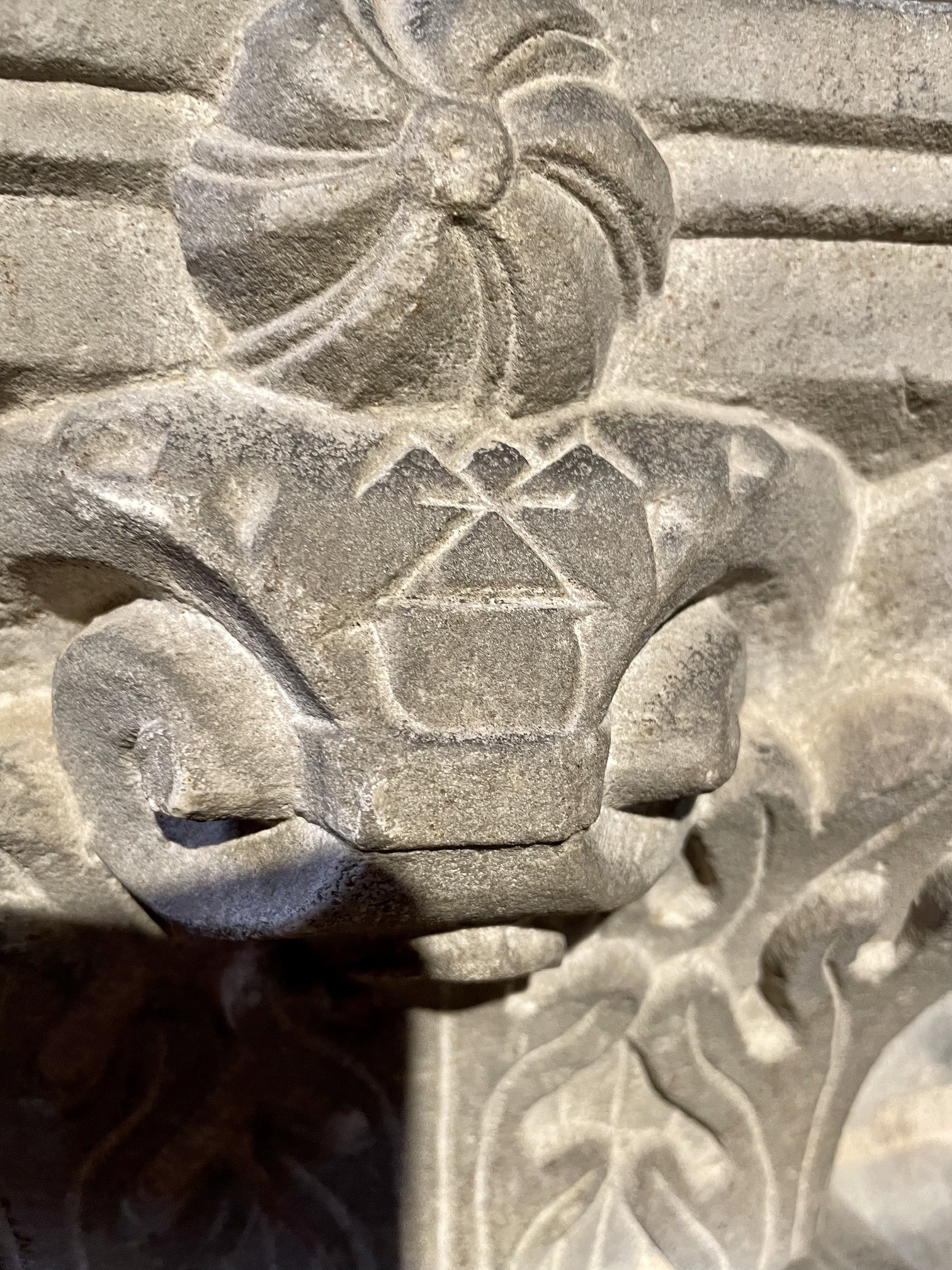
A mark on the monument
Geometric mason’s mark incised on a carved detail of the memorial. · Helena’s field photograph
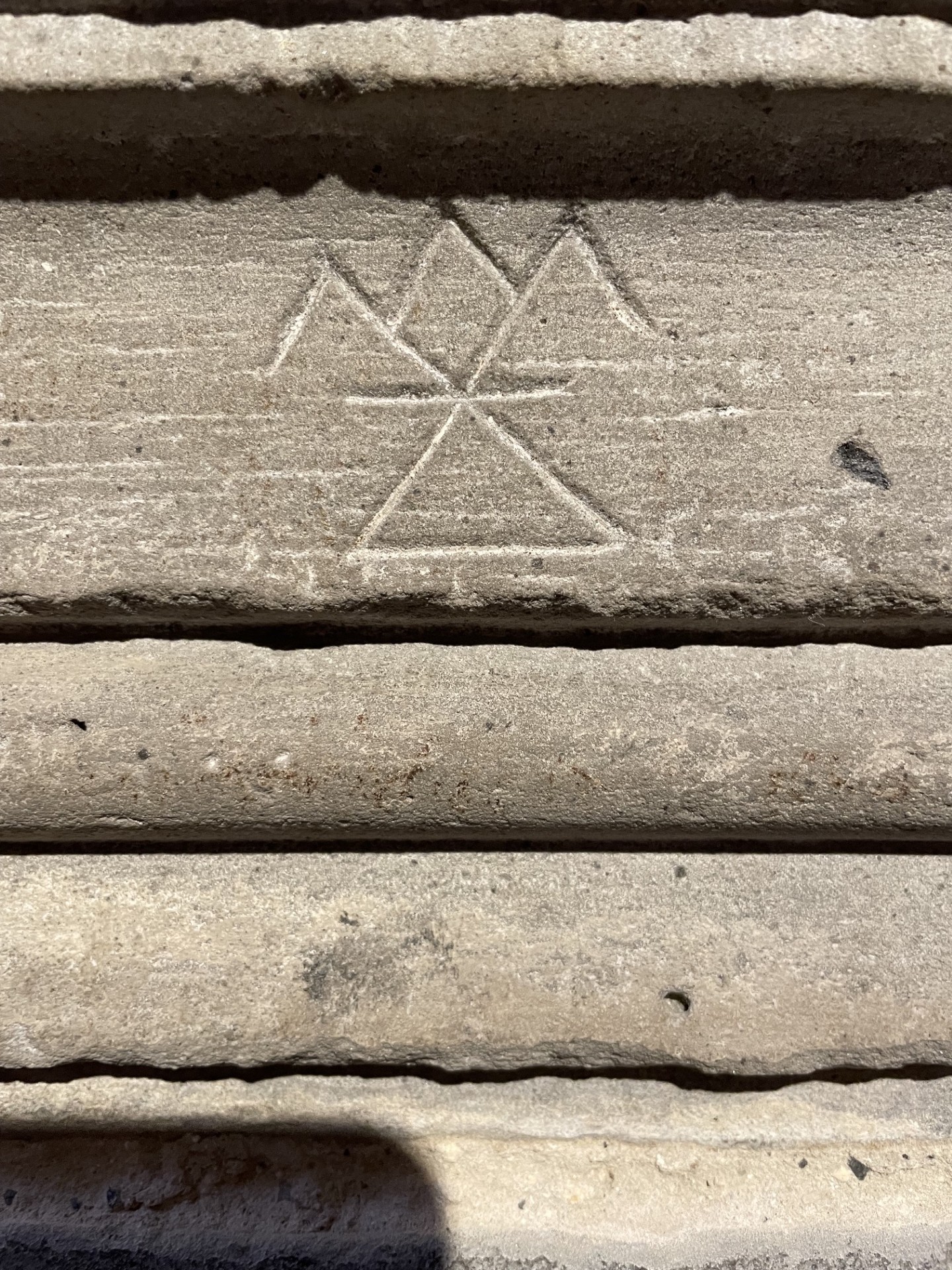
A second mark on the monument
Triangular arrangement cut on a different architectural element of the memorial. · Helena’s field photograph
Schaw’s regulations make Dunfermline a compelling place to bring documentary and material evidence into conversation. They show an established Scottish lodge culture long before the foundation of the first English Grand Lodge in 1717; the marks on his later memorial show why attribution still depends on the object’s own history.
Case Study 05 · Carving and Reception · Rosslyn Chapel · Midlothian
Founded by William St Clair in 1446, Rosslyn Chapel holds an unusually dense record of late medieval carving. Its stone surfaces bring together architectural craft, recurring figures and an inscription drawn from a biblical wisdom contest. Each invites questions about how a building was made, what its imagery communicated and how later generations have read it.
For the study of marks, Rosslyn is most useful when the carvings are examined in place: their position, repetition, tooling and architectural setting matter as much as their striking forms. These three examples offer a starting point, rather than a single key to the chapel.
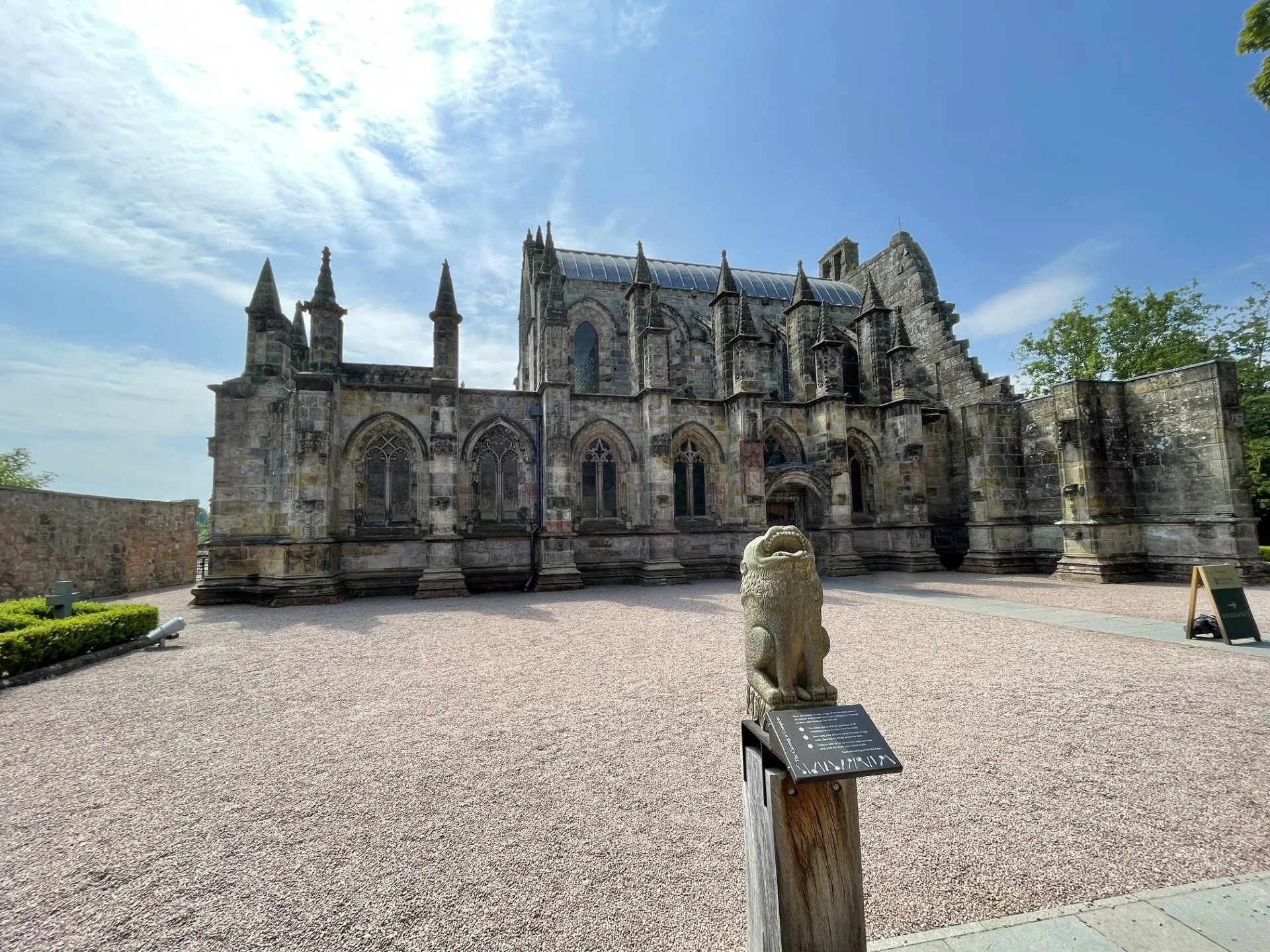
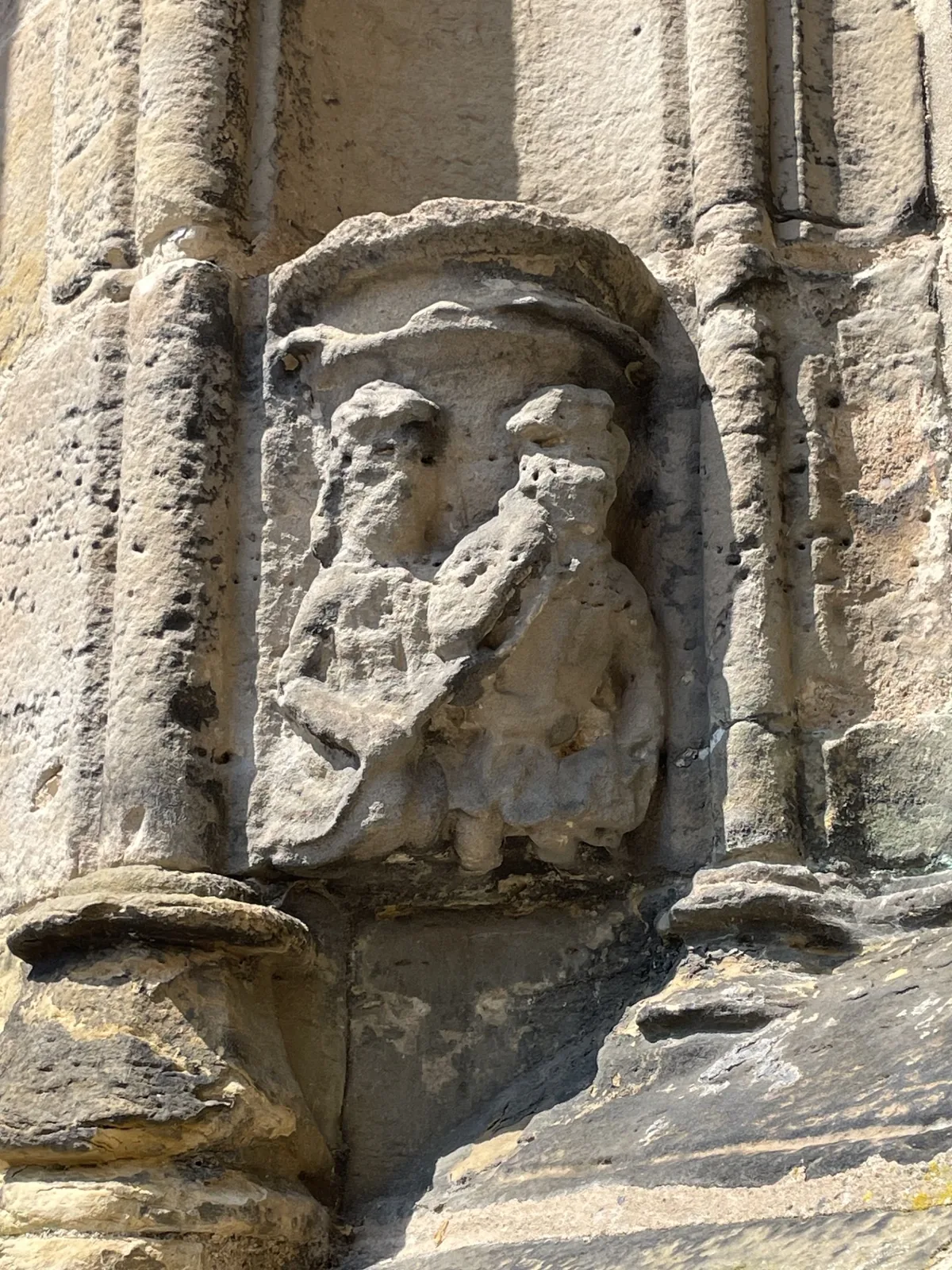
Exterior Detail · The Entered Apprentice
Helena’s close-up records the exterior relief she knows as the “Entered Apprentice.” Its figures invite close study of gesture, setting and the stories attached to Rosslyn. “Entered Apprentice” is also the name of the first degree in later Craft Freemasonry; applying that reading to this carving is an interpretation, not an established identification of its original subject.
The relief outside and the celebrated Apprentice Pillar inside are separate works.
Vines wind around a richly worked pillar with carved dragons at its base. The story of the apprentice is a later tradition; the surviving stonework is the evidence to begin with.
See Rosslyn Chapel’s record and photographs ↗Foliated faces recur inside and outside the chapel. Their distribution offers a way to study variation and repetition across its carved programme.
See Rosslyn Chapel’s record and photographs ↗In the south aisle, the chapel’s documented inscription evokes the contest of wine, king, women and truth in 1 Esdras. Its wording and placement belong together.
See Rosslyn Chapel’s record and photographs ↗This is a selected field of study within a much larger carved building. Helena’s wider interpretation of Rosslyn’s wisdom inscription and later reception appears elsewhere in her research.
Comparative Study · Ships Cut in Stone · Maritime Memory
Ship graffiti occur in historic buildings across Ireland, Britain and the wider North Atlantic. A carved vessel may preserve details of maritime life or reflect the concerns of people connected to rivers, ports and the sea.
Documented Example · Kilclief · County Down
A carved ship on a stone at Kilclief has been examined in a published archaeological study. The researchers compare its form with Viking-age ship imagery from Dublin and Scandinavia. The example makes a precise bridge between this research world and Helena’s work on Norse material culture, while its own archaeological setting remains central to interpretation.
Read the Kilclief study ↗·Explore Norse research →
Visual Comparison · Parham · Suffolk · England
This late medieval ship graffito at St Mary’s, Parham, gives a visible comparison for the Kilclief research. It is a different object from the Irish stone; its own context matters.
Photograph: Medievalg / Wikimedia Commons · CC BY-SA 3.0 · Unmodified
Comparative Field Notes · Iberia · Mediterranean
Helena’s travel and study across Europe inform the questions she brings back to Irish buildings. Published research offers two useful comparisons: at Toledo, marks can be examined alongside building records and their distribution in a cathedral cloister; at Palermo, a recorded group of marks raises questions about how Mediterranean stonework can be photographed and catalogued. Neither example supplies a ready-made attribution for an Irish mark.
Toledo · Spain
A study of Toledo Cathedral’s cloister (1383–1485) compares stonecutters’ marks with documentary evidence and maps their distribution through the building.
Read the published research ↗Palermo · Sicily · Italy
Research on the medieval apse of a Palermo chapel examines a repertoire of mason’s marks and methods for documenting them for public study.
Read the published research ↗From Fieldwork to Shared Knowledge
The video follows one recurring mark through three buildings. Marks of Ireland extends that way of looking into a structured public project for photographs, location, comparison and future research.
See the Method in Action · Digital Exhibition
Created by Helena for her MA module in Digital Public History, this video exhibition follows a distinctive double-strand “S” mason’s mark through Kilcooley Abbey, Holycross Abbey and St Canice’s Cathedral. Field photographs, comparison and historical research become an accessible account of how one recurring form can open questions about craft, patronage and the movement of visual ideas.
The exhibition explores a possible connection with the O’Tunney sculptural atelier as a research question, while keeping the mark’s material setting and the limits of attribution in view.
Hidden in Plain Sight · MA Digital Public History exhibition by Helena B. Scott · Select fullscreen to enlarge
Explore Helena’s MA research & credentials →Marks of Ireland
Founded by Helena, Marks of Ireland is her flagship digital atlas for recording and interpreting mason’s marks, medieval graffiti and historic symbols. Its core record begins in Ireland, where field recording, documentary research, photography and mapping bring dispersed evidence into a coherent corpus. Selected comparative material from Scotland and England may be added as the project develops; the Irish record remains its foundation.
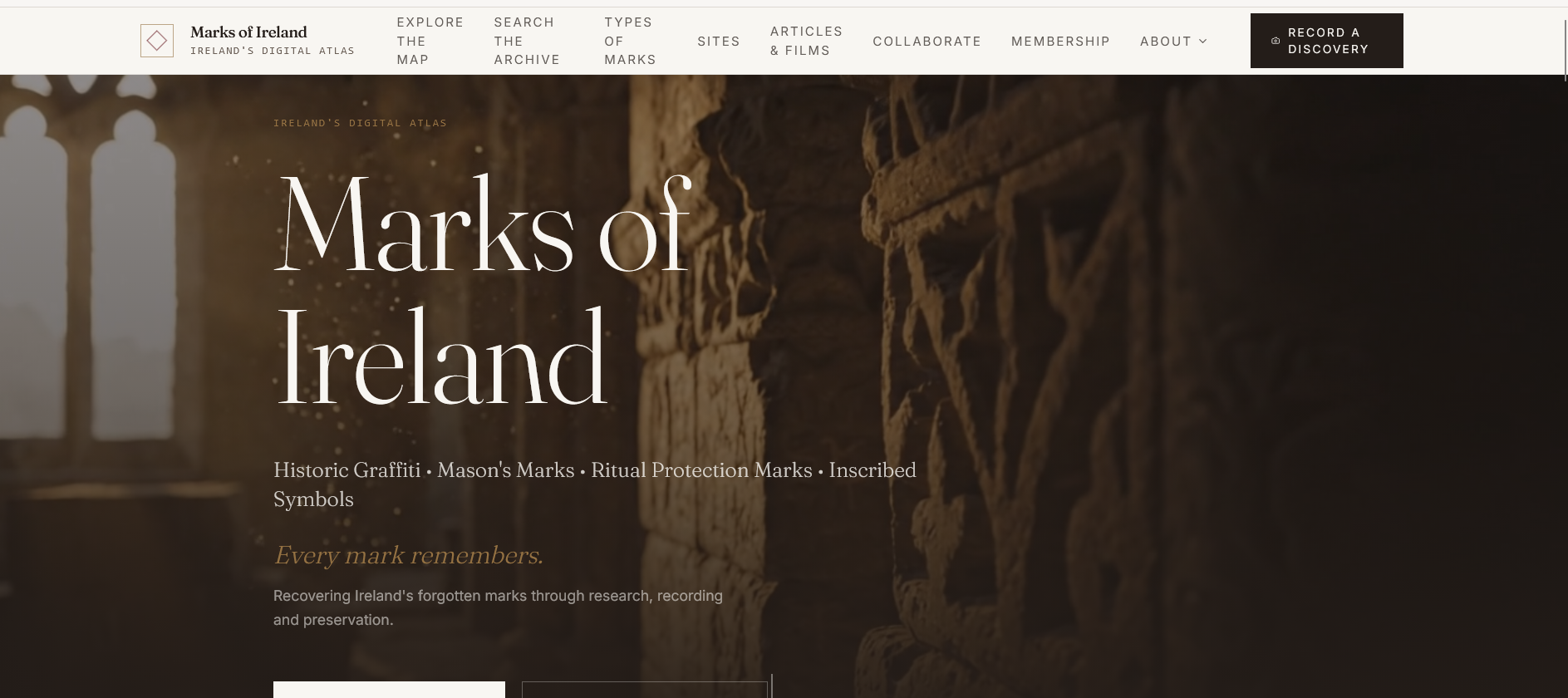
Marks of Ireland · Public release · November 2026
Explore Marks of Ireland →For Institutions · Learners · Future Members
The archive can become a research collaboration, an illustrated public programme or a new way to learn to read historic stone. Choose the route that fits your interest.
Discuss field recording, collections research, exhibition interpretation, digital heritage and talks designed for your audience.
Discuss a project →The atlas is in development. Follow the research for public release news and future membership or subscription details.
Follow the research →Explore the developing Templar Academy for specialist teaching, and see currently listed lectures and events.
Explore the Academy →Meaning · Teaching · Collaboration
Once the material history is understood, symbolism opens another level of interpretation. Explore Helena’s published teaching and the routes for researchers, institutions and private clients to work with her.
From Material Evidence to Meaning
Symbols also connect this research with Helena's wider work in Jungian and archetypal psychology, medieval religion and Western esotericism. Those interpretive frameworks build upon the historical and material investigation, preserving the archaeological context as the foundation for later symbolic or psychological reading. A mark's archaeological context and historically supportable meanings remain distinct from any later archetypal or psychological reading.
That layered method allows the same object to be considered at different levels without confusing them: as a physical trace, as evidence of human activity, as a historical symbol where the evidence supports that identification, and finally as an image that may acquire new meanings for later viewers.
Symbolic Interpretation · Green Language · Initiation
What can carved stone tell us, and what can later readers discover in it? The visible, or exoteric, reading begins with the object: its material, setting, date, craft, patronage and documented uses. An esoteric reading asks how its imagery might also speak to initiation, transformation and inner knowledge. Helena teaches both approaches while making clear where historical evidence ends and a symbolic interpretation begins.
In Le Mystère des cathédrales (1926), Fulcanelli offered an alchemical reading of Gothic architecture and carving through the langue verte, or “green language.” His work is an influential modern esoteric interpretation of medieval stone, not a record proving that every medieval mason or Templar intended the meanings he proposed. That distinction makes close looking more rewarding: a carving can have a documented history and a later symbolic life.
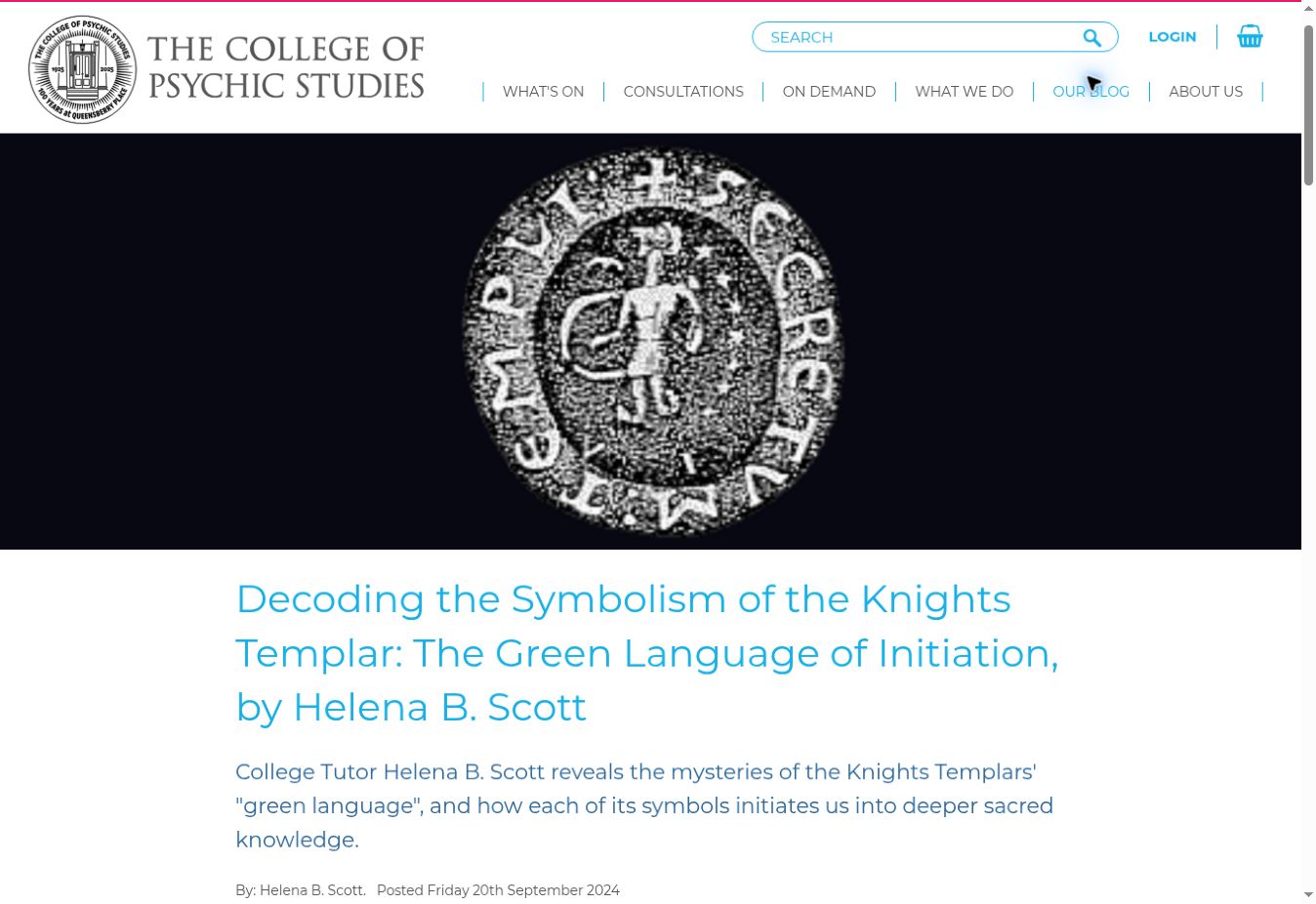
Enlighten · The College of Psychic Studies · 2024
Decoding the Symbolism of the Knights Templar
Read Helena’s published article ↗From the Public Article to Your Own Questions
Helena’s published College article introduces her interpretation of Templar symbols, colours, numbers, architecture and the language of initiation. Her classes and private teaching take these questions further through historical sources, visual comparison and guided symbolic reading.
You can study with Helena when a class is offered, request private teaching or sustained mentorship, or invite her to teach a group. She also accepts paid commissions to research and interpret carved marks, personal and family objects, inscriptions, symbolism within homes and historic properties, and related heritage material.
Bring a question, an object or a place. The work begins with what can be documented and develops an interpretation suited to the evidence and your aims.
Work with Helena · Paid Teaching & Interpretation
01 · Private interpretation
Book an initial consultation about a personal or family object, a carved mark, an inscription, or the symbolism of a home or historic property.
Book a consultation →02 · Classes & mentorship
Join a scheduled class or arrange one-to-one teaching and a sustained mentorship shaped around your own interests and research.
Explore private mentorship →03 · Groups & commissions
Invite Helena to teach a group, commission a specialist lecture, or discuss a historical, heritage or interpretive research brief.
Commission Helena →Explore Further
Symbols, marks and graffiti sit at the intersection of archaeology, material culture, sacred landscape, primary sources and Helena's wider research into medieval Ireland.
Bring Your Own Place or Object · Consultations
For a home or historic property, explore its architecture, past occupants and symbols through a research-led profile. For an object, inscription or question that crosses several fields, request a consultation shaped around what you have found.
Analytics Preferences
Help improve the Helena B. Scott website
Google Analytics helps understand how visitors find and use the site. If you decline, analytics cookies remain off and only limited cookieless measurement signals may be sent. It is not used for advertising here.