Texts & Manuscripts
Manifestos · ritual texts · occult publishing · archival transmission
Research Method · Evidence Before Lineage
The deeper interpretive conclusions arising from this method are reserved for Helena's publications, lectures and ongoing research.
Historiography · Western Esotericism · Rejected Knowledge
Many of the subjects Helena works with — esoteric traditions, magic, Gnosticism, psychical culture, initiatory symbolism and forms of spiritual experience — have historically occupied an uneasy position at the edges of academic respectability. Yet marginalisation is itself part of their history. What a culture dismisses as irrational, occult or unacceptable can reveal as much about the construction of knowledge as the traditions that remain inside the canon.
This Research World therefore sits in conversation with the critical-historical study of Western esotericism developed by scholars including Professor Wouter J. Hanegraaff. His work on esotericism and the academy has been especially important in examining the category of “rejected knowledge”: currents excluded from dominant intellectual narratives, but which remain essential to understanding European religious, philosophical and cultural history.
For Helena, taking rejected knowledge seriously begins with historical criticism: returning to texts, objects, archives, landscapes and the historical communities that created and transmitted them before inherited assumptions decide the outcome.
Historical Revisionism · Restoring the Overlooked
For Helena, this is also a form of historical revisionism in its proper scholarly sense: returning to histories that have been overlooked, marginalised or rejected, asking why they were excluded, and testing inherited narratives against the evidence that survives. Hidden and secret histories matter because exclusion itself can distort the historical record, making the recovery and testing of neglected evidence an essential part of historical revision.
“Taking them seriously and considering them in depth.”
Wouter J. Hanegraaff · on the study of rejected knowledge
Research Themes
Invisible Orders · Rosicrucianism
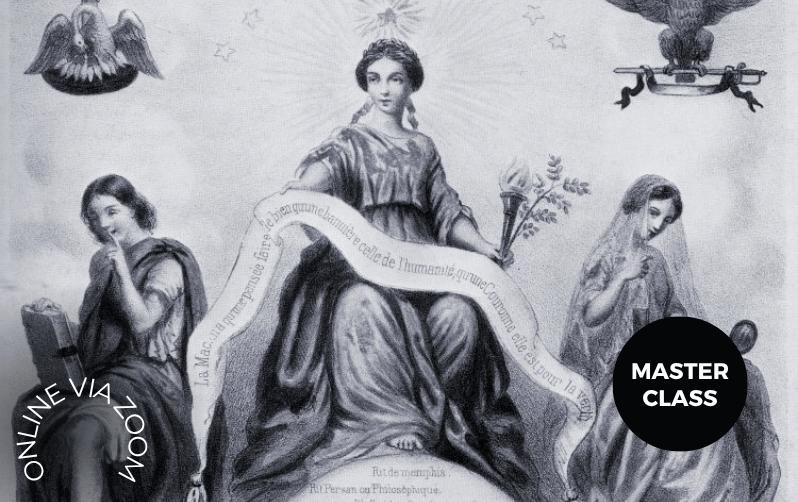
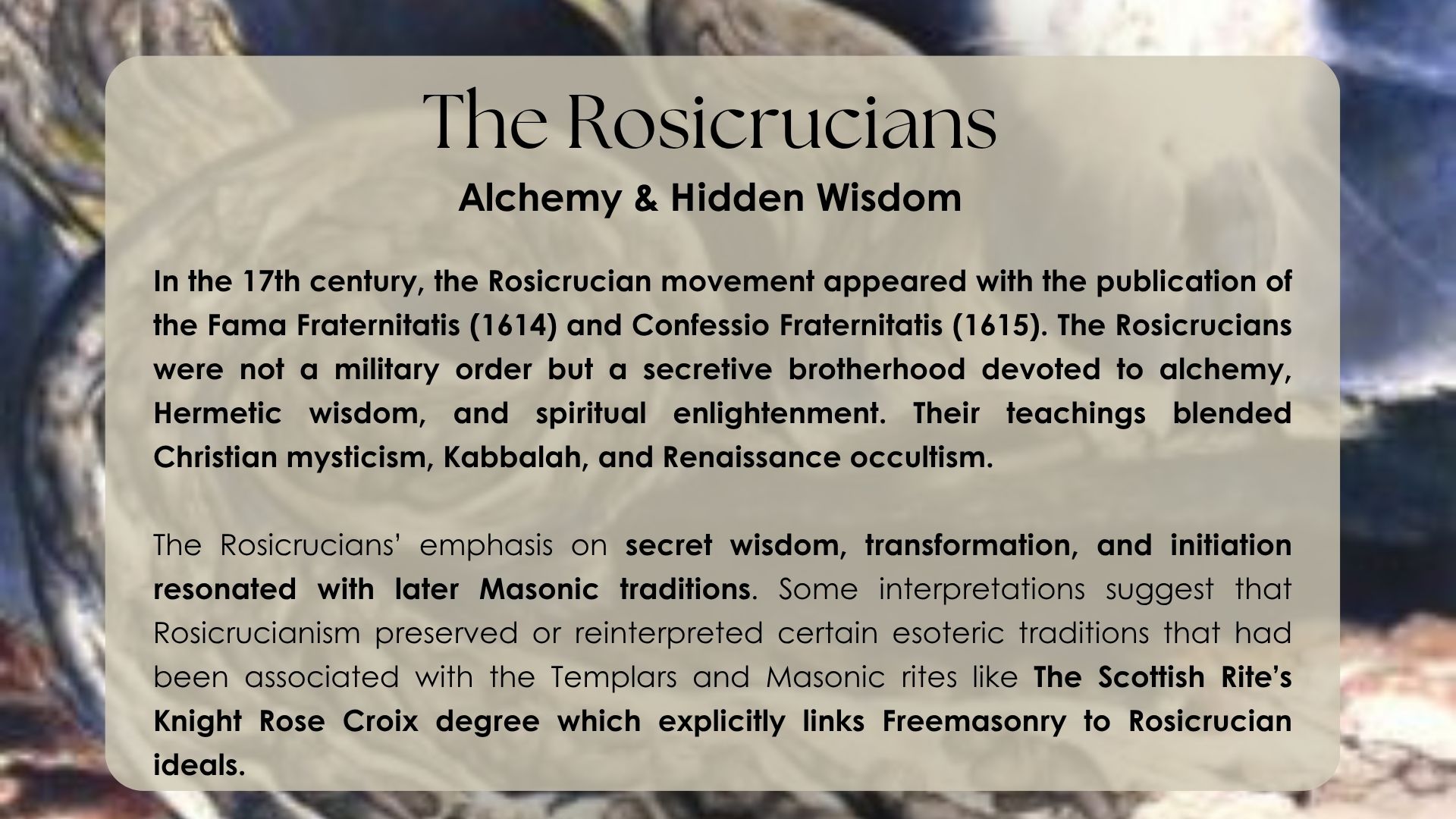
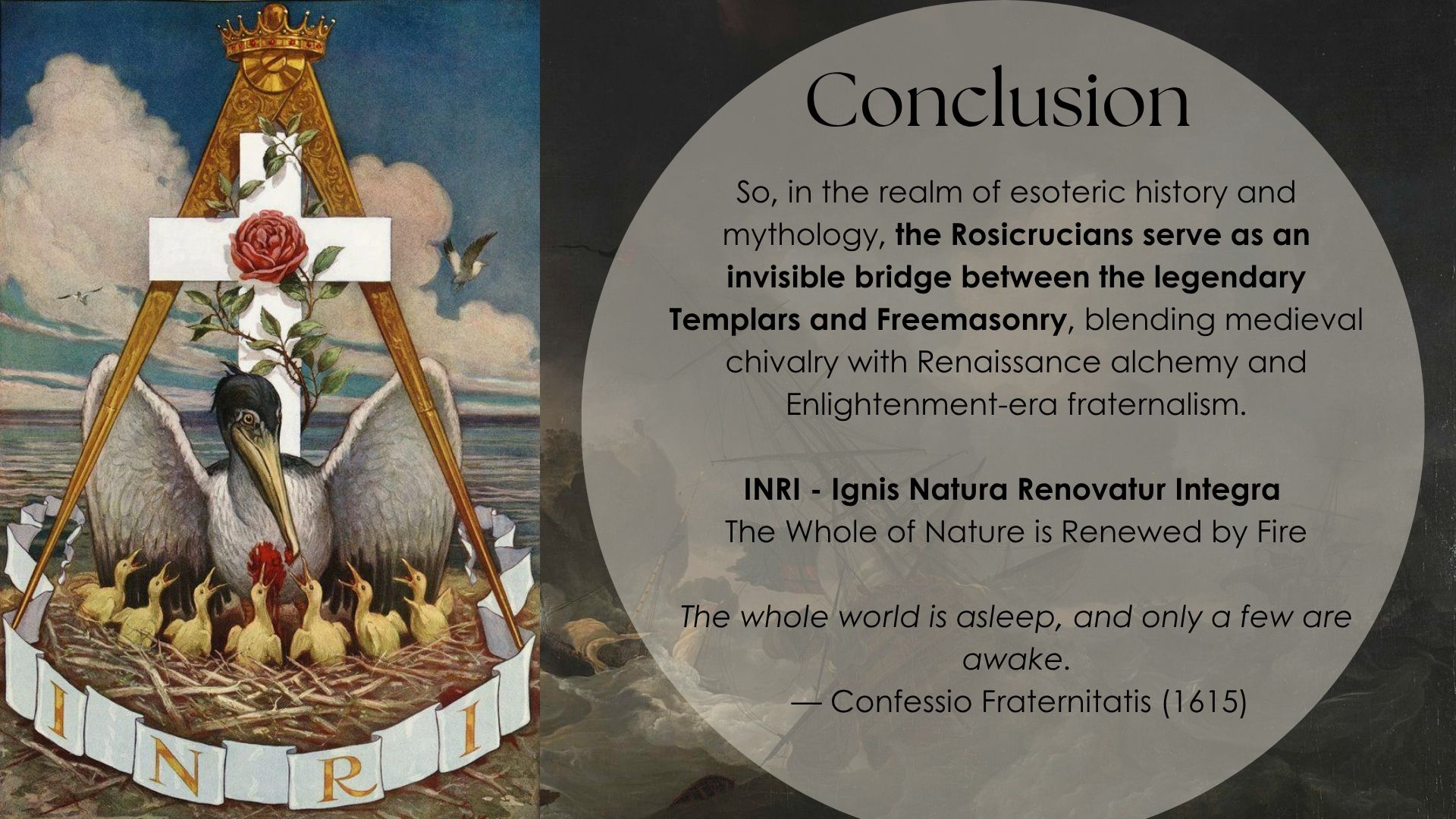
The appearance of the Rosicrucian manifestos in seventeenth-century Europe provides one of the most remarkable examples of an idea becoming history. Announcing an elusive brotherhood dedicated to knowledge, healing and spiritual and intellectual reform, the manifestos emerged from a world in which alchemy, Hermetic philosophy, Christian mysticism and the developing natural sciences had not yet separated into the categories we recognise today.
Whether the original brotherhood existed in the form its texts described is almost beside the point. Europe began searching for it — and eventually created Rosicrucian organisations of its own. Helena's research and teaching explore this process of myth becoming movement, and the subsequent interaction of Rosicrucian ideas with Freemasonry and later initiatory traditions, including the Hermetic Order of the Golden Dawn.
University Guest Lecture · 2025 · Concordia University of Edmonton, Canada
Delivered for REL 312 · Magic and the Occult at the invitation of Professor Emeritus of Religious Studies Dr Steven Muir, this lecture examined the Rosicrucians as a conceptual and esoteric bridge within later traditions surrounding the Knights Templar and Freemasonry — while distinguishing symbolic transmission and historical influence from claims of simple institutional descent.
Inventing Ancient Origins
Secret societies frequently look backwards. Claims of descent from ancient mystery schools, biblical communities, the builders of Solomon's Temple, the Knights Templar and other initiatory traditions have become part of the mythology of Western esotericism. But claimed ancestry and demonstrable historical transmission are not the same thing.
One strand of Helena's research examines the extraordinary afterlife of the Essenes within Western esoteric thought. From the eighteenth century onwards, they were increasingly transformed into an ancient secret brotherhood: guardians of hidden wisdom, teachers of Jesus and, eventually, supposed predecessors of Freemasonry and Rosicrucianism.
Yet the historical Essenes revealed by ancient sources belong to a specifically Jewish religious world characterised by strict observance, ritual purity, exclusivity and powerful apocalyptic expectations. Josephus describes the principal Essene community as celibate and deeply suspicious of marriage, reporting a particular distrust of women's sexual fidelity; he also records a separate Essene group that did marry. This is a considerably more austere and gender-restrictive world than the enlightened, gender-progressive secret brotherhood imagined in much later esoteric literature.
That matters particularly when later traditions attempt to place Jesus, Mary Magdalene or John the Baptist inside an Essene lineage. Parallels in asceticism, purification, apocalyptic expectation or wilderness imagery can invite comparison, but comparison is not membership. No surviving ancient source identifies any of the three as Essenes, and the specifically Essene structures described by Josephus cannot simply be projected onto them. The association of Mary Magdalene with an Essene initiatory community is especially difficult to reconcile with the principal community's documented attitude towards women and marriage.
Their surviving traditions include secrecy and practices that later readers could interpret esoterically, but this does not make the later portrait historically accurate.
What if the problem is not that the tradition remembered the wrong ideas — but that it attached them to the wrong community?
Following the tradition backwards reveals something remarkable. The familiar image of Jesus being educated by an enlightened secret Essene brotherhood can be traced in important part to eighteenth-century speculation and historical fiction. Karl Friedrich Bahrdt's influential account was conceived as a novel rather than a historical biography; its Essenes became an international secret order that selected and instructed Jesus. The narrative was subsequently expanded and absorbed into later esoteric literature, while Masonic traditions also adopted the Essenes as supposed predecessors of Freemasonry.
Helena's continuing research follows this construction through Western esoteric history and examines why the supposed connections between the Essenes, Jesus and Mary Magdalene — and between the Essenes and later Freemasonry — require substantial reconsideration.
Blavatsky · Theosophy · Esoteric Reception
H. P. Blavatsky was an important nineteenth-century contributor to the esoteric afterlife of the Essenes. In Isis Unveiled (1877), she presented the Essenes and Therapeutae within a much older initiatory and theurgic current and asserted that Jesus had been educated and initiated among them before separating from their community. These claims became influential within later occult and esoteric constructions of Christian origins.
Helena's position draws an important boundary here. Spiritual revelation, mediumship and other forms of received experience may be meaningful within spiritual practice; they do not, by themselves, establish historical fact. A revelatory claim can be studied as testimony, religious experience and the source of a later tradition, but an ancient genealogy still requires evidence appropriate to historical enquiry.
Revelation can create tradition. It cannot substitute for the archive.
But removing one historical identification raises another question. The ancient world preserves evidence of another community, largely overlooked in popular esoteric genealogies, whose beliefs, practices and social character provide a strikingly different context for some of the qualities that later tradition mistakenly projected onto the Essenes. Helena's current research investigates whether this neglected community offers a more plausible historical setting for ideas surrounding Jesus, Mary Magdalene and the earliest currents that would later emerge more recognisably within Gnostic thought.
The identity of this community and the fuller argument are deliberately being reserved for Helena's ongoing research and forthcoming publication.
Scotland · 1598–99 · Lodge Culture
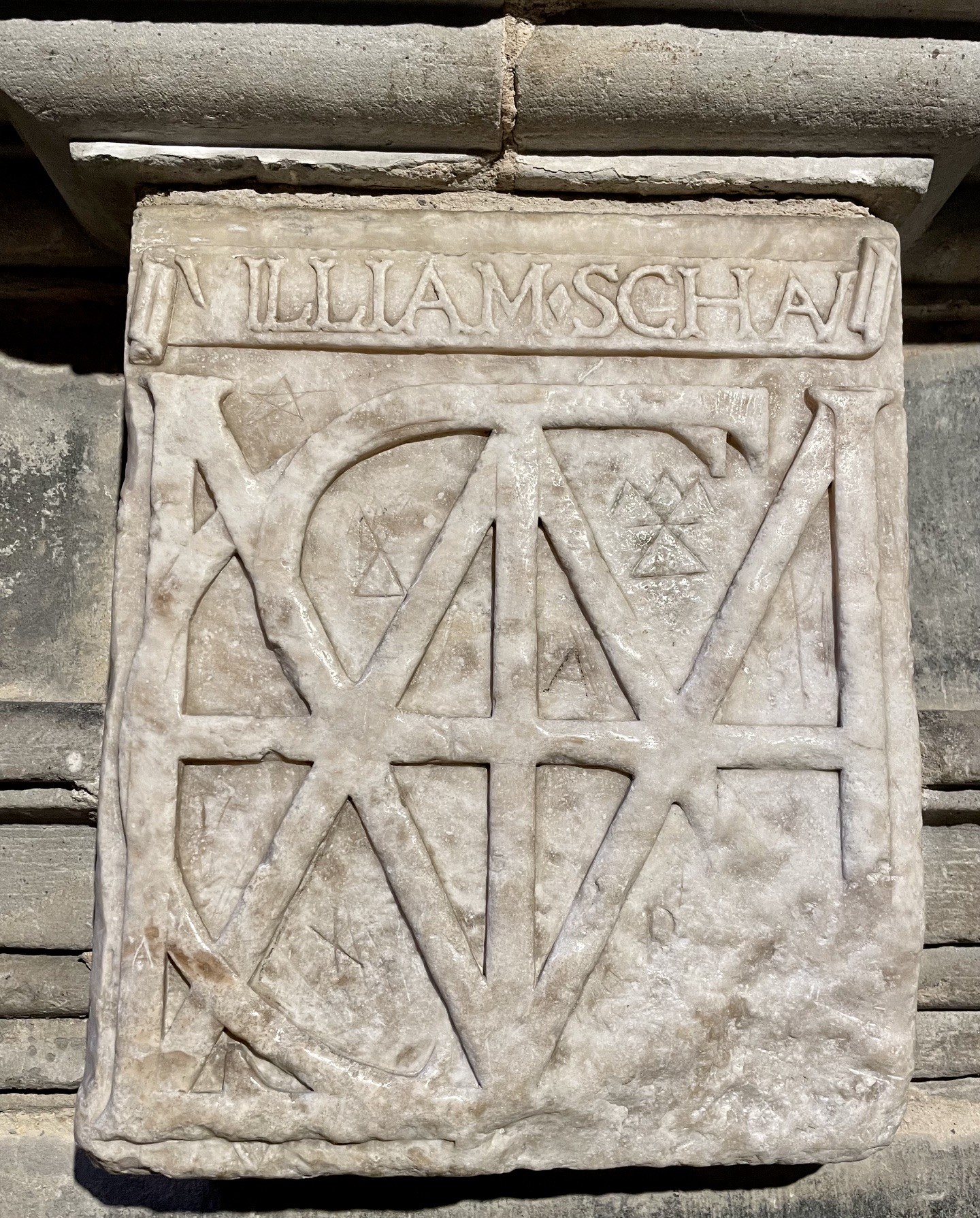
Scotland preserves exceptionally early documentary evidence for organised lodge masonry. William Schaw, Master of Works to James VI, issued statutes in 1598 and 1599 regulating masons, lodges, apprentices, meetings and the recording of marks. Helena's fieldwork at Dunfermline Abbey has brought these written rules into conversation with Schaw's surviving monument and the marks cut into its stone.
1598–99
Rules for an established Scottish craft and lodge culture, more than a century before the first English Grand Lodge of 1717.
No. 0
Kilwinning’s traditional designation as Lodge No. 0 preserves its exceptional claim to antiquity within Scottish Freemasonry.
No. 1
Its surviving minutes begin in 1599, giving Mary’s Chapel one of the most important continuous documentary records in the history of lodge Masonry.
Dunfermline · Field Archive
Schaw's memorial makes the transition from documentary history to material culture visible. Helena's photographs record the name monogram and working marks on the monument as part of her wider study of mason's marks and the organisation of building craft.
Explore the Schaw field study →Mother Lodge Kilwinning (No. 0) · Private Research Visit
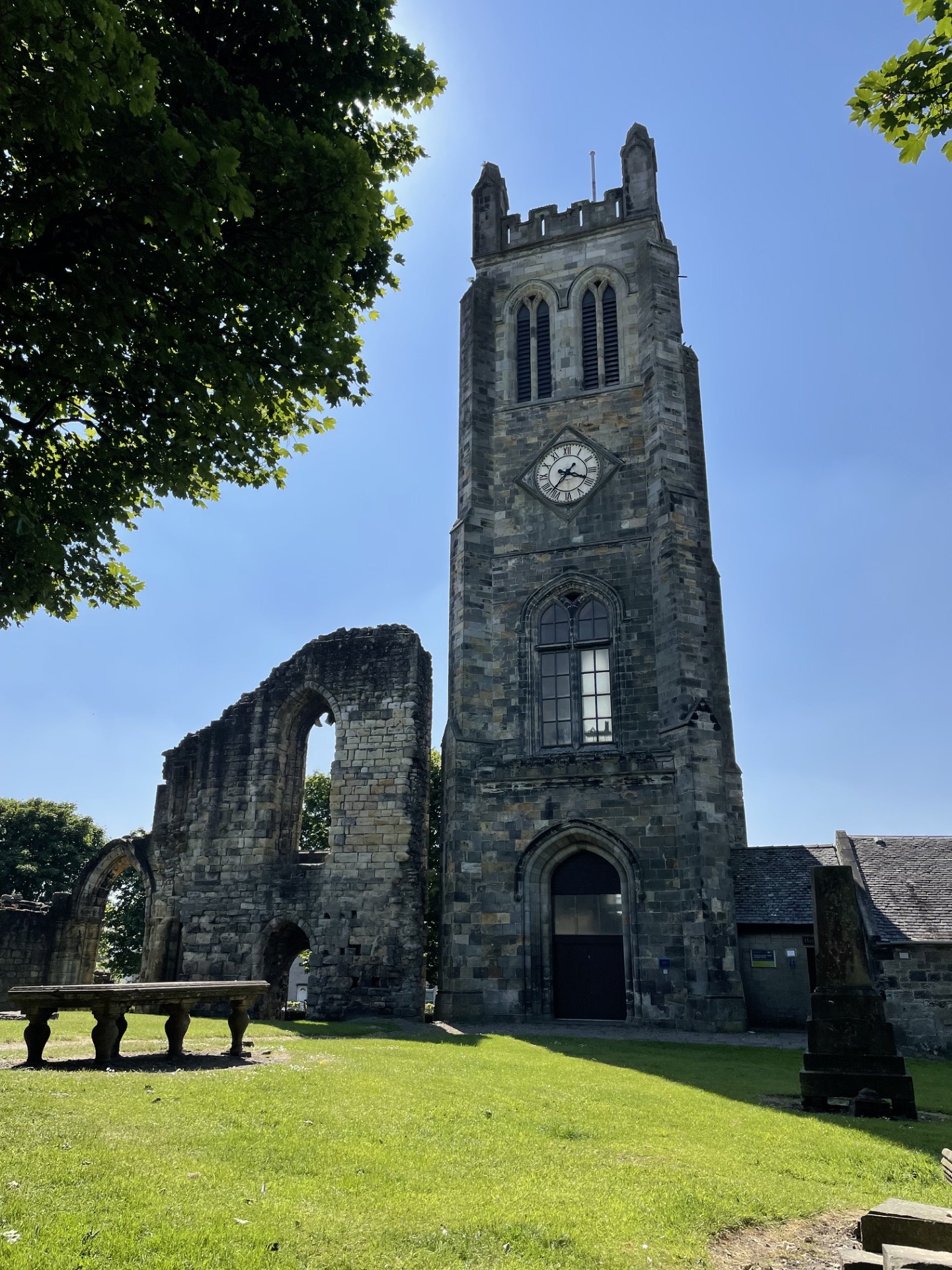
During a private visit, Helena was generously shown the Lodge, its material history and the surviving landscape around Kilwinning Abbey. The sequence below moves from the Abbey and the Lodge's 1140 tradition through the earlier lodge site to the present Mother Lodge and its interior.
Kilwinning Abbey
The older sacred and building landscape behind the lodge tradition · photograph by Helena B. Scott · click main image to enlarge
Mother Lodge Kilwinning traces its own history to 1140 and the building of Kilwinning Abbey. The date belongs to the Lodge's historical tradition rather than to a surviving twelfth-century lodge minute book: its known minutes begin in 1642, while the Schaw Statutes of 1598–99 provide important earlier documentary evidence for Kilwinning's place within Scottish lodge culture.
Eglinton Castle · Following the Documentary Trail
From lodge tradition to family archive:
following the documents beyond Kilwinning.
Helena's investigation of Mother Kilwinning also led her to Eglinton Castle, historic seat of the Earls of Eglinton. The connection is not incidental: Hugh, 5th Earl of Eglinton, purchased the barony of Kilwinning in 1594, and the later succession brought the Seton and Montgomerie lines together when Sir Alexander Seton of Foulstruther inherited the Eglinton estates and assumed the Montgomerie name and arms.
The Eglinton story also opens onto the political world of the Scottish crown. The Montgomeries were deeply embedded in the Stewart realm, and the surviving Eglinton papers preserve grants made by Mary, Queen of Scots to the family. The later succession of Sir Alexander Seton of Foulstruther to the Eglinton estates brought the Seton and Montgomerie lines together, linking this Ayrshire landscape to another family closely associated with Scotland's Stewart history. For Helena, these dynastic connections matter because lodge history did not develop in isolation: landholding, patronage, court politics, kinship and the movement of manuscripts all formed part of the world in which early Scottish Masonry took shape.
Eglinton also occupies an important place in the documentary history of Scottish Masonry. Mother Kilwinning records that during a search of the castle in 1860, the Schaw Statutes of 1598 and 1599 were rediscovered there — documents that provided crucial early evidence for Kilwinning's place within Scotland's lodge culture.
Explore the Eglinton & Montgomerie archive · National Records of Scotland ↗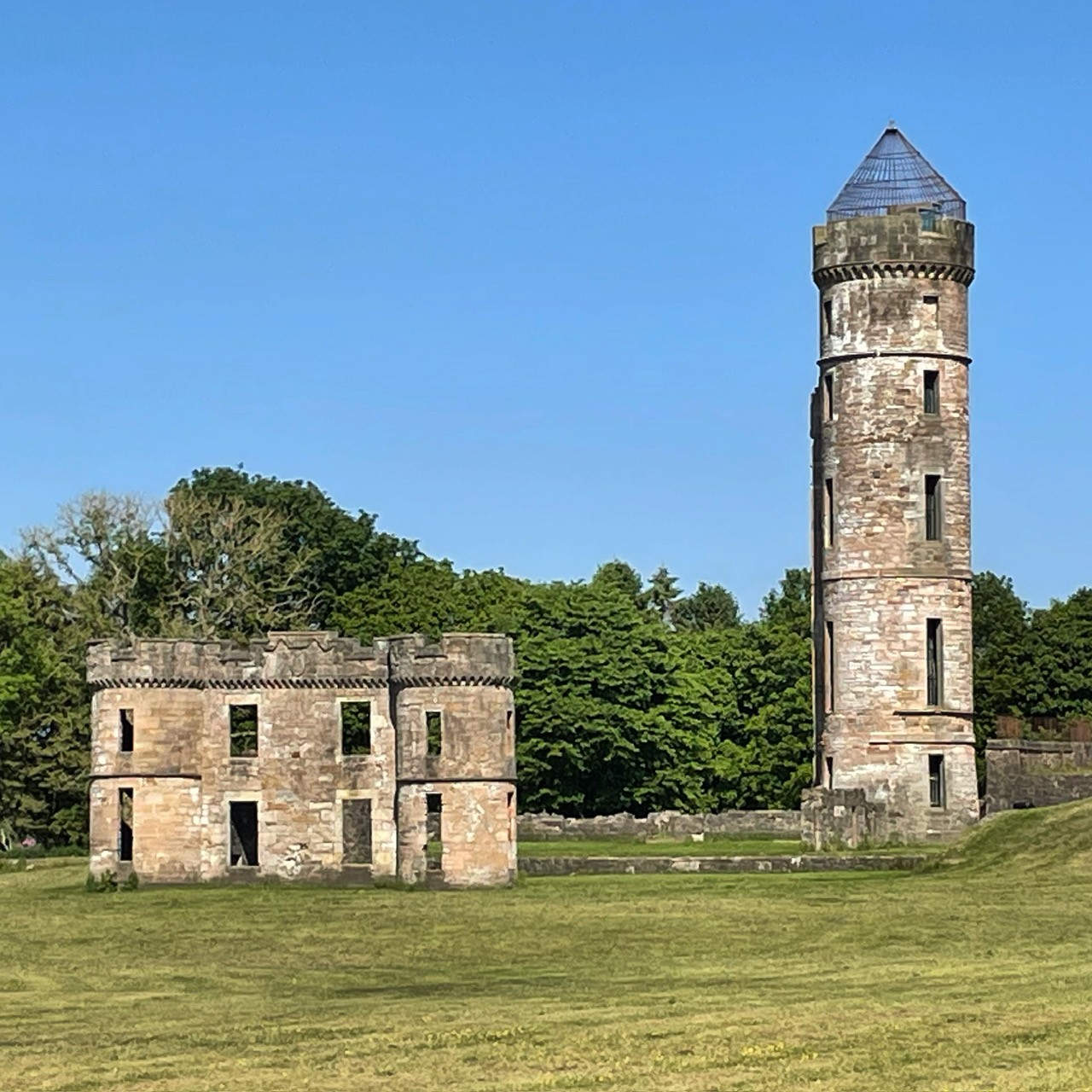
Heredom · Kilwinning · Landscape · Masonic Memory
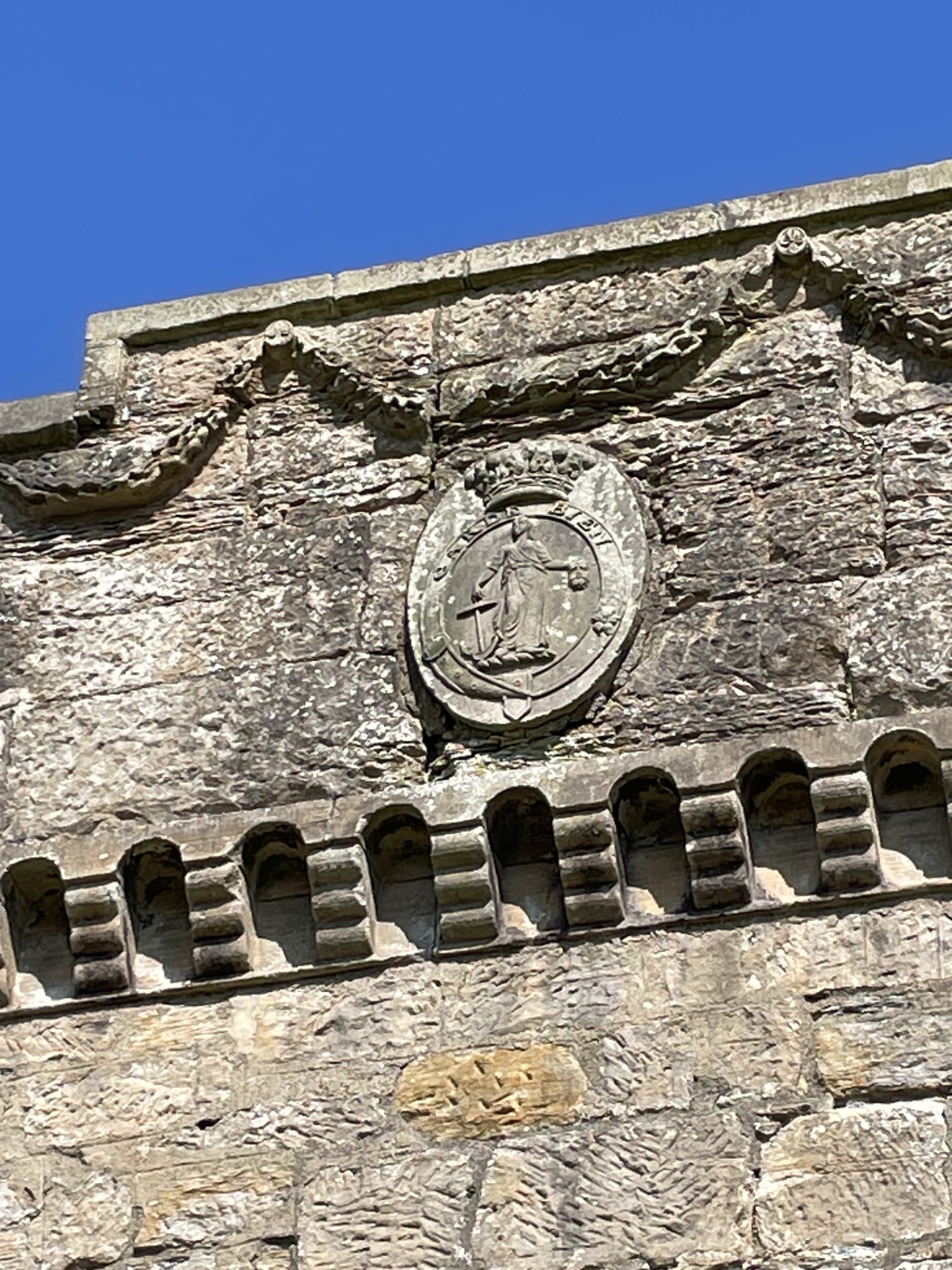
Helena's field research in the Kilwinning–Eglinton landscape also follows the tradition of Heredom of Kilwinning and the proposed location of the legendary Mount Heredom. While working in the area she attempted to trace this landscape herself, including geometric features identified in historic mapping of the Eglinton estate and neighbouring Benslie landscape.
The Royal Order of Scotland preserves two closely connected degrees: Heredom of Kilwinning and Knight of the Rosy Cross. Its own traditional history connects Kilwinning with Robert the Bruce and places the Rosy Cross tradition at Bannockburn in 1314, where Bruce is said to have received assistance from a body of knights sometimes identified with former Templars.
The surviving documentary record and the traditional history do not presently align into a simple medieval institutional genealogy. Helena's research does not treat that gap as a reason to discard the tradition. Instead, it forms part of her wider historical-revisionist enquiry: returning to landscape, lodge memory, archival traces, symbolism and the histories surrounding Heredom, Kilwinning, the Rosy Cross, Robert the Bruce and Templar reception to ask what may have been overlooked — and what the evidence may yet allow us to reconsider.
Research in development · fuller findings reserved for Helena's forthcoming work.
The Oldest Lodge? · A Scottish Question
Scotland preserves some of the earliest documentary evidence for organised lodge Masonry anywhere in Europe — but precedence remains one of its most intriguing historical questions. Mother Lodge Kilwinning (No. 0) traces its tradition to the masons associated with the building of Kilwinning Abbey around 1140. Its own surviving minute books begin in 1642, although the Schaw material of 1598–99 independently confirms Kilwinning as an established lodge and preserves its claim to “old and ancient liberties.”
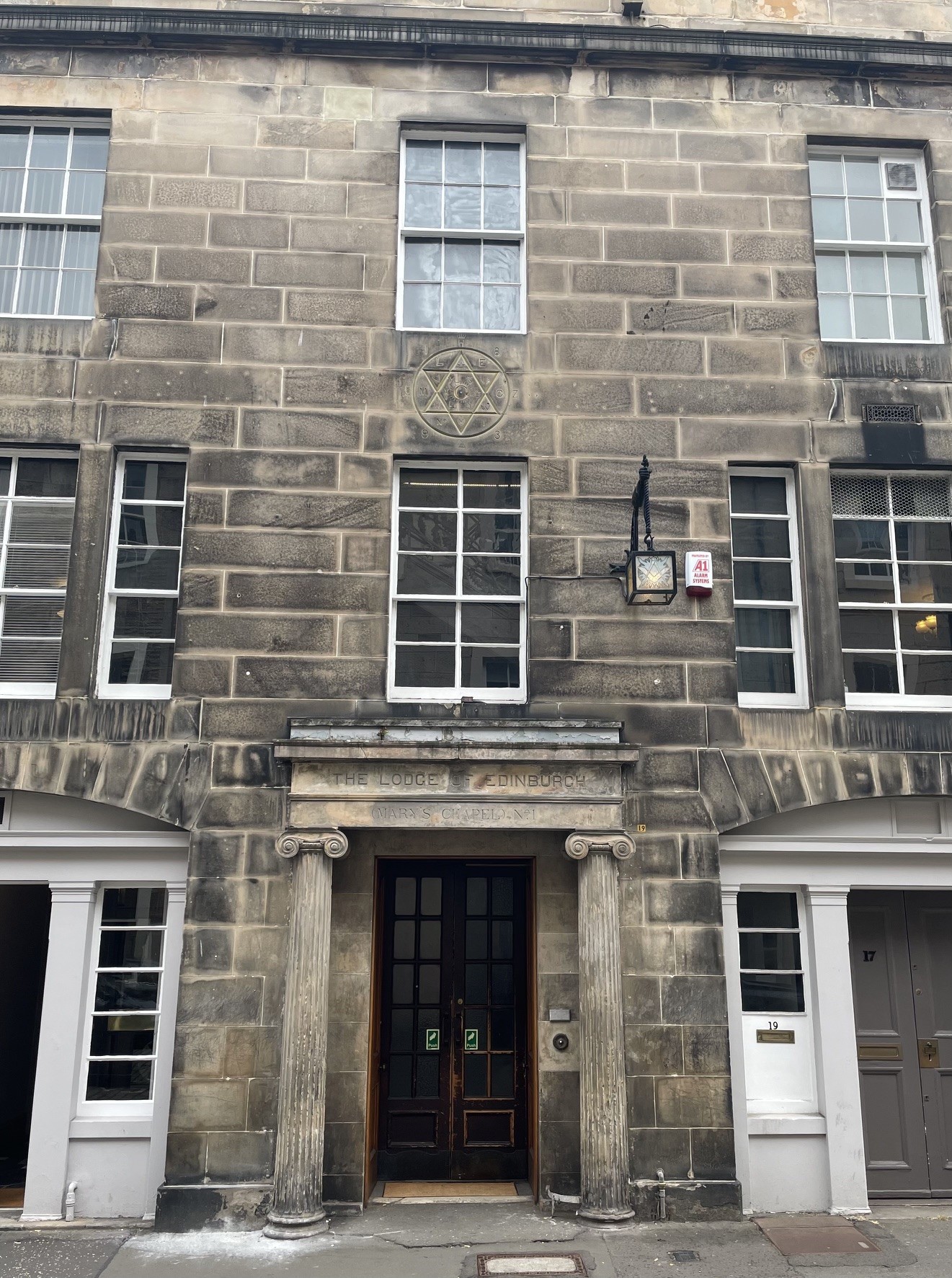
The Lodge of Edinburgh (Mary’s Chapel) No. 1, by contrast, preserves its own continuous minutes from July 1599 — the oldest surviving minutes belonging to a Masonic lodge still working today. The Schaw material itself preserves the historical tension: Edinburgh receives documentary precedence while Kilwinning retains an exceptional traditional status within Scottish Masonry.
Tradition · No. 0
Mother Lodge Kilwinning
1140 lodge tradition · Schaw evidence 1598–99 · surviving lodge minutes from 1642 · distinctive No. 0.
Archive · No. 1
Lodge of Edinburgh · Mary’s Chapel
Schaw Statutes preserved with the lodge record · continuous surviving minutes from 31 July 1599 · No. 1.
Tradition gives Kilwinning the older memory. The surviving archive gives Mary’s Chapel the earlier continuous documentary record.
Helena has visited both lodges. At Mary’s Chapel she was shown the secure archive in which the historic records are preserved and saw reproductions of the early minutes and Schaw material displayed within the lodge. The competing traditions are therefore presented here as part of the living history shared by the lodges themselves, alongside the surviving documentary record.
Mary’s Chapel · Conan Doyle · A Later Connection
Sir Arthur Conan Doyle — creator of Sherlock Holmes, Freemason and later President of the London Spiritualist Alliance — was made an honorary member of the Lodge of Edinburgh (Mary’s Chapel) No. 1 in 1901. That later connection creates an unusual bridge between one of Scotland's oldest documented lodge traditions and the psychical and Spiritualist institution that would become the College of Psychic Studies, where Helena trained for more than a decade and now teaches.
Doyle's engagement with the unseen was not a late-life curiosity. He began investigating psychical phenomena in the 1880s, attended séances and experiments in telepathy, joined the Society for Psychical Research in 1893, and eventually devoted much of the final fourteen years of his life to Spiritualism. His substantial psychic and Spiritualist writings included The New Revelation (1918), The Vital Message (1919), Wanderings of a Spiritualist (1921), the two-volume History of Spiritualism (1926), Pheneas Speaks (1927) and The Edge of the Unknown (1930). His career therefore joins Freemasonry, mediumship, psychical research and public advocacy for survival after death within a single remarkable intellectual life.
Lodge of Edinburgh (Mary's Chapel) No. 1 · Private Research Visit
Helena visited the Lodge of Edinburgh (Mary's Chapel) No. 1 by private arrangement, where members generously shared the Lodge's history, architecture, symbolism and material culture with her. The visit included discussion of its extraordinary documentary record, the early lodge minutes and Schaw material, as well as the working tools, ashlar, historic marks and objects through which the traditions of the Craft continue to be communicated.
The generosity of these private visits — at Mary's Chapel and Mother Lodge Kilwinning (No. 0) — has been an important part of Helena's Scottish research. Extended conversations with members offered something archival sources alone cannot provide: an opportunity to encounter how Freemasons themselves understand, preserve and transmit the history and symbolic inheritance of their lodges.
The Lodge of Edinburgh (Mary's Chapel) No. 1 occupies a different place in the story. While Kilwinning preserves the older foundation tradition, Mary's Chapel possesses the extraordinary documentary record: its surviving minutes begin on 31 July 1599, within the world shaped by William Schaw's statutes and the organisation of Scottish craft Masonry. The Lodge met historically in Mary's Chapel in Niddry's Wynd before later moving to its present home in Hill Street, carrying the name of the earlier meeting place with it.
Lodge of Edinburgh (Mary's Chapel) No. 1
Façade · private research visit · photograph by Helena B. Scott · click main image to enlarge
Field Relationships · Scotland
These encounters also gave Helena something different from documentary research: the opportunity to listen to how Freemasons themselves understand the history, material culture and symbolism of the Craft. Conversations in Kilwinning, Edinburgh and at Rosslyn added living institutional memory to the archival and architectural evidence already under study. What was shared was material appropriate for a visiting researcher — history, symbolism, buildings, collections and publicly discussable tradition — not private ritual, obligations or material that members regarded as confidential.
Those encounters have led to lasting friendships within Scottish Freemasonry and have strengthened Helena's interest in presenting the Craft through its history, symbolism and ethical traditions rather than through the conspiracy narratives that so often surround it.
Symbol · Ethics · Inner Formation
For Helena, one of Freemasonry's enduring values lies in its use of symbol as a language of moral and inner formation. The traditional description of the Craft as a system of morality “veiled in allegory and illustrated by symbols” points towards something that connects directly with her wider work: symbols are not merely decorative. They can become instruments for reflection, self-knowledge and transformation.
Her teaching therefore returns repeatedly to the sources — tracing the historical meanings of Masonic images, ritual language and material culture while also asking what those symbols can still offer to people engaging with them today. The symbolic and ethical inheritance of Freemasonry has value beyond questions of lodge membership.
Rosslyn Chapel · Carving · Initiation · Reception
Founded by William St Clair in 1446, Rosslyn Chapel occupies a distinctive place in Helena's research because its extraordinary carved programme sits at the meeting point of medieval material culture and centuries of later esoteric interpretation. Rather than treating the chapel as a single symbolic code, Helena returns to the carvings themselves — their placement, repetition, craft and documented histories — before asking how later initiatory traditions have read them.
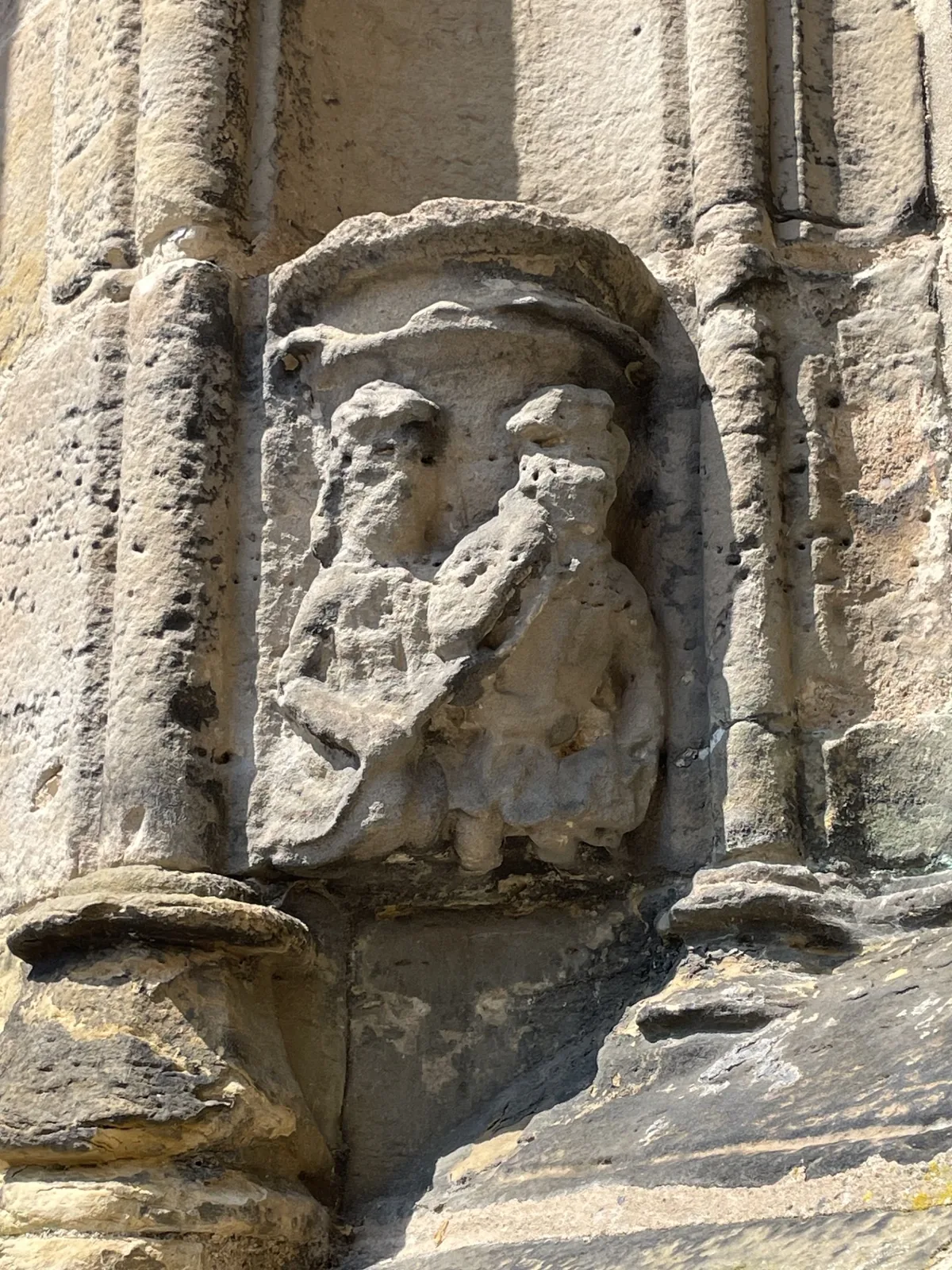
Exterior Detail · The Entered Apprentice
Helena's close-up records the exterior relief she knows as the “Entered Apprentice.” The name immediately resonates with the first degree of later Craft Freemasonry, making the carving especially interesting within the chapel's subsequent Masonic and esoteric reception. The exterior relief and the celebrated Apprentice Pillar inside are separate works.
Study the carving in its material context →Vines spiral around one of Rosslyn’s most celebrated carved pillars, with dragons at its base and a later tradition of the gifted apprentice.
Explore Rosslyn Chapel ↗Foliated faces recur throughout the chapel, binding human image and vegetal form into one of Rosslyn’s most persistent carved motifs.
Explore Rosslyn Chapel ↗The south-aisle inscription draws upon the wisdom contest in 1 Esdras: wine, king, women — and finally truth.
Explore Rosslyn Chapel ↗Ireland · France · Craft Networks · Transmission
Scotland preserves exceptionally early lodge records, but the history of Freemasonry cannot be reduced to a single national origin story. Helena's research also follows Irish and French routes through which military, craft and initiatory cultures moved across borders and were subsequently remembered.
Irish Jacobites · France
A later tradition associated with La Parfaite Égalité claimed a foundation in 1688 within an Irish Stuart regiment connected with the Jacobite world in France. The Grand Orient accepted that claimed antiquity in the eighteenth century, but surviving contemporary evidence does not securely establish a lodge at Saint-Germain-en-Laye in 1688. The tradition nevertheless points towards the important Irish and Jacobite presence in the development of eighteenth-century French Masonry.
France · Compagnonnage
French Compagnonnage preserves its own craft genealogies around three legendary founding families: the Children of Solomon, the Children of Maître Jacques and the Children of Père Soubise. Their traditions join building craft, journey, Temple imagery, fraternity and moral formation. Later traditions identified Maître Jacques with Jacques de Molay and connected branches of the Compagnons with the Knights Templar, preserving a remarkable memory in which craft, Temple, initiation and Templar tradition converge.
Helena's Interpretive Framework
The Knights Templar did not simply “become the Freemasons.” But it is equally unhelpful to deny the associations that developed between Templar memory, building craft, initiatory traditions and later Freemasonry. The relationship is more complex — and more interesting — than either a simple line of institutional descent or a claim that no meaningful connection exists.
What survives is a web of craft networks, building traditions, initiatory structures, Temple mythology and symbolic vocabulary that could be transmitted, forgotten, reinterpreted and recombined across different communities. Helena describes this symbolic mode of transmission as a green language of initiation — a way of reading image, stone, ritual and allegory as carriers of meaning across changing historical worlds.
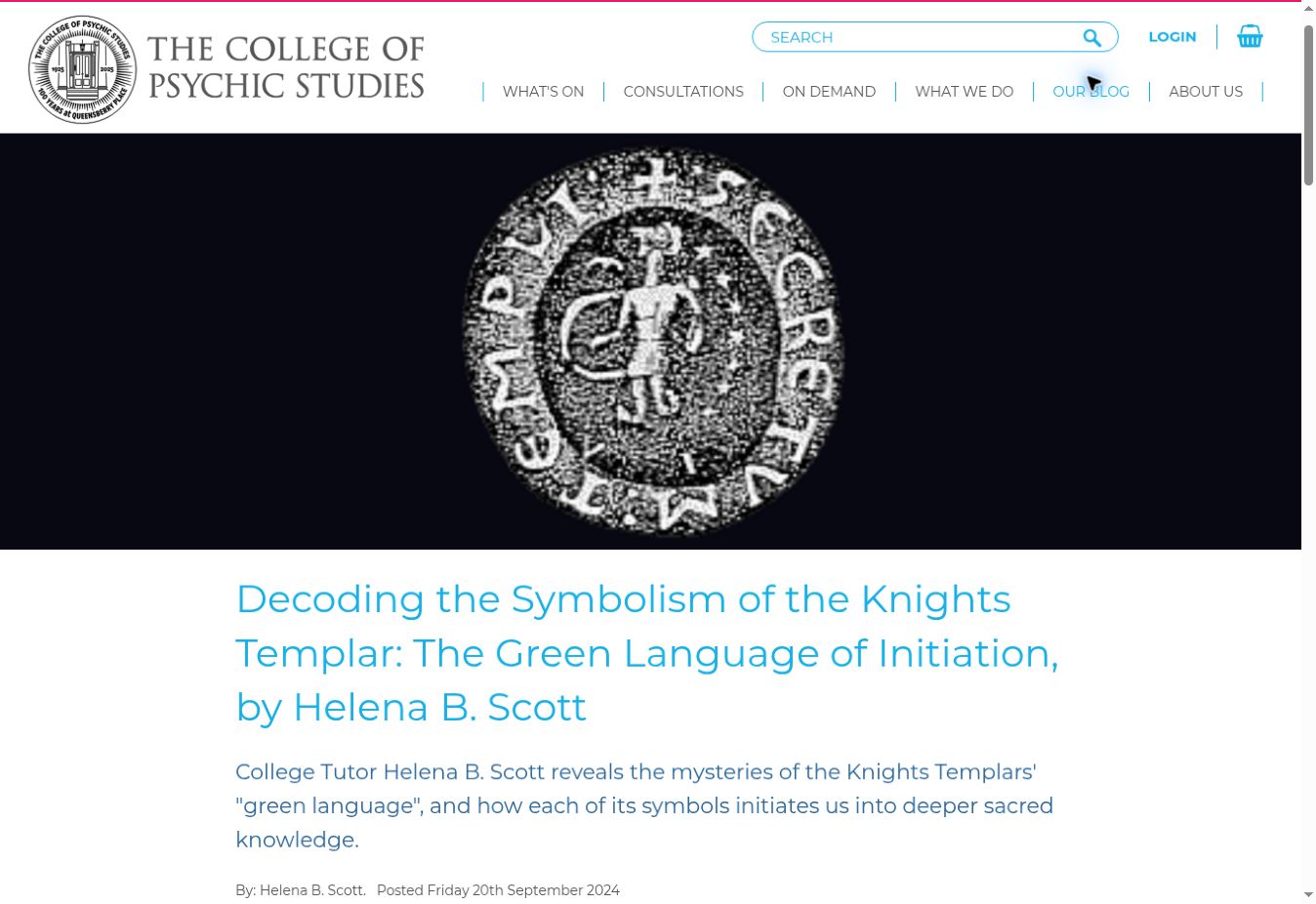 Read Helena's College essay · The Green Language of Initiation ↗
Kirkwall · Orkney Islands · Scotland
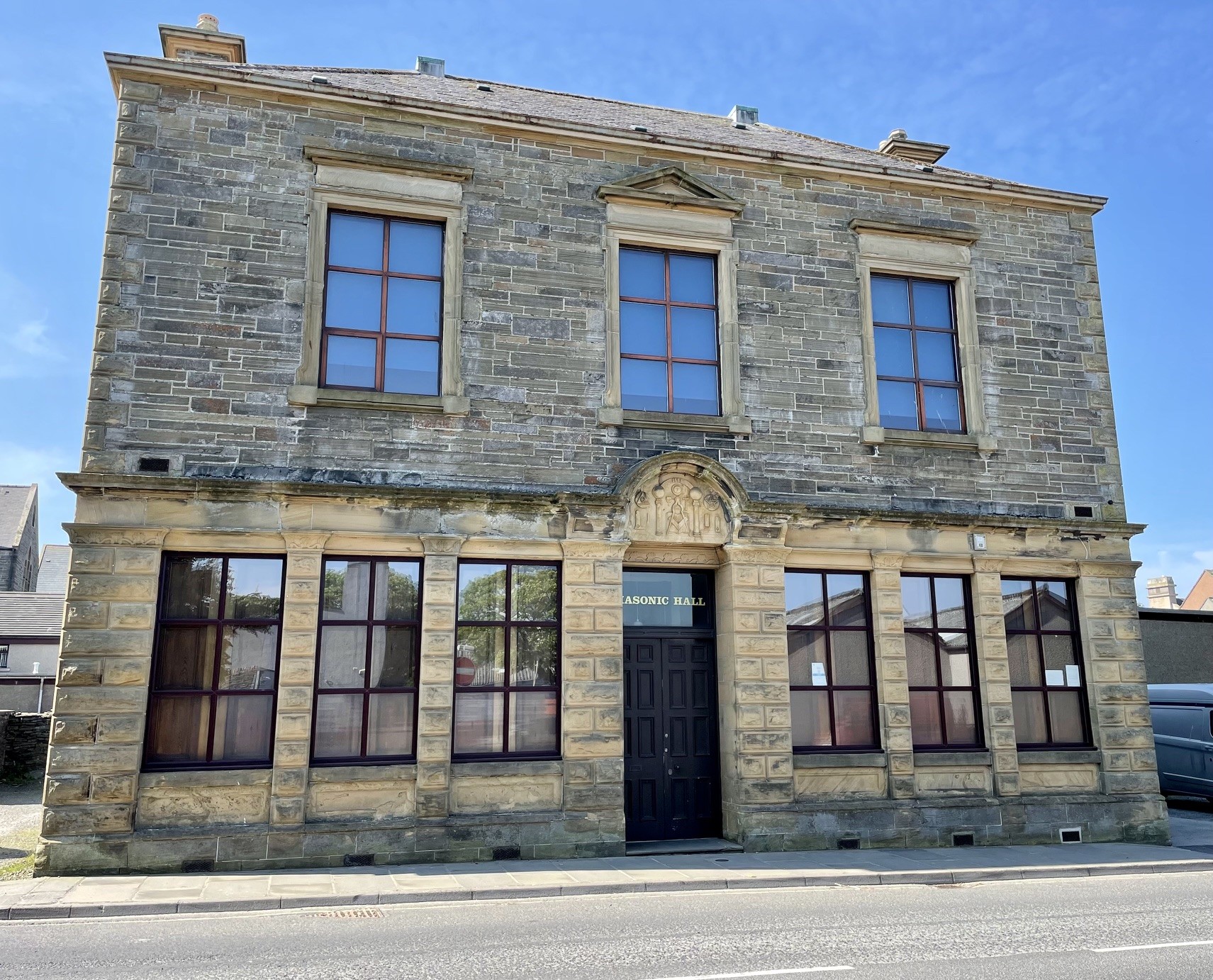
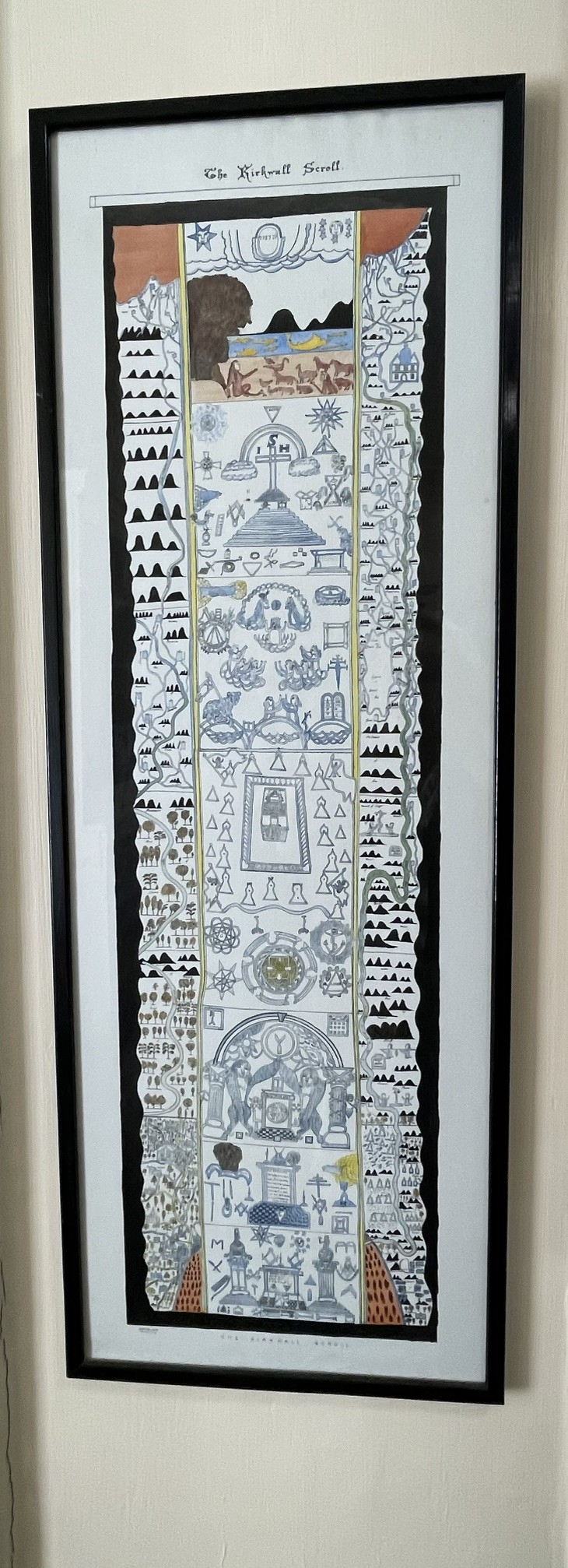
Lodge Kirkwall Kilwinning No. 38² preserves lodge records from 1736 and received its Grand Lodge charter in 1740. The Kirkwall Scroll is one of the most enigmatic objects associated with Scottish Freemasonry: a long painted cloth combining recognisably Masonic imagery with biblical, symbolic and more difficult-to-identify material. It has attracted claims of great antiquity, including proposed medieval and Templar associations.
The Orkney–Rosslyn connection also has a genuine historical St Clair dimension: the family held the Earldom of Orkney before William St Clair founded Rosslyn Chapel, while Lodge Kirkwall Kilwinning’s eighteenth-century charter was signed by William St Clair of Roslin as Grand Master Mason of Scotland. Later interpretations have drawn the Scroll into the wider cycle of St Clair traditions surrounding Rosslyn, the Knights Templar and Henry Sinclair’s legendary Atlantic voyage — part of the Scroll’s remarkable afterlife rather than a question this page attempts to resolve.
The surviving lodge record provides firmer ground. Lodge Kirkwall Kilwinning was founded in the eighteenth century, and a visiting brother, William Graeme, joined the lodge in 1785 before donating a floor cloth the following year — generally identified with the Scroll. Modern Masonic scholarship has therefore argued for a later eighteenth-century date, while acknowledging that the object remains unusually complex.
For Helena, the Scroll is a remarkable study in symbolic transmission and layered memory: a meeting place where biblical, initiatory, alchemical and Masonic imagery gathers within a single object. Its symbols invite questions about how ideas travel, how traditions remember themselves, and how meanings can be preserved, transformed and rediscovered across generations.
History · Material Culture · Symbolic Transmission
The relationship between the Knights Templar, Rosicrucianism and Freemasonry occupies a complex territory where documented history, material culture, craft tradition, institutional memory and symbolism intersect. Later Masonic traditions explicitly incorporated Templar and Rosicrucian imagery, degrees and narratives, while earlier building cultures, networks and places invite a wider historical enquiry into how knowledge and traditions moved between communities.
Helena approaches this question through documents, archaeology, architecture, artefacts, carved and inscribed material, craft organisation, family and institutional networks, ritual traditions and comparative history. Alongside these forms of evidence, she also follows the symbolic continuum: ideas of initiation, sacred knowledge, inner transformation, death and rebirth, the Temple, the perfected human being and the recovery of lost wisdom that repeatedly reappear — transformed by the historical worlds through which they pass.
The enquiry places history, object, landscape and symbol into conversation — tracing where connections can be documented, where traditions changed, what material evidence survives, and what becomes visible when evidence usually studied in isolation is brought back together.
Ireland · Field Identification · Material Culture
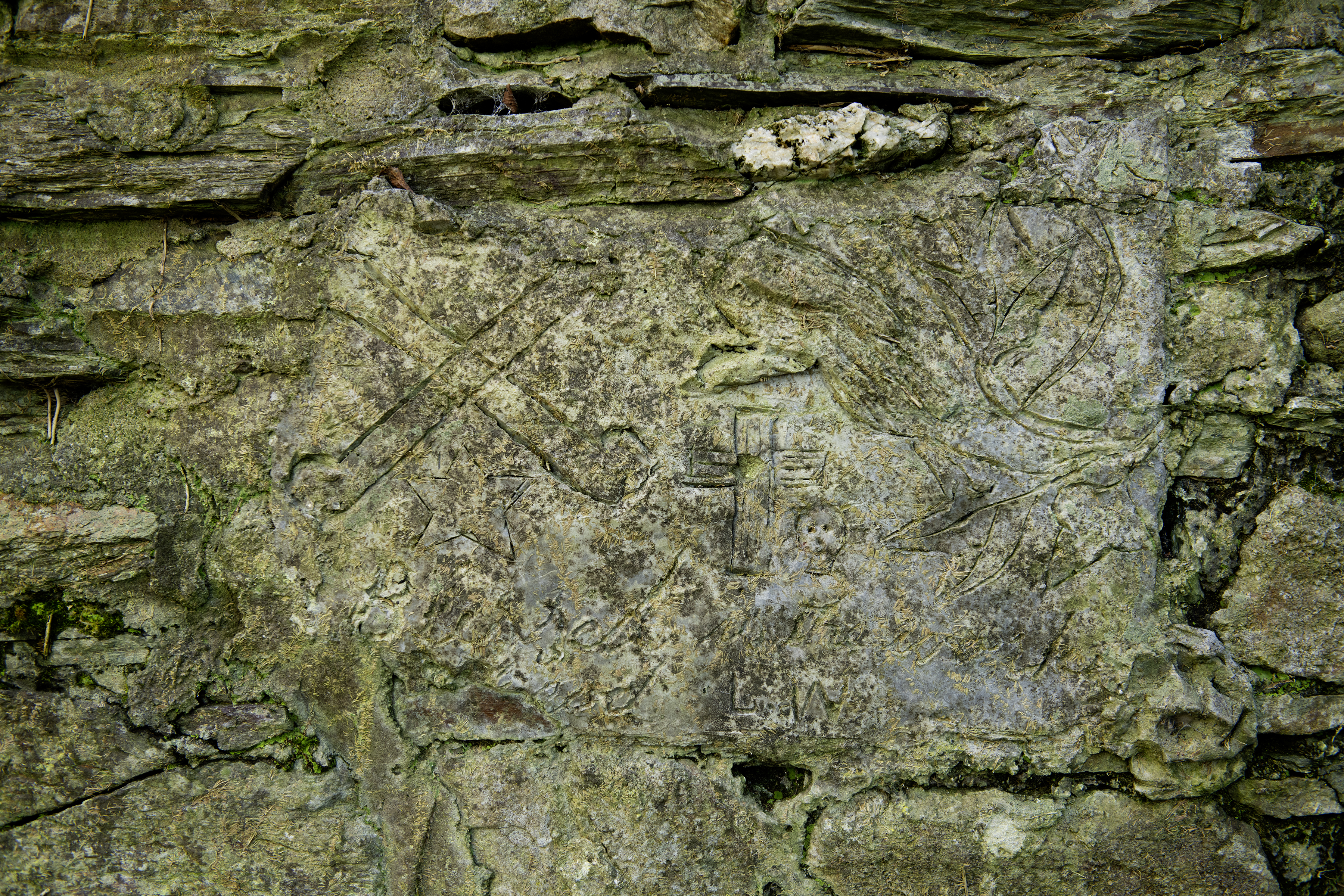
During her MA fieldwork at Kilbarry Knights Templar Graveyard, Helena identified and reported previously unrecorded archaeological material to Ireland's National Monuments Service. Among the later layers was historic Masonic graffiti: a carved block carrying a five-pointed star identified in Helena's research as a Masonic blazing star, crossbones, a cross beside a skull, the inscription “Blessed is the Word,” the letters L W, and an enigmatic bird-like or foliate figure in the upper-right corner.
The block was deliberately incorporated into the later graveyard wall at the site of the former Knights Templar preceptory of Kilbarry, one of the principal Templar houses in medieval Ireland — a placement also noted as intentional during archaeological examination of the wall. That physical relationship makes the graffiti particularly significant within Helena's research into the later memory and reception of Templar sites.
Helena has now written an article tracing the block's symbolic programme and its wider historical resonances, including traditions surrounding the fate of the Knights Templar after the arrests in France and later narratives of Templar movement into Scotland and Ireland. The article brings archaeology, site history, Masonic symbolism and Templar reception into conversation around a single deliberately placed object.
Developing Exhibition Concept · Ireland
Ritual · Object · Symbol
1725 · An Irish Grand Lodge
Ireland belongs to the earliest documented history of organised Grand Lodge Freemasonry. The Premier Grand Lodge of England was established in London in 1717; Ireland followed within a few years, with the first recorded communication of the Grand Lodge of Ireland on 24 June 1725. The Grand Lodge of Scotland was constituted in 1736, although Scotland’s individual lodge culture and documentary record reach considerably further back, as the Schaw Statutes, Mary’s Chapel and Kilwinning material examined above demonstrate. Irish Masonry subsequently developed a distinctive and internationally influential lodge culture, carried abroad through military, mercantile and diasporic networks.
The Irish story also intersects with traditions already encountered on this page. Irish and Jacobite networks formed part of the movement of Masonry into eighteenth-century France, while the first known active body of Masonic Knights Templar recorded in Ireland bore the striking title “The High Knight Templars of Ireland, Kilwinning Lodge.” These strands make Ireland an important meeting place for questions of craft tradition, military networks, Templar reception and the development of Masonic ritual.
Explore the Grand Lodge of Ireland history ↗Helena is developing an exhibition and public-history concept — adaptable as a digital, physical or hybrid project — examining Irish Freemasonry through objects, architecture, archival sources, lodge culture, family networks and symbolism. The idea grows from her encounter with Masonic material culture during her MA museum internship in Waterford, her Kilbarry field identification, and the Masonic architectural and genealogical research developed in Loftus: The Hall of Dreams.
Collection Object · Waterford Treasures
c. 1790 · Chinese armorial porcelain · Synnott Collection · Bishop’s Palace, Waterford
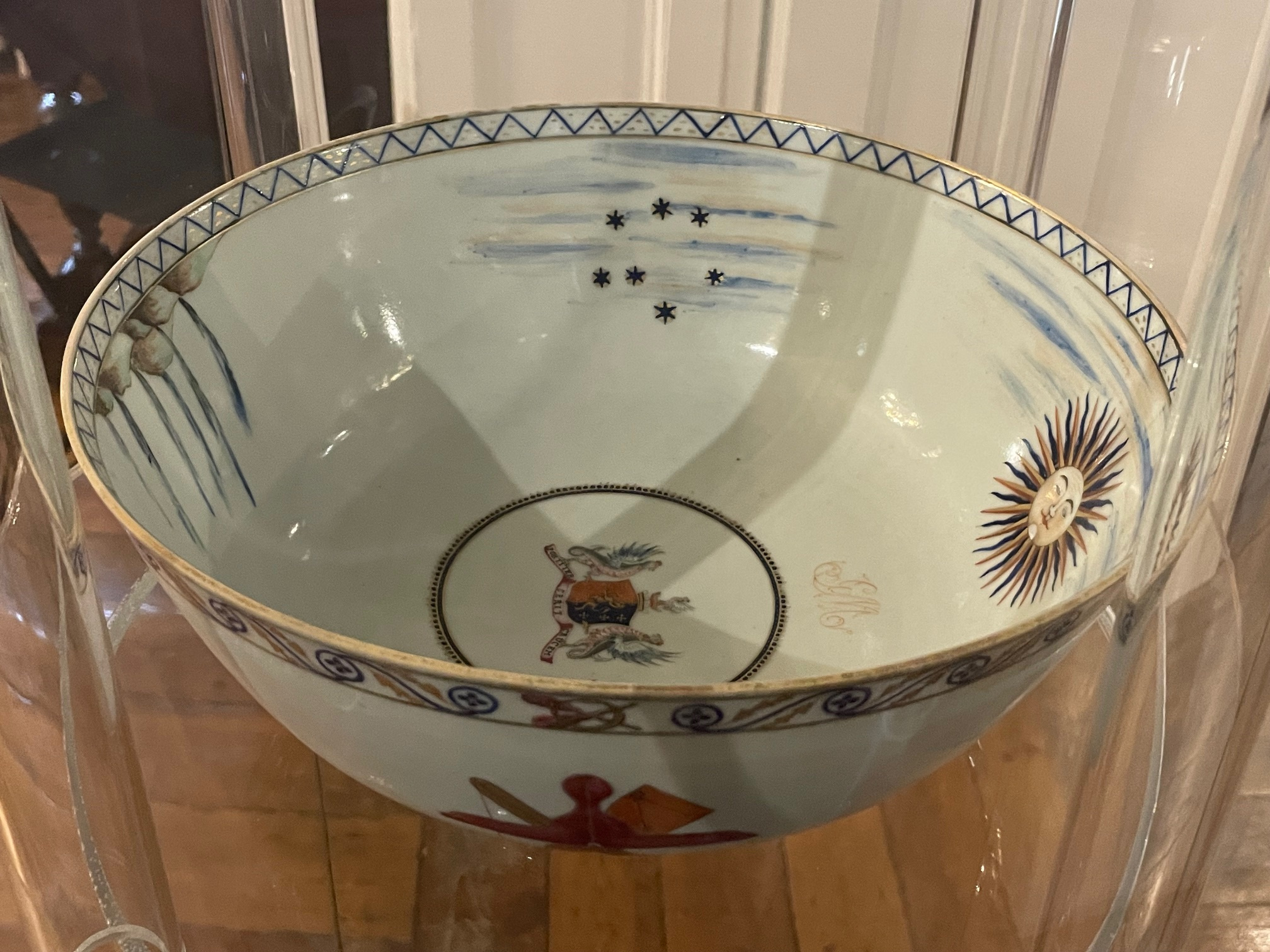
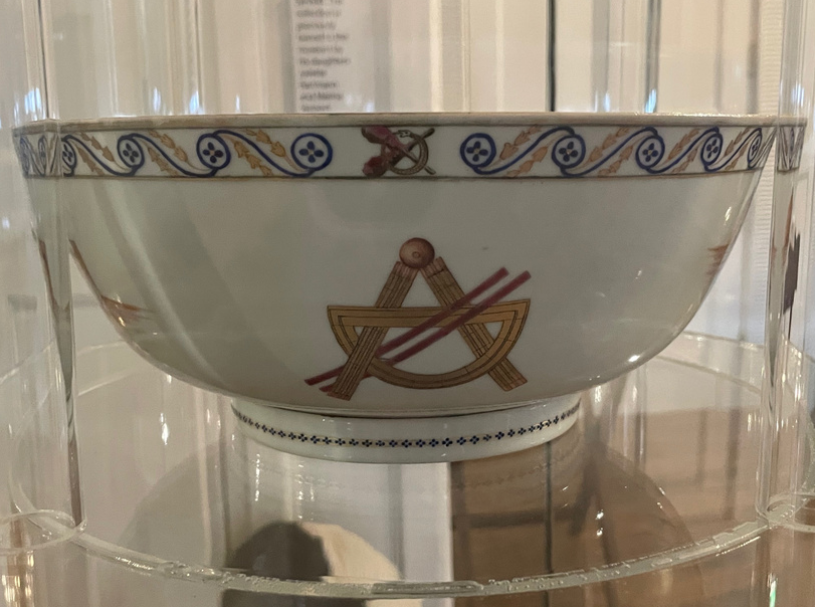
During her museum internship in Waterford, Helena recognised the Masonic character of the bowl through its symbolic programme: the beehive, sun and moon, square and compasses, and seven stars. Made for Richard Hely-Hutchinson, 2nd Baron Donoughmore and Grand Master of the Grand Lodge of Ireland, the object brings together Irish Masonic history, elite networks, global material culture and the visual language of the Craft.
Visit Waterford Treasures · Bishop’s Palace ↗Waterford Medieval Museum · MA Internship · 2025
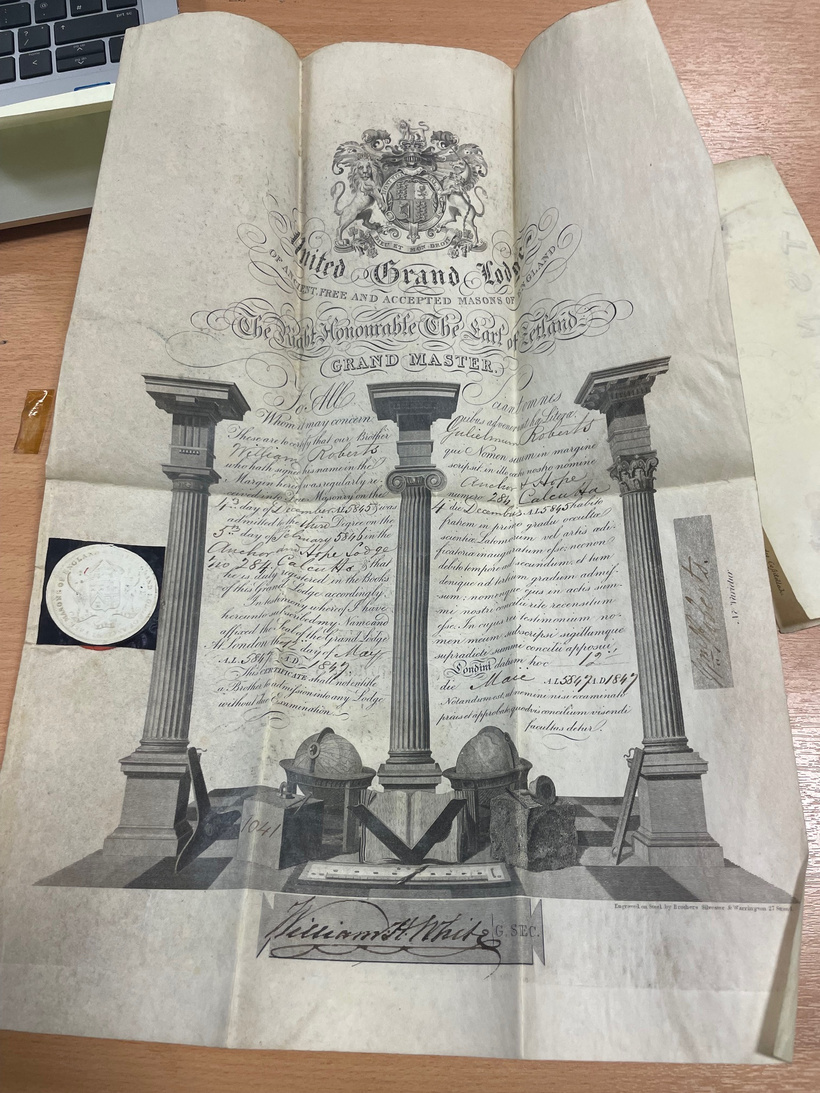
Through Objects & Documents
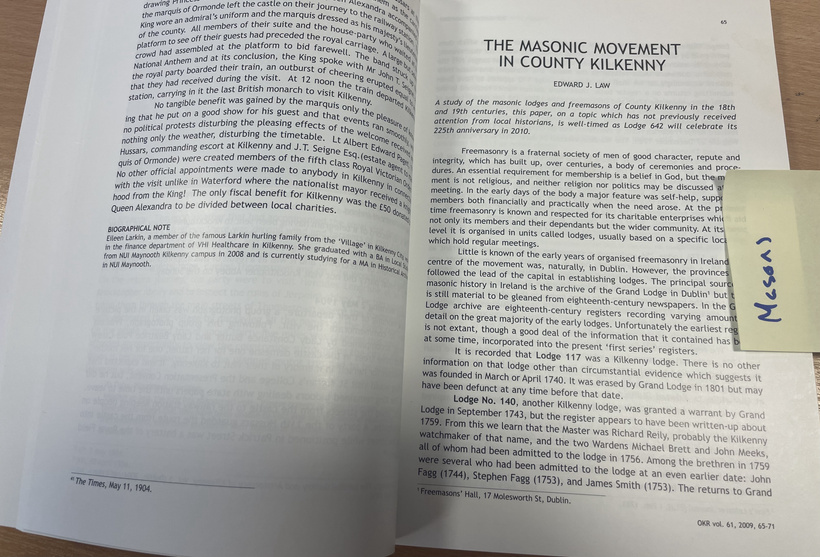
By the time of her MA museum internship in Waterford, Helena had already been researching and writing about Freemasonry in Ireland for years. Her published work in Loftus: The Hall of Dreams traced Masonic family networks and their historical origins, while other research has examined Masonic interiors, buildings, symbolism and the longer Irish contexts in which those networks operated. The Waterford collection therefore did not introduce a new subject; it brought museum objects and archival evidence into an established line of enquiry.
Alongside the Hely-Hutchinson punch bowl, Helena was given the opportunity to examine and handle original Masonic certificates from the Museum's collection and to photograph them for her research record with permission. A Kilkenny Review (2009) study of the Masonic movement in County Kilkenny added another regional documentary layer. Encountering these materials together helped crystallise the idea of an Irish Masonic exhibition and public-history project: bringing objects, archives, architecture, family networks, inscriptions and symbolism into conversation across Ireland.
Research in Development · Irish Masonic Material Culture
This continuing research strand follows objects, inscriptions, archives, architecture and regional lodge histories across Ireland, bringing material evidence into conversation with the wider history of the Craft.
Éliphas Lévi · Occult Revival · Polarity · Reception
A medieval name · a nineteenth-century image · a modern esoteric afterlife

The name Baphomet appears in material connected with the medieval Templar trials, but the famous goat-headed figure now associated with it is not a medieval Templar image. It was created centuries later by French occultist Éliphas Lévi and belongs to the nineteenth-century occult revival.
Union of Opposites · Alchemical Marriage
Lévi's figure is a deliberate union of opposites: masculine and feminine, light and darkness, above and below, animal and human, with solve and coagula inscribed upon the arms. Read through the language of alchemy, the androgyne evokes the coniunctio — the alchemical marriage in which apparently opposed principles are brought into transformed unity.
Its later cultural power makes Baphomet an especially revealing case study in the construction of esoteric memory. A medieval name and a nineteenth-century image have become layered together so completely that they are frequently mistaken for a single historical tradition.
Baphomet · Atbash · Sophia
In The Essene Odyssey (1984), biblical scholar Hugh J. Schonfield proposed that Baphomet, rendered in Hebrew letters and transformed through the ancient Atbash substitution cipher, produces a form he interpreted as Sophia — Wisdom. The proposal remains disputed and no surviving Templar document demonstrates that the name was encoded in this way.
Helena nevertheless regards Schonfield's hypothesis as worthy of serious consideration and supports it as an interpretive possibility within her wider research into Templar symbolism, Gnostic currents and the Sacred Feminine. Sophia belongs to the symbolic world of divine Wisdom that recurs across Gnostic and later esoteric traditions, making the proposed relationship especially suggestive within this wider field of enquiry.
Seen together, the medieval trial name, Lévi's nineteenth-century androgyne and Schonfield's twentieth-century cipher theory reveal how an esoteric image can gather new layers of meaning across time — precisely the processes of transmission, transformation and reinterpretation at the centre of this Research World.
London · 1888 · Hermeticism · Rosicrucianism · Ceremonial Magic
Ritual, Magic & the Modern Esoteric Imagination
Founded in London in 1888 by the Rosicrucian Freemasons William Wynn Westcott, William Robert Woodman and S. L. MacGregor Mathers, the Hermetic Order of the Golden Dawn became one of the great synthesis-points of the modern Western esoteric tradition. Hermeticism, Qabalah, Rosicrucianism, alchemy, astrology, Tarot, Egyptian symbolism, Enochian material and ceremonial initiation were brought into a graded system of study and practice whose influence travelled far beyond the life of the original Order.
The Golden Dawn also matters because its magical world was not exclusively male. Women entered its initiatory structure alongside men and became ritualists, artists, visionaries and office-holders in their own right. The Order therefore provides an unusually rich historical meeting place between Freemasonry and Rosicrucianism, ceremonial magic, artistic culture, the Sacred Feminine and the emergence of modern occultism.
Founder · Freemason · SRIA Rosicrucian
The organising force behind the early Order and the figure who recognised what could be built from the Cipher Manuscripts.
Founder · Physician · Freemason · SRIA
A senior Rosicrucian and early Imperator whose Qabalistic learning belonged to the intellectual foundations of the Order.
Founder · Ritualist · Translator · Magician
The principal ritual architect who helped transform the Golden Dawn into a working system of ceremonial magic.
Mathers · Solomon · The Grimoire Tradition
Mathers' importance extends beyond the organisation itself. His English edition of The Key of Solomon the King (1889), assembled from manuscript sources, and his later translation of The Sacred Magic of Abramelin helped return older magical texts to modern circulation. His work makes the Golden Dawn an important bridge between manuscript magic, Solomonic tradition, Rosicrucian and Masonic currents, and the practical ceremonial systems of the nineteenth-century occult revival.
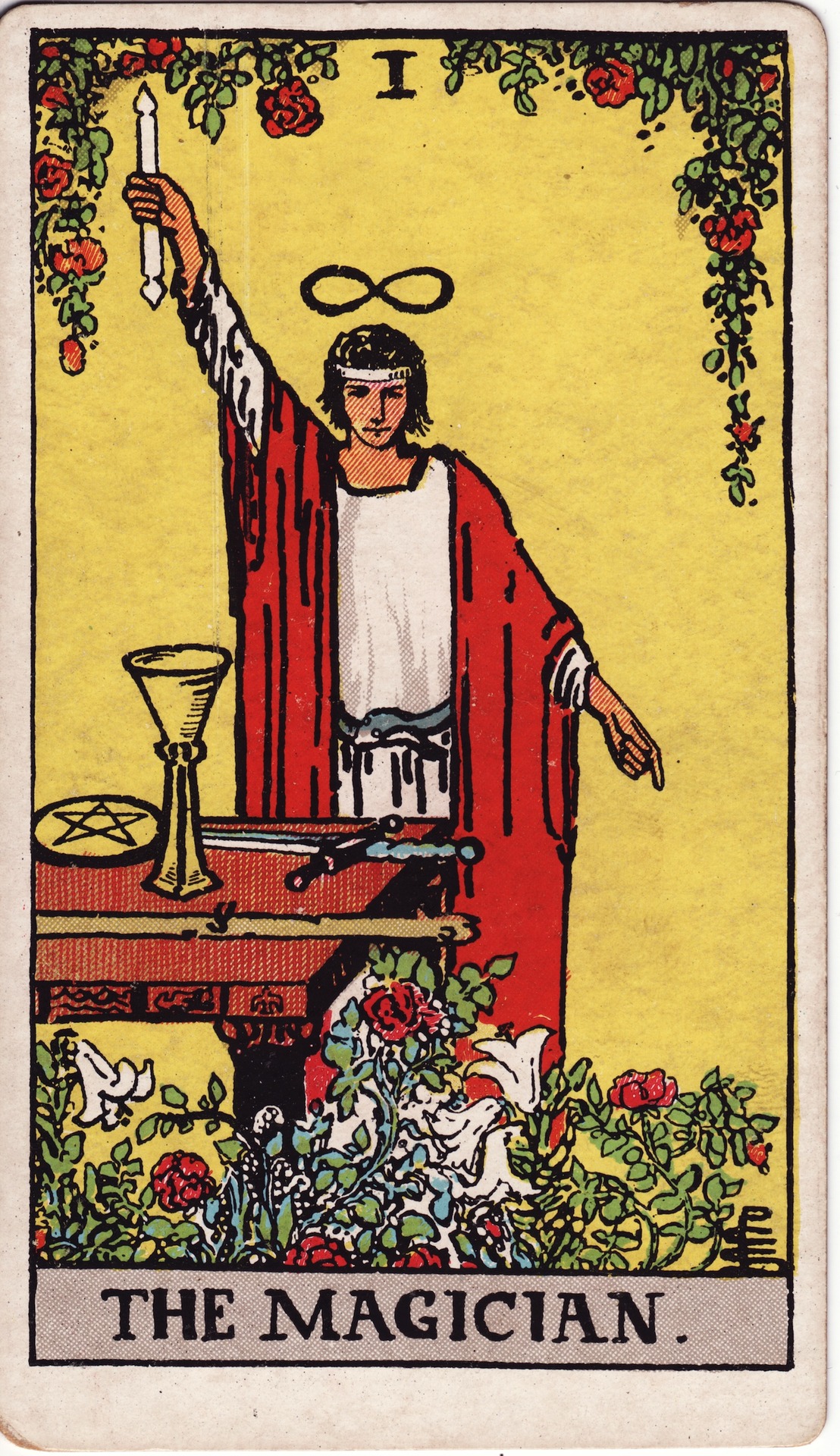
The Magician · Helena's Reading
Waite describes the Magician's gesture as belonging to the “Instituted Mysteries”; the four suit-symbols lie before the adept and are adapted according to his will. Within Waite's own Masonic, Rosicrucian and initiatory world, Helena reads the figure through a distinctly Masonic lens: the initiated person who receives the tools, learns their symbolic use and consciously participates in shaping his own destiny — bringing what is above into relationship with what is below.
The High Priestess · Veil · Gnosis
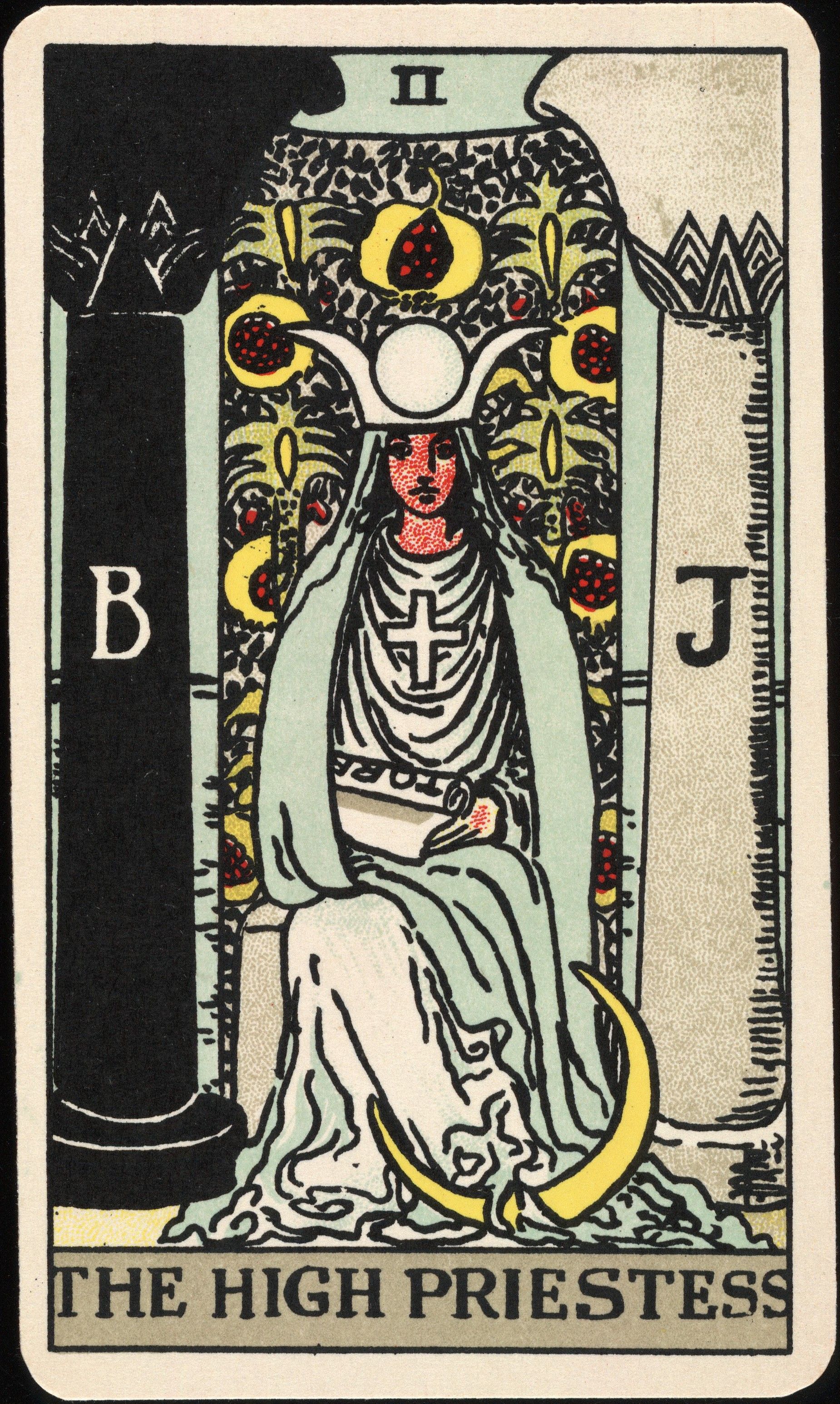
The High Priestess provides the complementary image: threshold, hidden knowledge, lunar and feminine symbolism, and the mystery concealed behind the visible world. Together the two cards provide a compact visual language for the Golden Dawn inheritance — will and receptivity, operation and contemplation, revealed symbol and concealed wisdom.
Waite · Smith · Grail · Mysticism
Arthur Edward Waite occupies a particularly important place in Helena's intellectual landscape and is one of the esoteric scholars whose work she most values. A Golden Dawn initiate, Freemason, Rosicrucian, Christian mystic and major Grail scholar, Waite moved repeatedly between ceremonial sources and the search for an interior mystical tradition. His work on the Grail, alchemy, ritual and the history of initiatory orders — including Templar and Masonic traditions — makes him far more than the name attached to a Tarot deck.
Pamela Colman Smith, herself a Golden Dawn member, gave the Waite–Smith Tarot its extraordinary visual life. Her fully illustrated minor arcana and symbolic major cards transformed the visual language of modern Tarot. The deck therefore stands here not simply as divination, but as an artefact of the Golden Dawn milieu: a collaboration between scholarship, initiatory symbolism and artistic imagination.
Women of the Golden Dawn · Initiates · Officers · Creators
One of the Golden Dawn's most significant departures from the Masonic and Rosicrucian institutions from which its founders emerged was its admission of women into the initiatory system from the beginning. Men and women progressed through the same graded structure, and women became officers, ritualists, teachers, temple leaders, artists and creators of magical work. In the late-Victorian world, that was not a minor detail: three Rosicrucian Freemasons had helped construct an initiatory order in which women could participate directly in the transmission and practice of esoteric knowledge.
Moina Mathers · Art · Ritual · Isis
Artist, clairvoyant and magician, Moina Mathers was a creative participant in the ritual and visual life of the Golden Dawn rather than simply the wife of its principal ritual architect. In Paris she worked with MacGregor Mathers on the public Rites of Isis and, after his death, continued the Alpha et Omega tradition, preserving and transmitting an important strand of Golden Dawn ritual culture.
Florence Farr · Egypt · Theatre · Temple Leadership
Actress, musician, writer and accomplished magician, Farr brought theatrical practice, voice and a deep engagement with Egyptian religion and magic into her esoteric work. She became Praemonstratrix and later Chief Adept of the London temple during the period when Mathers was increasingly based in Paris, making her one of the most important women in the Order's leadership and ritual development.
Initiate, theatre patron and major financial supporter; the first initiate into the Inner Order and a formidable figure in both Golden Dawn and modern theatre history.
Golden Dawn initiate and artist whose Waite–Smith Tarot became one of the most enduring visual inheritances of the occult revival.
Initiated in 1891 as Per Ignem ad Lucem — “Through fire to the light” — and advanced through several First Order grades before resigning in 1894; her occult practice continued beyond the Order.
A later initiate in Golden Dawn-derived traditions whose automatic writing with Yeats became foundational to A Vision.
Initiated through the Golden Dawn-derived Alpha et Omega before developing her own influential school of Western esotericism.
One of the Order’s earliest women, initiated at Isis-Urania in 1888 and later into the Inner Order; artist, writer and memoirist of the wider esoteric world.
Golden Dawn initiate, traveller, Spiritualist author and psychical researcher whose work bridges ceremonial initiation with mediumship and the investigation of unseen experience.
Initiated in 1891 and admitted to the Inner Order in 1892; a long-serving practitioner who remained active into the Stella Matutina period.
These women entered the Order through different routes and remained for very different lengths of time, but together they demonstrate the breadth of female participation in Golden Dawn and Golden Dawn-derived culture — from temple leadership and ritual innovation to art, theatre, politics, automatic writing and the creation of new esoteric schools.
Literature · Theatre · Magic · Current Research
Poet · Magician · Visionary
For Yeats, ceremonial magic was not an eccentric ornament attached to literature. It was a disciplined way of working with image, imagination, ritual and consciousness. His years in the Golden Dawn — including leadership within the Isis-Urania temple — fed a symbolic practice that travelled into his poetry, drama and theatrical experiments, helping shape the imaginative structures through which he approached myth, nation, spirit and transformation.
Maud Gonne, herself a Golden Dawn initiate, belongs to this same world where politics, myth, magical experiment and the Irish cultural revival repeatedly intersected. The trajectory continued through Yeats's marriage to George Hyde-Lees: their automatic writing and collaborative system-building became foundational to A Vision, where history, personality, symbol and cyclical time were organised into one of the most extraordinary esoteric cosmologies produced by a major modern writer.
Current Research · Yeats & the Occult Imagination
Helena's continuing research follows how Golden Dawn practice, ritual symbolism, automatic writing and collaborative vision-making entered the imaginative architecture of Yeats's work. She is also contributing to a forthcoming documentary on Yeats, extending this research into public interpretation.
Transmission into the Twentieth Century
The Golden Dawn did not end with the fragmentation of the original Order. Aleister Crowley, initiated in 1898 and later embroiled in its internal conflicts, co-founded the initiatory order A∴A∴ (1907) with George Cecil Jones and carried Golden Dawn-derived ceremonial structures into his developing system of Thelema. Other strands travelled through successor bodies and figures including Dion Fortune and Israel Regardie, whose publication of Golden Dawn material helped make a once-private ritual system enormously influential within twentieth-century occultism.
From Lodge to Living World
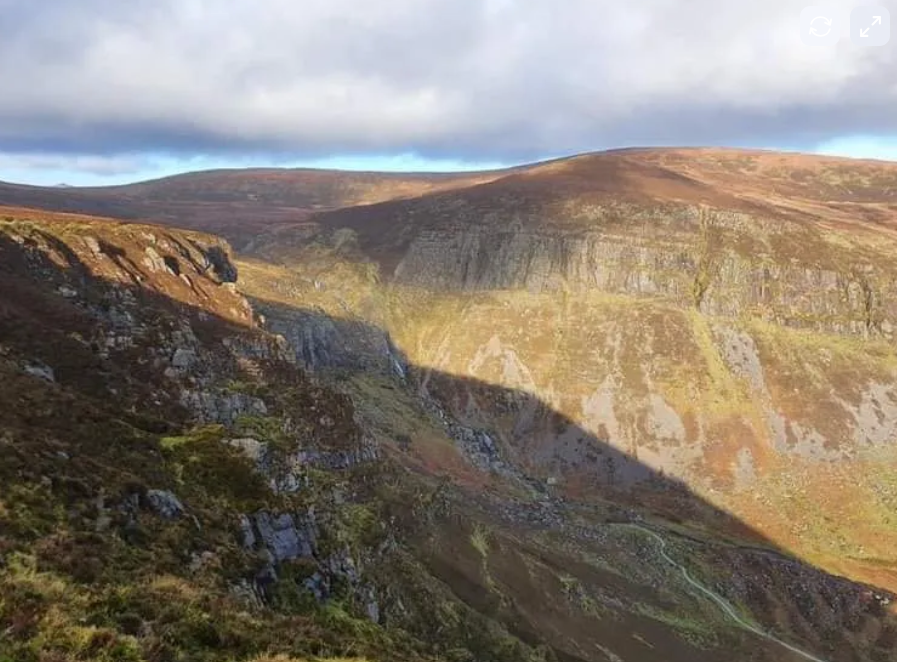
From the feminine within the lodge, Helena's enquiry moves outward to the oldest symbolic architecture of all: land, orientation, body and Earth.
Beyond the Archive
Historical method can tell us when a text appeared, who belonged to an order, how an object was used and how a tradition changed. It cannot by itself exhaust the human experiences that gave many esoteric traditions their meaning.
Helena's wider work therefore also engages with mysticism, mediumship, psychical research, Jungian psychology and visionary experience — not as substitutes for historical evidence, but as part of the continuing human encounter with symbol, psyche and the unseen.
Connected Research
Western esotericism provides a connective field across Helena's research into Gnosticism and alchemy, Jungian and archetypal psychology, medieval religious culture, the Knights Templar, the Sacred Feminine, Freemasonry, symbolism, sacred geography, haunted history and psychical research. The value lies not in collapsing these subjects together, but in tracing documented relationships and recognising where later traditions reinterpret older material.
Her Diploma in the History of Magic, Witchcraft and the Occult from Imperial College London (2022–23), together with more than a decade of training at the College of Psychic Studies and her wider historical and Jungian work, places this research at an unusual intersection of academic enquiry, lived tradition and public history.
As a lecturer, Helena's related subjects include Western esotericism — its history, methodologies and misunderstandings — alongside Gnosticism, alchemy, Hermetic thought, Freemasonry, symbolism and historical revisionism.
Research · Collections · Interpretation
Esoteric history survives not only in occult books but in objects, architecture, inscriptions, lodge material, private archives, correspondence, ritual artefacts and local collections. Helena works with these materials as a public historian and cultural heritage specialist, developing research, interpretation, lectures, exhibitions and public-facing narratives for museums, historic sites, archives, historical societies, Masonic organisations and cultural institutions.
Universities & Research Centres
Research partnerships · specialist lectures · public scholarship
Museums & Heritage Bodies
Collections · interpretation · exhibitions · digital heritage
Masonic Lodges & Research Societies
History · symbolism · material culture · lodge programmes
Publishers & Documentary
Research · expert contribution · historical interpretation
Pillar IX · Digital Heritage & Research Tools
Through Pillar IX, Helena can also develop digital forms for heritage and research: interactive archives, digital exhibitions, interpretive websites, specialist databases, collection interfaces and bespoke research tools. The emphasis remains on scholarship and interpretation — using technology to make complex histories, objects and collections more accessible, connected and useful.
Explore Further
Analytics Preferences
Help improve the Helena B. Scott website
Google Analytics helps understand how visitors find and use the site. If you decline, analytics cookies remain off and only limited cookieless measurement signals may be sent. It is not used for advertising here.