Neolithic
Stone axe · pottery
Material Evidence
Documentary sources form only part of the surviving historical record. Helena B. Scott's field research places written evidence in dialogue with archaeology, architecture, objects, inscriptions, carved stone and landscape. The physical trace can confirm a documentary history, complicate it, or reveal a layer of a site that the written record has scarcely preserved.
This approach is particularly important in the study of medieval religious and Templar landscapes, where later rebuilding, destruction, reuse and changing land use can leave fragments dispersed across churchyards, walls and surrounding terrain.
MA Public History & Cultural Heritage · University of Limerick
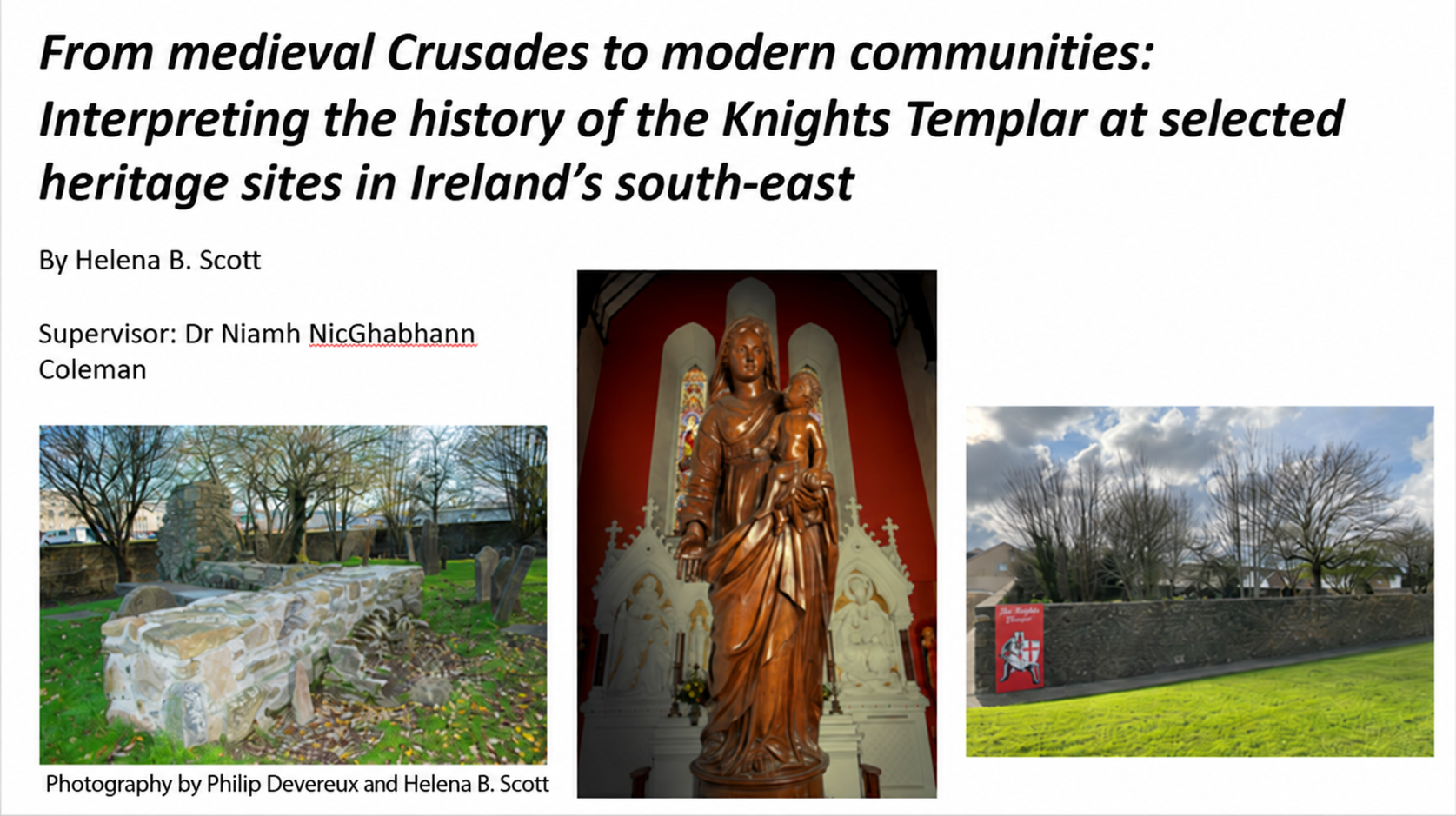
Helena's recently awarded MA dissertation examined how the history and legacy of the Knights Templar are interpreted at selected heritage sites in Ireland's south-east. Combining public history, archival and documentary research, field investigation, archaeology, material culture, landscape and community memory, the project asked how surviving evidence can reshape both scholarly understanding and the way medieval places are presented to the public.
Kilbarry became a principal case study: a landscape in which prehistoric archaeology, Norse/Ostman history, early Christianity, Templar and Hospitaller occupation, later burial and community stewardship remain layered within the same place.
Explore the MA research →From the MA Dissertation · University of Limerick
This research developed through Helena's recently awarded MA in Public History & Cultural Heritage at the University of Limerick. Her dissertation, From medieval Crusades to modern communities: Interpreting the history of the Knights Templar at selected heritage sites in Ireland's south-east, treated Kilbarry not as an isolated Templar monument but as a layered cultural landscape whose history begins long before the Order arrived.
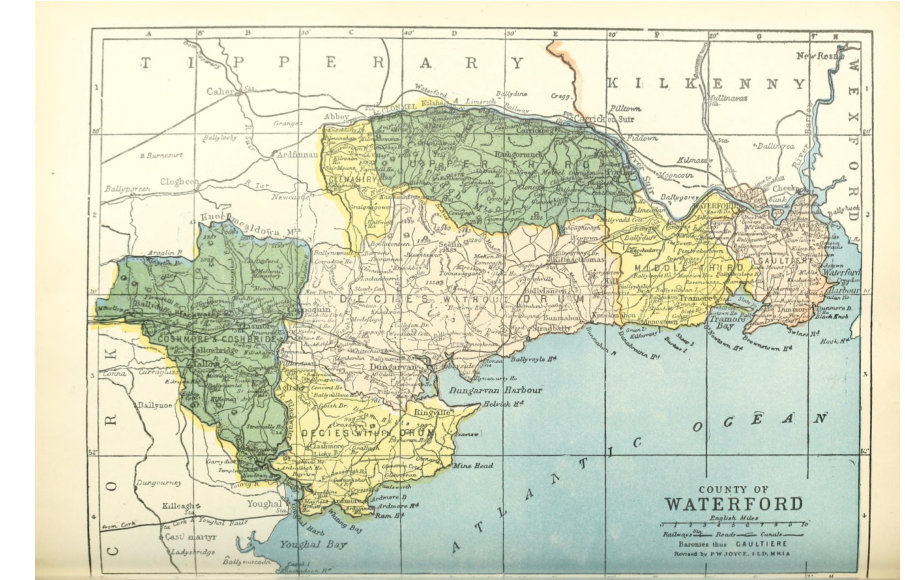
Kilbarry lies in the Waterford barony of Gaultier — “land of the foreigners” — associated with the Ostmen, descendants of Waterford's Norse founders. Following the Anglo-Norman invasion, Norse communities were displaced eastwards into this territory. The wider setting also connects Kilbarry with the Suir and the Viking-age settlement at Woodstown, placing the later medieval preceptory within a much older world of movement, settlement and exchange.
Before the Templars
The Norse did not disappear from Ireland in 1066. In Waterford, their descendants continued to be recognised in the documentary record as Ostmen long after the Anglo-Norman conquest. An inquisition of c. 1224 distinguishes the king's town from the town of the Ostmen at Waterford; records still refer to a vill of the Ostmen near Waterford c. 1282; and legal proceedings of 1311 concern the rights and status of Waterford's Ostmen. Scholarship catalogued by the National Library of Ireland likewise specifically addresses the rights of the Ostmen of Waterford in the fourteenth century. Rather than disappearing at a single moment, this distinct Norse-derived community was gradually absorbed into the later medieval population.
This continuity matters at Kilbarry Knights Templar Graveyard, formerly part of the Kilbarry Templar preceptory. Before the lands passed to the Knights Templar, evidence Helena traced through historian Herbert Wood to Chartularies (Wood) 10, fol. 8b, Bodleian Library, Oxford records that they had belonged to Ballyman Cutel, “probably a Dane.”
Kilbarry therefore stood within a landscape with a documented Norse/Ostman history before its Templar phase. Read alongside Gaultier — “land of the foreigners” — the continuing presence of Waterford's Ostmen, and Helena B. Scott's identification of the red sandstone cross-slab as Norse, this documentary evidence provides an important historical context in which the material evidence can be assessed.
The interpretation does not rest upon the carving alone: object, landscape, documentary evidence and regional history are read together.
Historical Geography · County Waterford · c. 1900
Map of the baronies of County Waterford. Gaultier, in the east, preserves in its name the memory of the Ostmen — descendants of Waterford's Norse settlers — within whose wider landscape Kilbarry later developed.
Source: Atlas and Encyclopedia of Ireland, c. 1900, p. 287 · reproduced in Helena B. Scott's MA dissertation · click map to enlarge
Deep Time · Kilbarry
Archaeological investigations by Dave Pollock on development land at Kilbarry and Lacken Road, outside the enclosed graveyard but within the wider archaeological landscape of the medieval preceptory, were studied in detail for Helena's dissertation. This work recorded evidence extending from the Neolithic into the post-medieval period, including a polished stone axe, Neolithic pottery, a disturbed cist burial and cremation urns. The medieval cemetery therefore occupies ground with a much longer material biography.
The landscape is not a single period preserved in stone, but a sequence of human presences layered across millennia.
Neolithic
Stone axe · pottery
Bronze Age
Cist burial · cremations
Norse / Ostman
Gaultier · Waterford · Woodstown
Early Christian
St Barry · sacred landscape
Templar · 1172–1177
Royal grant · preceptory established by c.1180
Hospitaller
Succession · architectural development
Post-Medieval
Burial · carved marks · community memory
Kilbarry is best read as a palimpsest: sacred ground repeatedly inhabited, interpreted and reused.
Original Field Research · Kilbarry, Waterford
During her postgraduate research, Helena identified previously unrecorded archaeological and historic material at Kilbarry, documented it in context and formally reported it to Ireland's National Monuments Service. The work forms part of her MA dissertation and archaeological annex, preserving reporting forms, measurements, site context, photographs and specialist discussion.
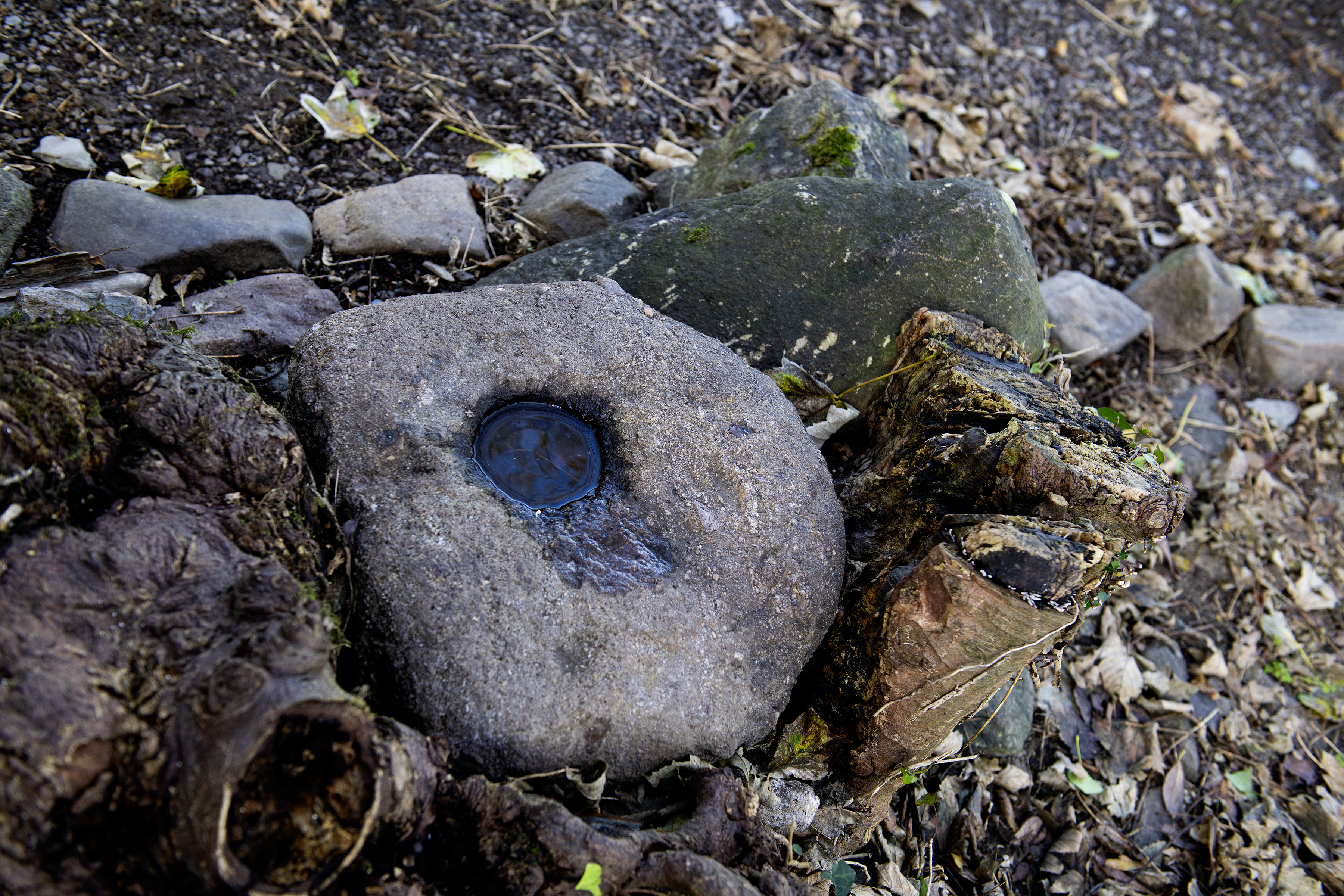
WA017-003014
Bullaun / spudstone; possible later reuse as a spudstone
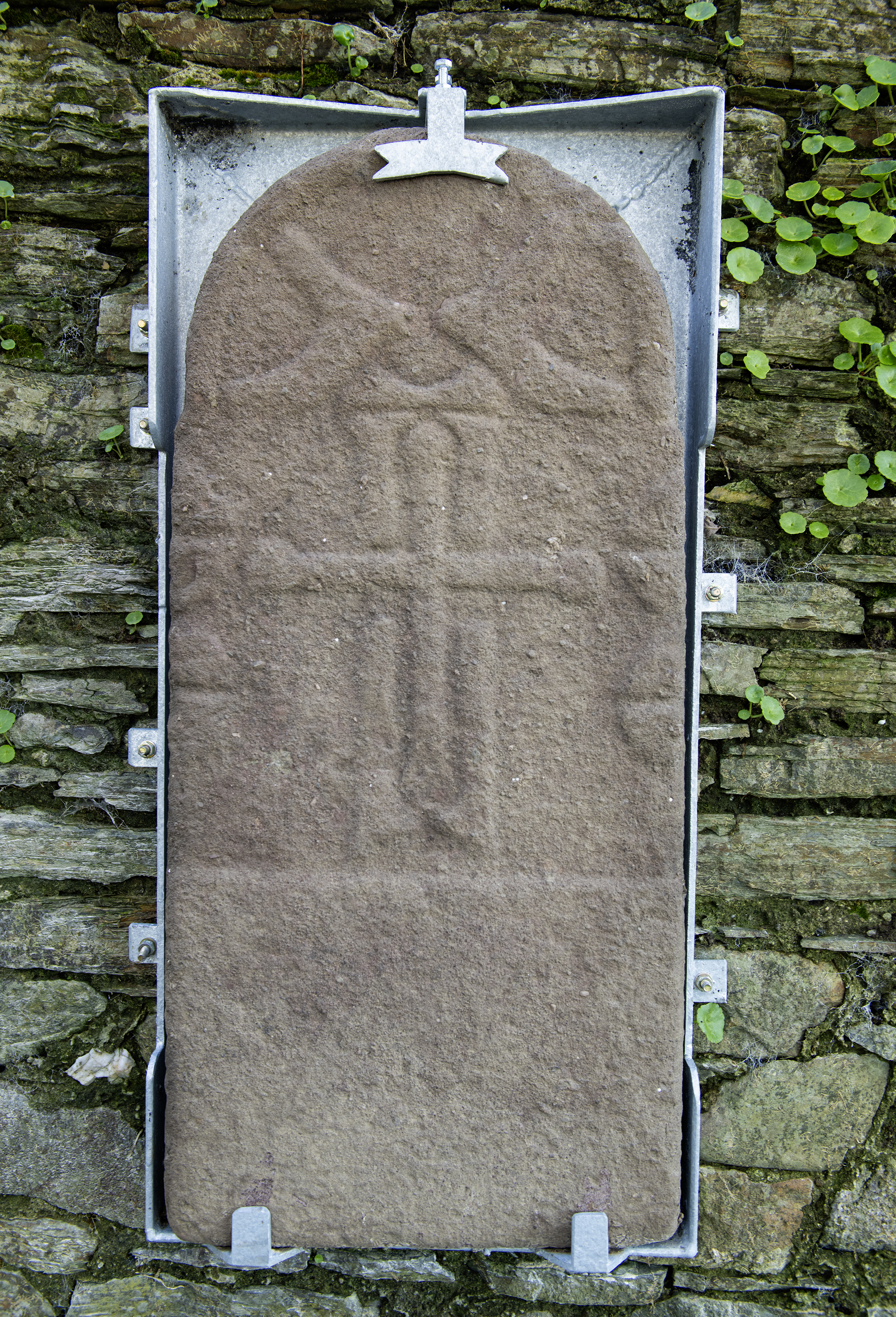
WA017-003013
Red sandstone cross-carved graveslab; interpreted by Helena B. Scott as Norse
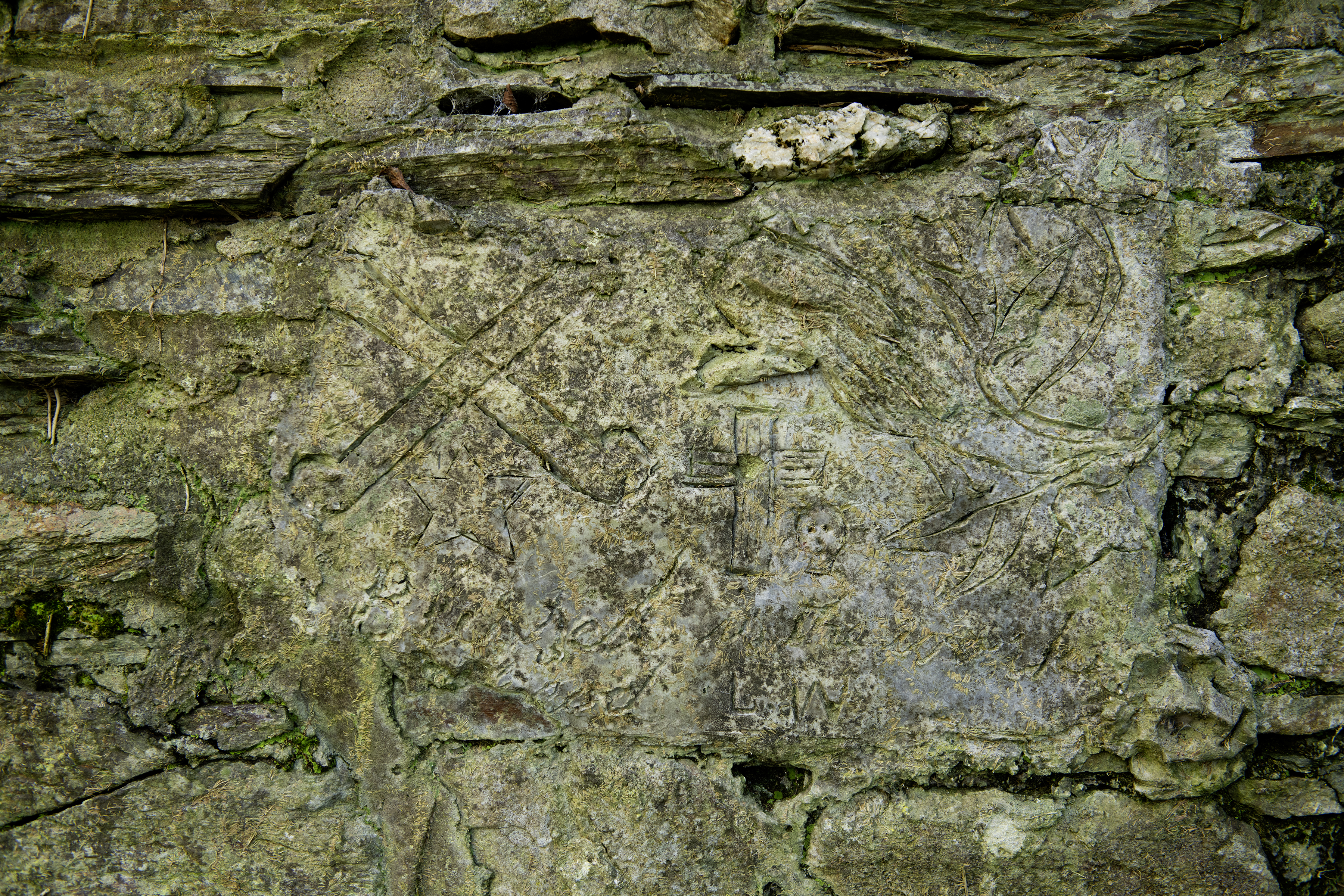
WA017-003002
Historic carved material incorporated into the Kilbarry graveyard record
Identification · Consultation · National Record
The National Monuments Service subsequently entered the cross-slab as WA017-003013 and the bullaun as WA017-003014, while the Masonic graffiti was incorporated into the existing Kilbarry graveyard record WA017-003002. Helena is recorded as identifier and reporter for the confirmed material.
Specialist consultation formed part of that process. Archaeologist Dave Pollock, whose published and unpublished archaeological investigations at Kilbarry and Lacken Road Helena studied for the dissertation, corresponded with Helena and met with her during the research. He generously shared his expertise, opinions and relevant archaeological reports; the reporting documentation also records his agreement with the bullaun identification.
Explore the full Kilbarry research →Research Method
Field Research · Cistercian Kilcooley & Holycross
The Cistercian abbeys of Kilcooley and Holycross are two of Helena's principal field-research sites. Over several years she has documented their carved stone, mason's marks, historic graffiti and architectural evidence as part of a continuing comparative study of medieval buildings, craft practice and material culture. This growing corpus will contribute to Marks of Ireland, Helena's developing national atlas of historic marks. A central strand of the work is tracing recurring marks across sites to recover the movements, working relationships and individual hands of medieval masons where the evidence allows.
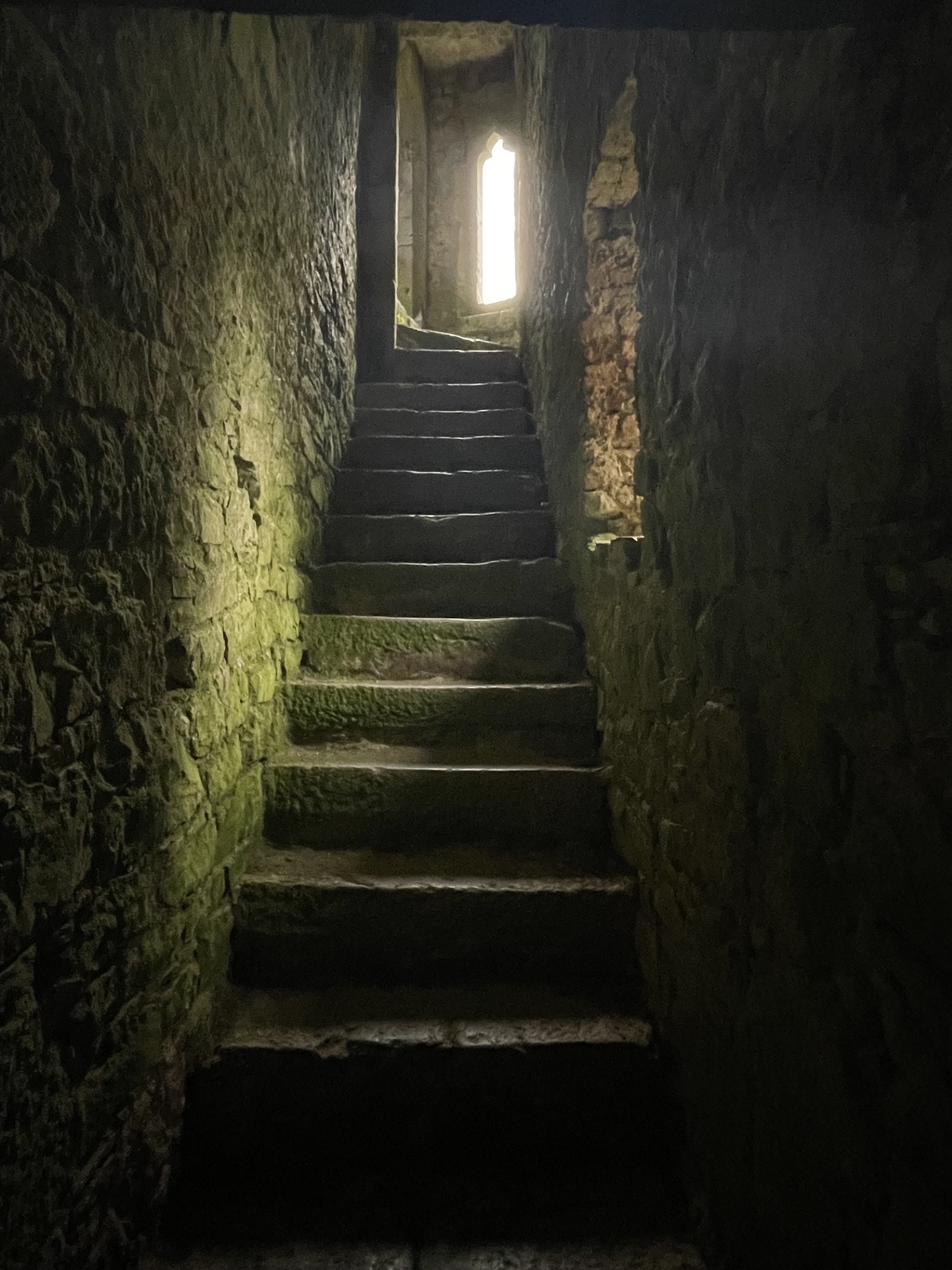
Architecture
Surviving medieval stone stair within the Cistercian abbey of Kilcooley, Co. Tipperary. The worn masonry preserves the physical experience of movement through the medieval building.
Photograph · Helena B. Scott · click to enlarge
Sculpture
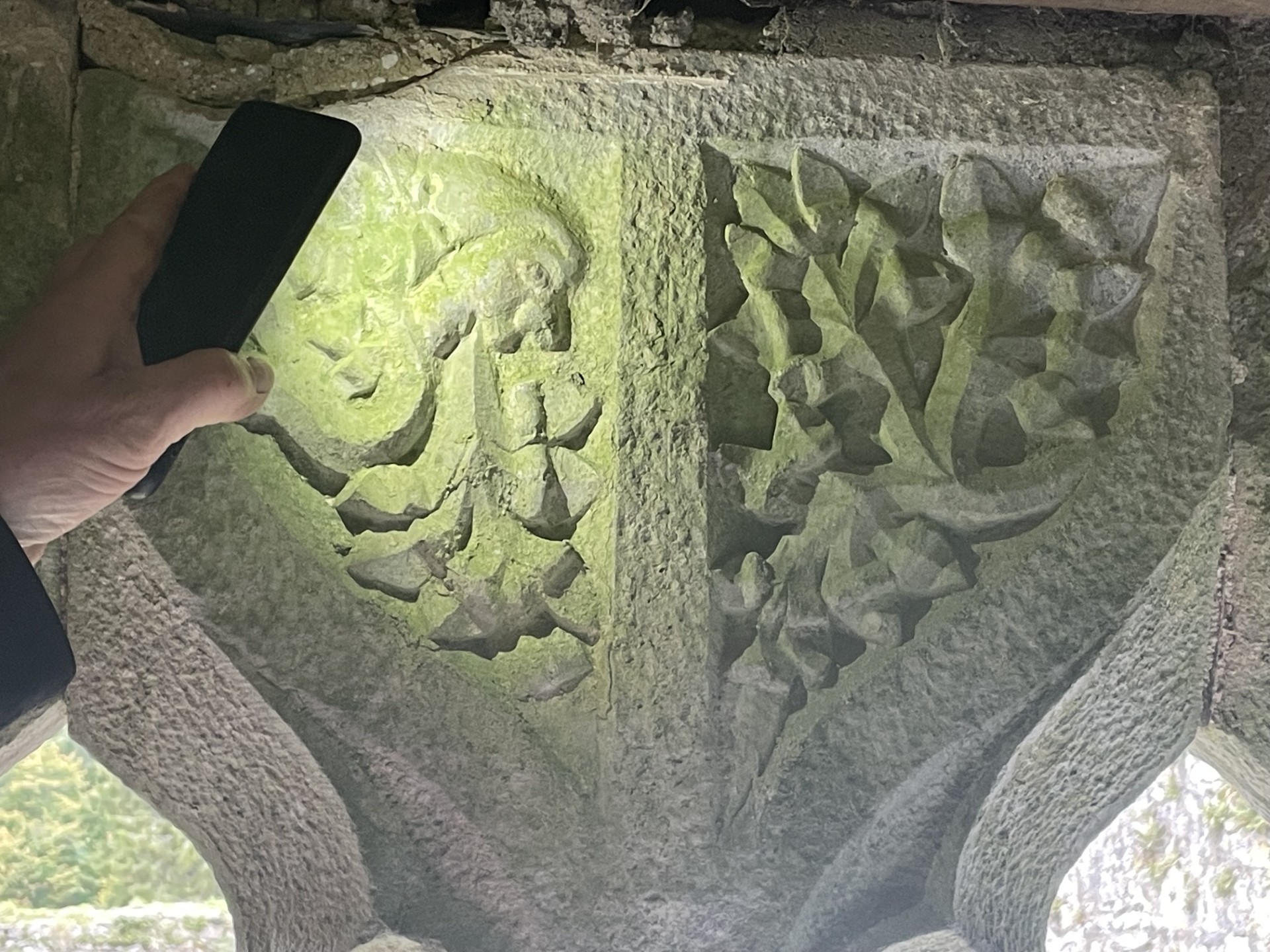
Green Man foliage carving at the Cistercian abbey of Kilcooley, examined under raking light to reveal the surviving relief and foliage.
Photograph · Helena B. Scott · click to enlarge
Mason's Mark
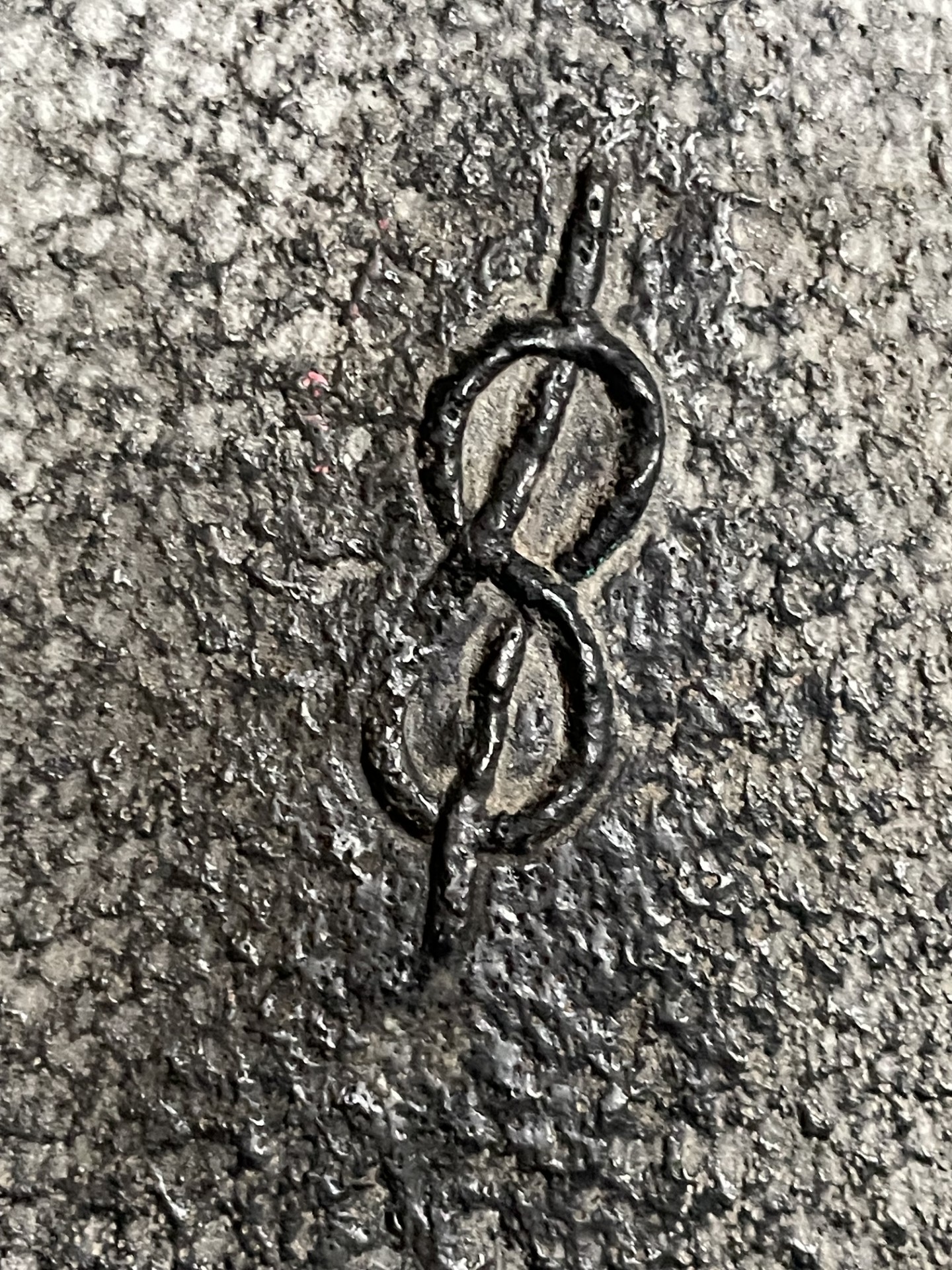
Looped / figure-eight mason's mark recorded at Cistercian Holycross Abbey, Co. Tipperary, part of Helena B. Scott's continuing comparative study of medieval mason's marks and historic graffiti.
Photograph · Helena B. Scott · click to enlarge
The marks make movement visible: individual craftsmen, workshops and architectural ideas can sometimes be followed from one medieval building to another — allowing fragments of the working lives of medieval masons to emerge from the stone.
Explore Marks of Ireland →Objects in Landscape
A stone belongs to a place. A mark belongs to a surface. A monument belongs to a landscape.
A carved stone is not only an image; it has material, technique, placement and biography. Historic graffiti belongs to a particular surface, phase and human act. A bullaun is not simply an isolated artefact; what it can tell us depends upon context, comparison and the limits of what can safely be inferred.
This evidence-first method connects directly with Helena's work on mason's marks and historic graffiti, sacred geography, Templar sites and cultural heritage. Symbolic interpretation can enrich a study, but it follows rather than replaces the physical and historical evidence.
From Field Evidence to Public Heritage
Finding something is not the end of the research process. Evidence must be recorded, contextualised, tested, shared with appropriate specialists and, where necessary, reported through the systems that protect the archaeological record.
Helena's work then carries that research into public history: publications, digital interpretation, lectures, heritage programming and accessible resources that return knowledge to the communities and landscapes from which it emerged.
Research · Interpretation · Collaboration
Helena works at the meeting point of historical research, archaeology, material culture and public interpretation. Her research can support heritage interpretation, exhibitions, digital heritage, lectures and public programmes, site histories, research collaborations and place-based storytelling.
Analytics Preferences
Help improve the Helena B. Scott website
Google Analytics helps understand how visitors find and use the site. If you decline, analytics cookies remain off and only limited cookieless measurement signals may be sent. It is not used for advertising here.