Place, Land & Documented History
The building is only one layer. Helena examines maps, deeds, records, former occupants, architectural history, archaeology, earlier land use, significant events and the wider landscape — including what may have occupied or happened on the ground before the present building existed.
Folklore, Testimony & Atmosphere
Reported experiences, oral tradition, community memory and local stories are considered alongside the lived atmosphere of a place. A troubling space does not have to imply a ghost: conflict, distress, repeated human activity and the history of how a place has been used may all be relevant to how it is experienced.
Psychical & Energetic Experience
Where relevant and requested, Helena may bring her own psychical impressions and sensitivity to the atmosphere or energy of a place into the enquiry. These observations are kept distinct from documented historical evidence and considered as another layer of the consultation.
Reading the Place
The House Is Only One Layer
This work is not limited to private homes. Helena can also work with haunted and historic sites, hotels, heritage properties, institutions, universities and training centres, libraries, shops, pubs, hospitality venues and other public or commercial spaces where unusual experiences, persistent atmosphere or a documented history of haunting forms part of the life of the place. A site does not need to contain a domestic building at all: ruins, historic grounds, archaeological places, landscapes and visitor attractions may have their own reported phenomena, folklore and accumulated histories. For organisations and visitor-facing properties or sites, the historical strand can also become a carefully researched account of reported hauntings and associated people, events, folklore and landscape — useful for interpretation, heritage storytelling, tours, exhibitions or responsible tourism without turning legend into historical fact.
A place does not have to be old to carry a history. A newly built house may stand on much older ground: former farmland, an earlier settlement, a vanished road or boundary, an industrial site, a place of worship or burial, or land associated with events and human activity long predating the present building. Helena therefore begins not simply with the age of the house, but with the deeper biography of the place — the building, the land beneath it and the people who have interacted with both.
Nor does an uncomfortable or oppressive atmosphere necessarily require the presence of a deceased person or a conventional “ghost”. Homes absorb human life. Conflict, grief, fear, illness, prolonged stress, violence or repeated patterns of distress may form part of a property's story even when the people involved are still living or have long since moved elsewhere. Where a client experiences a room or building as heavy, unsettled or simply wrong, Helena considers the experience without forcing it into a single supernatural explanation.
Her approach brings together the disciplines that already shape her wider work as a public historian and cultural heritage specialist: documentary research, genealogy, architectural and material history, landscape archaeology, anthropology, folklore, oral testimony and sacred geography, alongside her study of the history of magic, witchcraft and the occult. This wider historical and cultural knowledge is particularly valuable when a property, object, landscape or reported experience is connected with ritual practice, folk belief, magical traditions, protective customs or older ways of understanding place. The wider setting can matter as much as the walls themselves — historic routes and boundaries, water, topography, archaeological remains, traditions of sacred or significant places and, where relevant to the enquiry, historical traditions concerning ley lines and other forms of sacred geography.
What a Consultation May Include
—Private homes, haunted and historic sites, hotels, institutions, universities, libraries, shops, pubs and visitor-facing properties
—Documented haunted-history research for heritage interpretation and responsible tourism
—History of the building and the land beneath it — including earlier land use
—Maps, deeds, estate records, census material, archives and newspapers
—Genealogical research on former occupants and people connected with the site
—Architectural history, alterations and building materials — including Stone Tape or residual-imprint traditions where relevant
—Landscape archaeology, topography, water, historic routes and boundaries
—Sacred geography, historic sacred landscapes and traditions concerning ley lines where relevant
—Folklore, anthropology, oral testimony, community memory and local stories
—Review and contextualisation of reported paranormal or unusual experiences
—Atmosphere, patterns of conflict, distress or other human activity associated with a space
—Gardens, significant plants or trees and other environmental features
—Objects and their provenance, associations and possible energetic significance
—Psychometry of objects — where relevant and requested
—Historical context for magic, witchcraft, occult practice and protective traditions
—Possible person- or object-centred attachments within spiritual and psychical frameworks
—Grounding, energetic boundaries, chakras, clair senses and personal protection practices
—Distinguishing reported residual hauntings, spirits or presences, and energetic atmosphere
—Psychical and energetic impressions — where relevant and requested
—Energy clearing, grounding, protection and thoughtful space-clearing practices
The physical environment is considered too. Building materials, later alterations, objects brought into a property, the use and arrangement of rooms, gardens and significant plants or trees, natural features and changes made during construction or renovation can all contribute clues to the history and felt character of a place. Within paranormal literature, the “Stone Tape” theory proposes that certain materials — particularly stone, but sometimes also wood and other elements of a building — may in some way retain impressions associated with intense or repeated events, which may later be experienced as a residual replay rather than an interacting presence. This remains a theory rather than an established scientific mechanism, but it provides a useful framework for distinguishing what paranormal traditions often call a residual haunting or energetic imprint from an apparently responsive spirit or presence.
Objects, Presences & the People Within the Home
What Belongs to the Place — and What May Have Been Brought Into It
Objects can form part of the enquiry for similar reasons. Antiques, inherited possessions, ritual or devotional objects, jewellery, furniture, artworks or something recently purchased or received may carry powerful personal histories and associations, and some psychical traditions understand objects as capable of retaining impressions connected with people, places or events. Where a particular object seems associated with unease, unusual experiences or a marked change in the atmosphere of a home, Helena can explore its provenance and context and, where appropriate, use psychometry — receiving impressions through direct contact with an object — as an additional intuitive layer alongside historical research rather than as documentary proof.
Sometimes the most useful question is therefore not simply “Who is haunting this house?” but “What has happened here — to this building, on this land, among the people who have occupied it, and to the objects now held within it?” A consultation may distinguish between a reported ghost or residual impression, an apparently responsive spirit or presence, and a more general energetic atmosphere rather than assuming that these experiences are all the same phenomenon.
The people living in the property are another part of the picture. Within spiritual and psychical traditions, experiences sometimes understood as attachments are associated not with the building itself but with a person, object or experience brought into it. A consultation may therefore consider recent changes in the household, places visited, objects acquired, spiritual or ritual practices, substance use, periods of severe stress or vulnerability, and whether the person feels unusually depleted, unsettled or affected. Where the client works within an energetic or spiritual framework, Helena can also explore grounding, energetic boundaries, protection practices, chakras and the careful development and management of intuitive or clair senses. These possibilities are approached as spiritual and psychical frameworks rather than assumed explanations, and concerns about physical or mental health should also be considered through appropriate professional care.
A Layered Method
Evidence, Experience & the Memory of Place
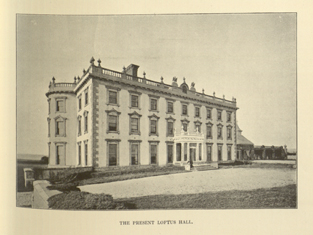
The approach remains deliberately layered. Documented evidence is distinguished from folklore and testimony; both are distinguished from Helena's own psychical or energetic impressions. Her work on Loftus Hall became an important expression of this method: looking beyond a famous supernatural legend to recover the histories of the house, the families and the land, while allowing archival research, folklore, landscape and psychical experience to remain in dialogue without presenting one as proof of another. That same principle informs these consultations.
Where appropriate and requested, the consultation can move from investigation into practical space-clearing work, grounding and ways of changing the felt atmosphere of a home. No particular supernatural explanation is assumed or guaranteed. Where an enquiry grows into a substantial heritage research or consultancy commission, Helena will direct you to Work With Helena.